• SLOW -
  • SLOW -
  • SLOW -
  • NEWS -
  • SLOW -
  • SLOW -
  • SLOW -
  • Photos by Mikki Simeunovich -
Menu

SLOWCITY.CA

  • SLOW -
  • SLOW -
  • SLOW -
  • NEWS -
  • SLOW -
  • SLOW -
  • SLOW -
  • Photos by Mikki Simeunovich -
×
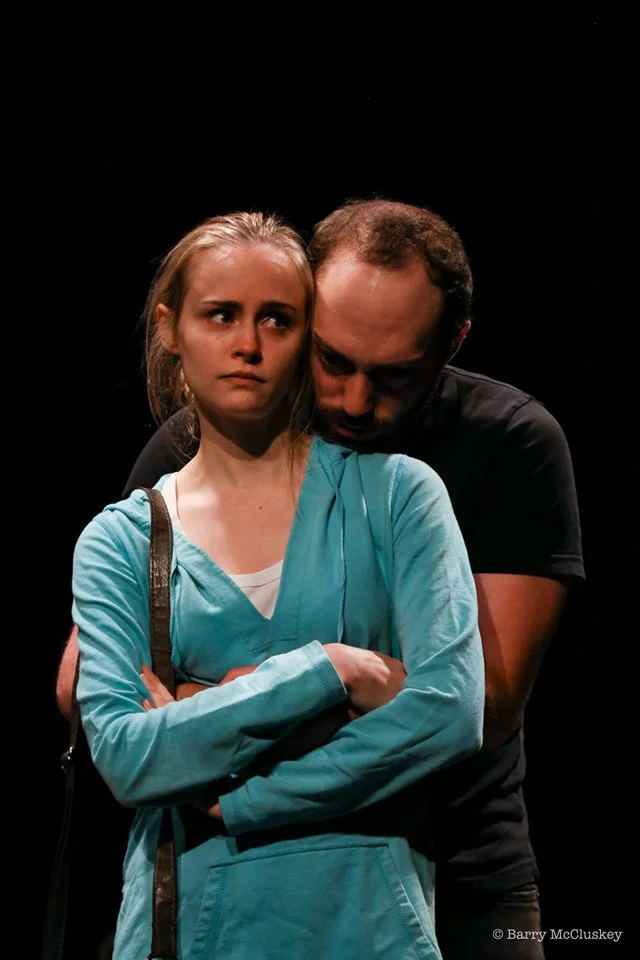
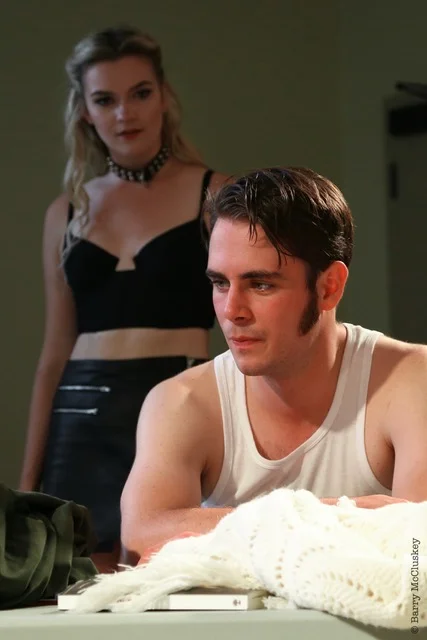
Manon Ens-Lapointe and Jack Copland, photo by Barry McCluskey.

Manon Ens-Lapointe and Jack Copland, photo by Barry McCluskey.

Theatre on the Ridge presentation of 'Venus in Fur' is an intimate experience

Will McGuirk August 12, 2019

By Paul Love
Guest Reviewer

Venus in Fur, by David Ives, is about a play that is an adaptation of the 1870 erotic novel, Venus in Furs, written by Austrian author Leopold von Sacher-Masoch. The play, the play within the play, and the novel all hold a lens to male-female relationships — how they are shaped by traditions, norms, and expectations, and how they are affected and challenged by individual desires and perceptions, as well as status and power.

The show opens with Thomas Novachek (Jack Copland) — the author of the play within the play — agonizing to someone on the phone about how frustrating it has been to audition actor after actor for the female lead due to the seeming lack of acting ability and intelligence of today’s young female actors. A young woman named Vanda (Manon Ens-Lapointe) explodes into the audition room, claiming to be hours late for her audition appointment due to a series of mishaps and unfortunate events, and talking faster than a human should be capable of. She is brash, vulgar, and seemingly clueless. After hearing Thomas’s lamentations, we know that he has already decided she is not right for the part. She convinces him to let her audition anyway, and that’s when everything changes. With everyone else gone home, Thomas is forced to read the role of the male lead, Severin. As Thomas and Vanda explore the play’s text together, so do they begin to explore each other — discovering each other’s notions of submission and domination as they engage in a playful yet increasingly intense battle of wills.

It must be said that a powerful two-hander like this can only be performed effectively if the two actors playing the roles of Thomas and Vanda are highly skilled. Thankfully, Mr. Copland and Ms. Ens-Lapointe are more than up to the challenge. Vanda is very different from Wanda (the character Vanda is auditioning for), so watching Ms. Ens-Lapointe switch from the rough-around-the-edges Vanda to the calm, elegant Wanda is truly entertaining. But the way Ms. Ens-Lapointe suddenly makes Wanda disappear as Vanda excitedly gushes about some aspect of this moment in the play, only to melt into Wanda again at the end of the emotive outburst, is mesmerizing. Thomas’s charming, self-effacing, yet troubled nature is presented subtly and naturally in Mr. Copland’s performance, and it is in his soulful reactions and facial expressions that we see so much of what is hidden beneath Thomas’s cool facade.

The play-within-a-play concept is used well by Ives, and the two stories interweave with each other incredibly well. They both develop and change parallel to one another, making it seem as though the development of Severin and Wanda’s relationship and the development of Thomas and Vanda’s relationship are informing and affecting each other.

Director Carey Nicholson smartly forgoes the traditional theatre setting for a more intimate one — Town Hall 1873’s green room (with audience seating on three walls) — which works well for a multitude of reasons. For the sake of realism, the room used for the performance is exactly the kind of small space where an audition like Vanda’s would be conducted. This creates an intimate setting where the two characters are forced to be close to one another, which helps ratchet up the tension between Vanda and Thomas. Ms. Nicholson contributes to this tension with the movement of the actors around the set and each other containing many peaks and valleys, perfectly mirroring the psychological jousting between Thomas and Vanda and Severin and Wanda. The structure of the room forces the audience to be a part of the intimacy of the show, as well. With the lighting being bright enough for each audience member to be visible, the experience of watching the show is much different — and, I would argue, more in line with the atmosphere of Venus in Fur — than it would be if the audience members were further from the stage, cloaked by the anonymity of the darkened auditorium. Finally, this setting allows the actors the opportunity to add nuances to their performances — twitches of the eye, furtive glances, stressful licking of the lips — that add richness and realism that an audience seated further away would be unlikely to pick up on.

Venus in Fur is truly a unique theatre experience that challenges long-held notions about relationships between men and women in a very powerful, often funny, and entertaining way. Highly recommended.

The play’s strong language and sexual themes are not suitable for younger audience members. The show is being staged at the historic Town Hall 1873 in Port Perry, 302 Queen St. Remaining performances are August 13, 14, 15, and 16 at 7:30 pm. For more information, visit the website.
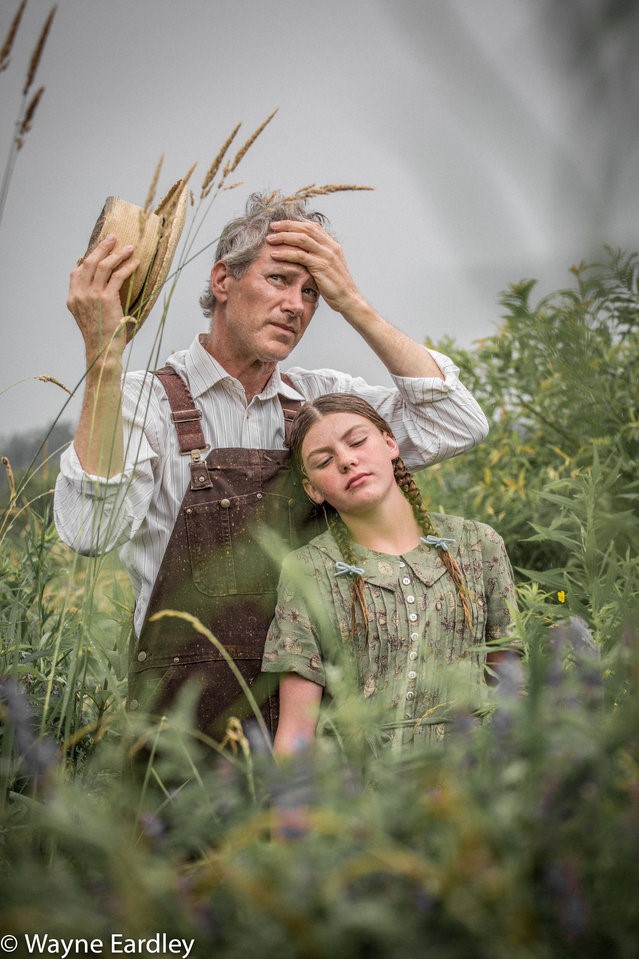

Kevin Bundy and Asha Hall-Smith, photo by Wayne Eardley

Kevin Bundy and Asha Hall-Smith, photo by Wayne Eardley

'Carmel' staged at Winslow Farm; Life in rural Canada told in Fourth Line Theatre production

Will McGuirk August 11, 2019

By Joe Szekeres

I am sorry to have missed ‘Doctor Barnardo’s Children’ and its original production at 4th Line several years ago as word of mouth rang exceptional in performance delivery and history lesson of Peterborough. I was told it wasn’t necessary to have seen the first and second plays to appreciate future stories.

After hearing playwrights Ian McLachlan and Robert Winslow deliver an informative talk back session in the late afternoon, I still think seeing the first two productions (with the fourth one on its way) would have given me a further understanding and appreciation for and of the background of ‘Carmel’, the third instalment of the Barnardo play series. Chalk one up for this newbie to keep his eyes pealed to 4th Line’s future social media links.

Nevertheless, my friend Carolyn and I sallied forth amid some dark clouds that did pass over us thankfully and mercifully with no rain.

Joe-Inside heading.png

The year is 1937 and it is the Great Depression. ‘Carmel’ takes place on and near Walter (Kevin Bundy) and Abigail (Kristina Nicoll) White’s family farm on Carmel Line, Cavan Township. Other settings include Peterborough, Hampton, and Millbrook. The play opens with a celebration of the fifteenth wedding anniversary of Walter and Abigail.

We also meet the central narrator of the story, Walter and Abigail’s daughter, Ruth (Asha Hall-Smith) and her chance encounter in meeting drifters Thomas Fortune (Danny Waugh) and Billy Fiddler (Jonathan Shatzky). Both Thomas and Billy are looking to find work before they head overseas to Spain, so they hope they can be hired on at the White’s farm which they are. We are also introduced to Delbert Gray (JD Nicholsen), local bank manager who puts a great deal of pressure on the Whites to pay their monthly mortgage.

I love the performance space here in this rural setting of the Winslow Farm. An angled riser sits centre stage with the suggestion of the framework of the White house and its front door. It looks as if it is probably the kitchen which becomes the gathering area. A table and chairs can be found upstage readied to be placed when necessary. Far stage left are two live hens next to the barn. It appears there are three locked signs on the upstairs rail that will be revealed. Three beautiful live horses are also used during the performance. I’m always leery of the use of live animals as we never know they will behave in front of an audience. One was a bit feisty for a few seconds, but the actors had the horse under control.

Some of the performances seemed a tad uneven at this opening night. Asha Hall-Smith seemed a bit hesitant for the first few minutes of the opening of the play when she addresses the audience directly. She has a lovely speaking voice and soon found her stride with her enthusiasm and sweet character development of Ruth. I bought the natural husband and wife relationship of Kevin Bundy and Kristina Nicoll especially when they had to excuse themselves from their anniversary party to argue quietly they cannot afford Walter’s purchase of two horses from Delbert Gray. Walter and Abigail’s relationship is dramatically and continually fraught with upcoming intensities and trials of human nature. I’m trying not to spoil the plot but pay close attention to Mr. Bundy’s two silent moments of heightened dramatic intensity – once occurs in the first act where one of the drifters recognizes Walter from the boat ride from England many years ago. The other occurs with one of the horses in the second act.

JD Nicholsen’s Delbert Gray nicely retains that bully edge of smugness that made me want to go up there and punch him right in the face for so many reasons - one is the way in which he tries to manipulate Abigail for the mortgage on the farm to be paid on time. As the two drifters who enter the lives of the White family, Danny Waugh and Jonathan Shatzky adroitly capture that mysterious element of those ‘bums’ who appear suddenly out of nowhere yet somehow leave an indelible impression on the lives of those whom they encounter for however long they stay. The use and incorporation of music becomes an effective vantage point which leads either to further character development or a quick byte of historical context. (I loved the humour and irony in ‘Song of the Bum’). Thanks, Justin Hiscox and to Melissa Payne for the fiddle accompaniment.

Ian McLachlan and Robert Winslow’s script sheds important historical elements of this area that I have always found fascinating and wish that residents would want to learn more about the history of the town or city in which they live. One thing that always puzzles me about original historical scripts are those moments the audience finds funny when a certain town is mentioned they know – is it a laugh because people have made a connection, an aha moment? As Director, Mr. Winslow had a strong handle on the subject material and kept it moving at a stable and steady pace for the most part. Perhaps it might have been opening night nerves, but some of the actors appear simply to recite the dialogue and not recognize the importance in the conveying of this information. Hopefully this will be rectified as performances continue.

In his Director’s Notes, Mr. Winslow speaks about the heartbeat of ‘Carmel’. It doesn’t have to be an Ottawa based Prime Minister or a Toronto based premier who speaks about the Canadian people from inside an office. Mr. Winslow thanks area farmer/market gardener Harold Lunn who epitomized the heartbeat of a community, the one who gets his hands dirty in tilling the soil and making progress in his community.

Pay a visit to the Winslow Farm and to 4th Line Theatre to feel the heartbeat of a rural community and a troupe of solid actors who tell a good story.

‘Carmel’ runs to August 31 at The Winslow Farm, 779 Zion Line, in Millbrook, Ontario. For tickets, visit the website.

Million Dollar Quartet.jpg

REVIEW: MILLION DOLLAR QUARTET A Port Hope Festival Theatre Production

Will McGuirk August 10, 2019

by Joe Szekeres

I couldn’t help but remember the adage “Good things come to those who wait” after seeing the opening night performance of ‘Million Dollar Quartet’ (from the book by Floyd Mutrux and Colin Escott) now onstage at Port Hope’s Capitol Theatre.

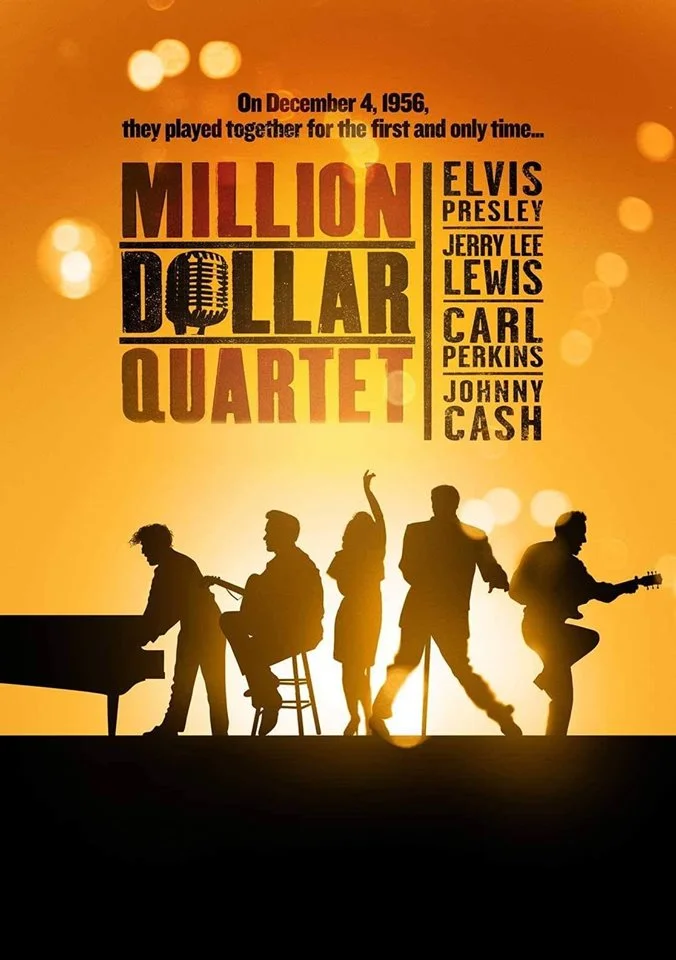
The premise is rather interesting. On December 4, 1956, an extraordinary jam session took place at Sun Records in Memphis with young hopeful musicians Johnny Cash (Matthew Fletcher), Jerry Lee Lewis (Jackson Seib), Carl Perkins (Isaac Bell) and Elvis Presley (Tyler Burton). We are introduced to the story through the narrator and manager of Sun Records, Sam Phillips (Daniel Abrahamson). Along for the ride is Presley’s girlfriend at the time, Dyanne (Olivia Sinclair-Brisbane).

Anna Treusch’s set design of the Sun Records Recording studio fills and fits the Capitol Stage nicely. We learn the studio was formerly an auto body repair shop. There is a piano angled stage right. From what I could tell far right, I saw a garbage can and box which could possibly be outside at the back of the studio. Three microphones from the period can be found lined up along centre stage. Along the back of the stage is the recording booth where manager Phillips stands as the musicians are recording. There is a definite 50s look and feel of the set especially in hearing the fine selection of preshow music from the era. In front of the recording booth we find two instrumentalists who are part of the production – brother Jay on bass guitar (Duncan Stan) and Fluke on the drums (Justin Han).

These musicians are wonderfully solid vocalists throughout the entire production. There were a few issues (not many) with sound balance that, I’m sure, will be rectified immediately so the lyrics to each song can be heard. Many audience members around me were humming along quietly or keeping their foot tapping or nodding of their heads.

But this is where I say, “Good things came to us in waiting for the second act.” Yes, there were some top-notch musical moments in the first act, but the script and not the performers seems to really lack focus before the interval. The plot unravels as we are introduced to the celebrations and secrets of these up and coming rock and country artists, but I wasn’t feeling any connection to the story and script at all. My guest also agreed that something was missing for her as well.

However, hang on to your hats, kids, as I don’t think this bit of information is spoiling anything for future audiences. All I can say is WOW when the second act began right to the conclusion of the production. There was so much joy in song and performance moments radiating from the Capitol stage. Director Susan Ferley and Music Director Daniel Abrahamson are to be congratulated for that surprise element (and I promise not to give spoiler alerts here as well). Ms. Ferley and Mr. Abrahamson’s direction in performance and music highlighted they wanted this opening night audience (and future audiences, of course) to have a good time.

And my guest and I did have a good time once we saw how the second act just took off and soared in performance and song. Daniel Abrahamson also plays the opening narrator, Sun Records recording producer/impresario Sam Phillips. Mr. Abrahamson’s Phillips is all business with just the right touch of bravado and smarminess as he recounts to us how he discovered each lad in the hopes of getting him to renew his contract with Sun Records. As the young country artist Johnny Cash, Matthew Fletcher captured Mr. Cash’s vocal range specially in the low bass/baritone range for ‘I Walk the Line’ in the second act. Mr. Fletcher’s costume of the black vest/pants and white shirt just rang Johnny Cash. There is an effective dramatic moment captured beautifully between Messrs. Fletcher and Abrahamson in the second act that I don’t want to spoil here, but it rang believable and natural to me.

Tyler Burton incorporates Elvis’s hip and leg swivel expertly in many of the songs he sings. From my seat, I could see that Mr. Burton was also trying to incorporate that pouty lip look that made young teen girls swoon and go wild. Olivia Sinclair-Brisbane is a fine looking Dyanne, and her version of ‘I Hear You Knocking’ is sexy and provocative. As Carl Perkins, Isaac Bell encapsulates that element of uncertainty in wondering if he is going to be able to continue in the music industry. There is also a scrappy side to Perkins in meeting the young Jerry Lee Lewis for the first time, and their intense confrontations in both acts never venture over the top.

Jackson Seib comes dangerously close to stealing the show as the energetically, vibrant Jerry Lee Lewis, but thankfully he never allows his performance to venture over the top or to upstage his fellow actors. Yes, there are highly effective dramatic moments in ‘standing his ground’ in his confrontations with Carl Perkins, but Mr. Seib’s high spirited and athletic workout at the piano is marvellous to watch and to hear. I couldn’t help but smile each time the focus was on him.

The concert at the end of this nearly two-hour production (without an interval) is the ice cream dessert for a summer evening. Truly thrilling and magical way to conclude an afternoon or evening of solid entertainment. It’s worth the drive to Port Hope.

‘Million Dollar Quartet’ continues to September 1 at The Capitol Theatre, 20 Queen Street, Port Hope, Ontario. For tickets please visit their website.

Earnest_01_TOTR.jpg

Theatre on the Ridge Has an Earnest Hit - review by Paul Love

Will McGuirk August 6, 2019

By Paul Love
Guest Reviewer

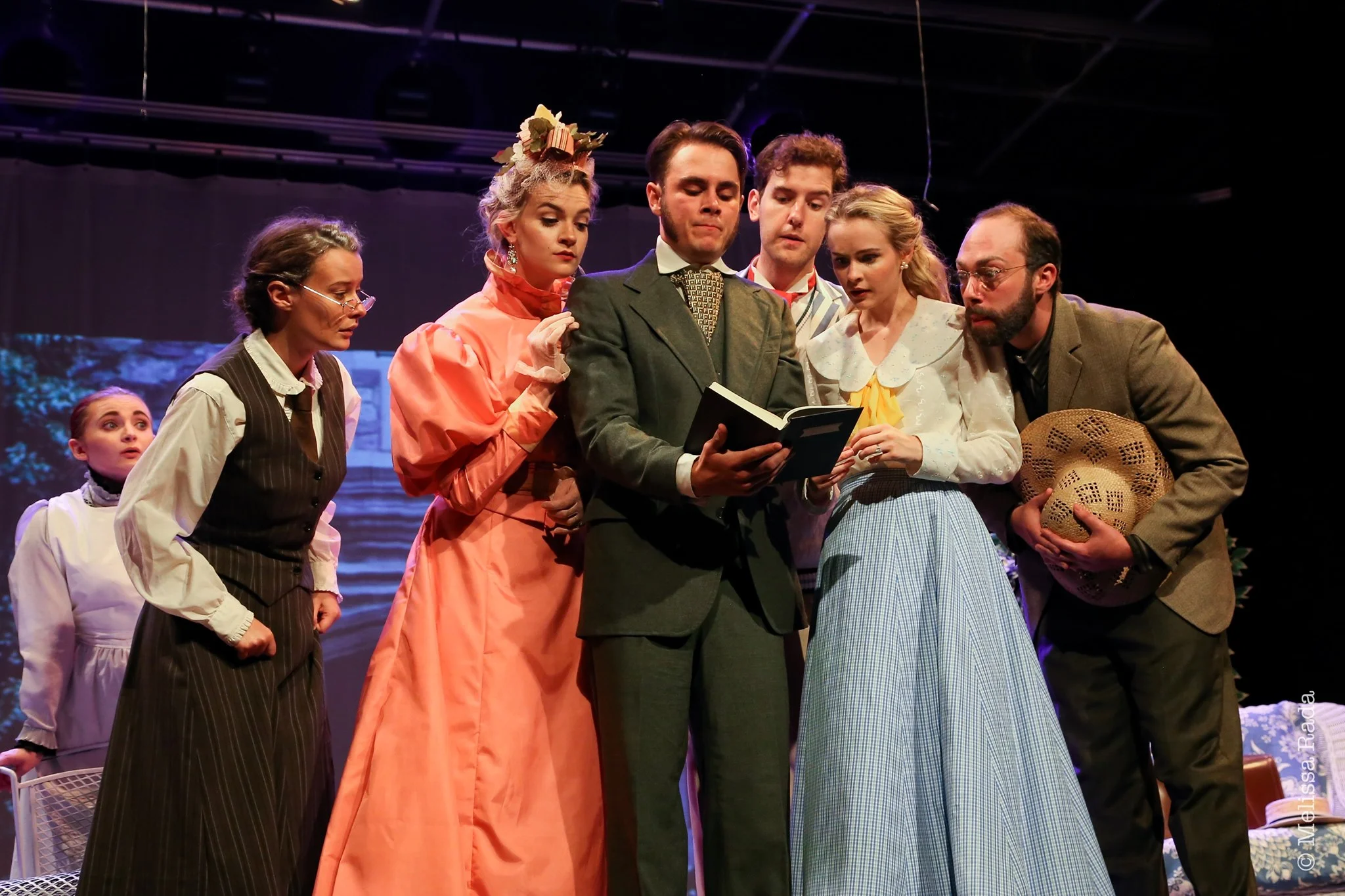
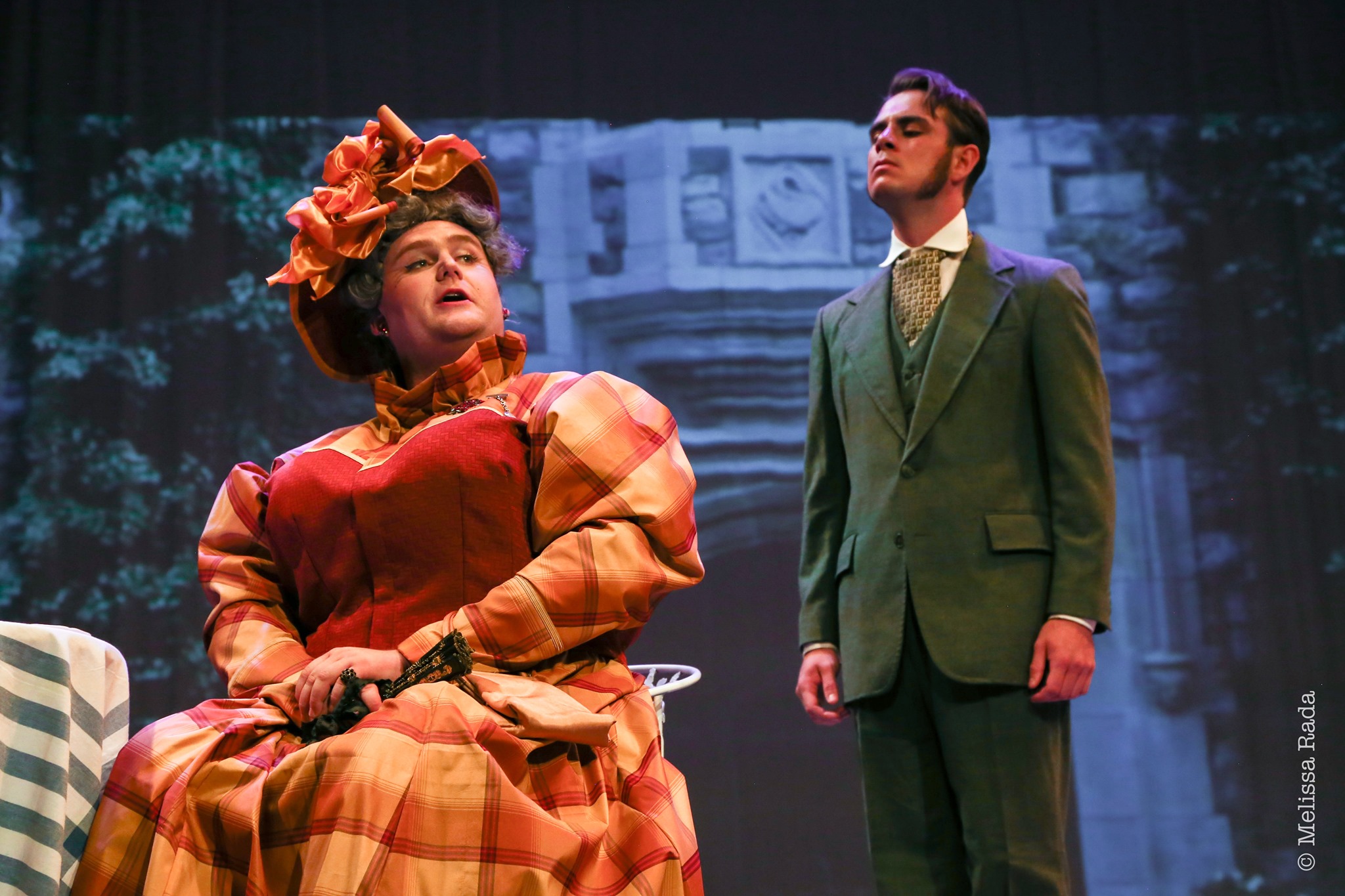
For those not familiar with it, The Importance of Being Earnest is a comedy that is essentially about two friends, Algernon (Barry McCluskey) and Jack (Jack Copland), who have created fictitious people in their lives to avoid bothersome social obligations. Jack is in love with Gwendolyn (Manon Ens-Lapointe), and Algernon is in love with Cecily (Lexi MacRae). Shenanigans and sneaky behaviour lead to mistaken identity, confusion, and an abundance of hilarity involving cucumber sandwiches, handbags, and German language lessons. Oscar Wilde wrote Earnest in the late 19th century as a means of poking fun at the unimaginative and indulgent nature of the aristocracy.

Theatre on the Ridge’s annual summer festival tends to focus, for the most part, on intimate, character-driven productions (think Joan McLeod’s The Valley or Graham, Tomlinson, and Vlaskalic’s The Drowning Girls), which allows the company to use appropriately minimalist sets that can accommodate the impermanence needed to stage several productions over the space of two months. So it was with some curiosity and, admittedly, trepidation that I sat in the darkened Town Hall 1873, awaiting to see how this company would tackle Oscar Wilde’s extravagant satirization of the aristocracy. My trepidation was immediately put to rest. Instead of a traditional flats-and-frames set, Algernon’s flat and Jack’s country home and garden are presented with images projected on a scrim — simple and effective. Add to it Carey Nicholson‘s great set pieces and Judith Sanders and Sheila Nicholson‘s luxurious costumes, and all the extravagance needed is there.

Earnest_02_TOTR.jpg

This is not a play, however, that can get by on lovely costumes and convincing sets alone. Wilde, like Shakespeare and Shaw, wrote dialogue that requires its actors to not simply deliver it properly — they must deeply understand it, as well. This cast does. And they are all up to the task of delivering that dialogue with spot-on English accents and a wonderful cadence that keeps the play rolling merrily along. Jack Copland gives a powerhouse performance as Jack. Whether he’s exasperated by Algernon’s behaviour, struggling against Lady Bracknell’s forbidding attitude, professing his love for Gwendolyn, or attempting to fib his way out of a sticky situation, Mr. Copland does so with full commitment, presenting us an everyman who we can root for but also enjoy laughing at. Barry McCluskey portrays Algernon with a perfect devil-may-care attitude and playful disposition. Little moments like placing a tiny piece of sandwich on the couch to tie his shoes and then plucking that last morsel up and eating it are great little bits that show us Mr. McCluskey’s full embodiment of the character. He and Mr. Copland take their respective characters to the next level with their excellent chemistry. Manon Ens-Lapointe plays Gwendolyn with a determined, no-nonsense attitude. She has great chemistry with Lexi MacRae, whose young, naïve Cecily is played with an excitable vapidity which is heightened (to hilarious effect) when interacting with Ms. Ens-Lapointe’s Gwendolyn. In the usual cross-gender casting of Lady Bracknell, Daniel McCormack steals scene after scene with his marvellously over-the-top performance of a character who is the very embodiment of the aristocratic ideal — a powerful, demanding presence who stands on formality to a fault, judging everyone in her presence, and making her feelings about everything abundantly clear, whether through harsh words or one of Mr. McCormack’s perfectly placed flicks of Lady Bracknell’s hand fan. A solid, laugh-out-loud performance. The rest of the cast all add greatly to the non-stop lively nature of the production. The work done by Hair and Makeup Artist Debbie Begg to age Frances Loiselle as Miss Prism and Duncan Gibson-Lockhart as Dr. Chasuble was quite convincing, which made me wonder why not very much was done to age Ian Williams in an otherwise convincing performance as the wonderfully dry butler, Lane.

Co-directors Annette Stokes and Michael Serres did a great job of matching the movement of the play to its fast-paced dialogue. They also make full use of the stage, and even have characters entering and exiting via the centre aisle, which works well.

Put simply, The Importance of Being Earnest is a great play. In the hands of the talented Theatre on the Ridge cast and crew, it is a must-see production.

The show is being staged at the historic Town Hall 1873 in Port Perry, 302 Queen St. Remaining performances are August 7 and 9 at 7:30 pm, and August 10 at 2 pm. For more information, visit the website.
Lexi McRae and Duncan Gibson-Lockhart, photo by Barry McCluskey

Lexi McRae and Duncan Gibson-Lockhart, photo by Barry McCluskey

Theatre on the Ridge's 'The Valley' explores mental health by way of healing circles

Will McGuirk July 26, 2019

By Dave Rabjohn
Guest Reviewer

The issue of mental health is appropriately working towards a more prominent position in social awareness. Depression especially affects our health community, schools, businesses, policing and family life. Theatre on the Ridge from Port Perry boldly explores this complex issue with its production of ‘The Valley’ in a recent preview performance. Written by award winning playwright from B.C., Joan MacLeod, the play first premiered in Alberta in 2013. Directed and designed by the co-founder of Theatre on the Ridge, Carey Nicholson confidently takes her audience into the darkness of depression through the interactions of two families and the backdrop of First Nations healing models.

The models are predominantly based on circles. A healing circle combines the elements of four directions, four stages of life, and the elements of earth, air, and water. Talking circles combine the most basic elements of democracy and the emphasis on strong communication. Carey Nicholson, astutely doubling as director and set designer, employs these circles into the set, lighting and blocking of the production. A sharp pool of light dominates the minimalist set at centre stage. It acts as the circumference of communication as the actors move counter clockwise around its border observing each other – even the curtain call is circular. The constant presence of a baby stroller begins the circle of life and moves through different stages represented by the different characters.

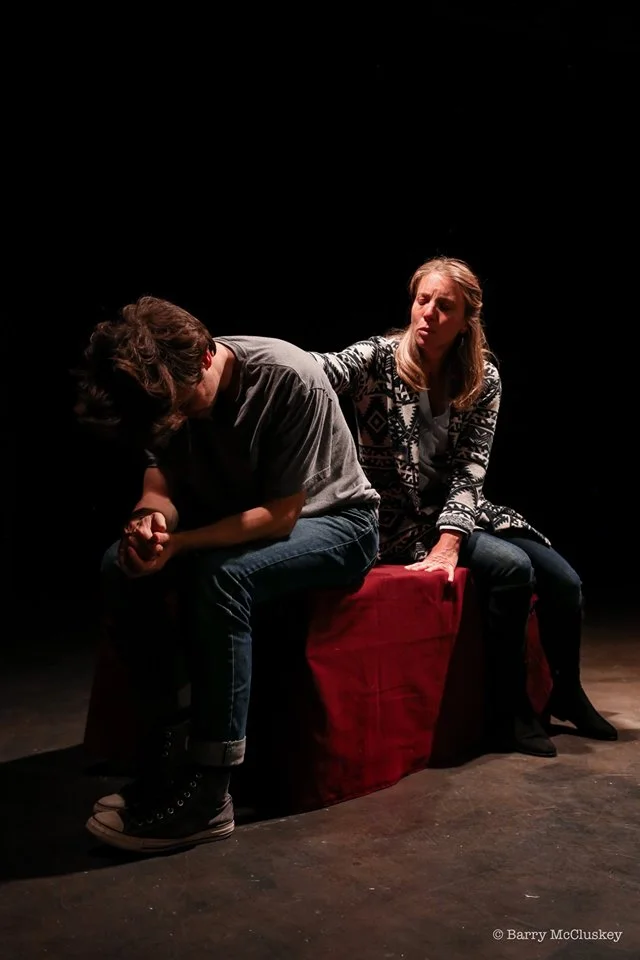
Michael Williamson and Amanda Jane Smith, photo by Barry McCluskey

Michael Williamson and Amanda Jane Smith, photo by Barry McCluskey

These characters represent two families affected by mental health and their stories intersect building ever more drama and focus on the issues of “the valley” of depression. Connor is a young man lost in the confusion of post secondary education and the rigours of finding oneself. His ever-patient single mother similarly is lost as she searches for answers while she creeps towards the edges of emotional trauma. Dan is the police officer caught up in the confrontation with an agitated Connor who is seemingly threatening a public space. Dan must deal with his actions in the context of his young family, especially with his newly rehabilitated wife who is a recent mother. This, again, is a source of difficult emotional valleys.

Michael Williamson, playing Connor, has a robust presence on stage. His facial expressions are distinctive, demonstrating forced calmness, anxiety, confusion and fierce anger. His voice ranges from soft to explosive featuring different stages of depression. Sometimes his voice is too soft for the audience, but the contrast is important. Amanda Jane Smith plays the pragmatic mother, Sharon, whose emotional control is usually just a moment away from exploding. Her fine acting is best highlighted as she impossibly absorbs jarring blows from the son she loves.

The circular theme continues with the interaction of the two families. Duncan Gibson-Lockhart plays the police officer clad in ominous body armour. His stage presence is bold and confident, but with the pressures of the day behind him, the pressures of wife and child are humbling. He, like Sharon, sometimes loses control as the “valley” issues wash over all the characters. Lexi MacRae gives a distinctive performance as the fragile young mother trying to stave off the darkness of addiction. Ms. MacRae is adept at plunging into the depths of suicidal behaviour, but also demonstrates sound leadership as she confronts both Sharon and her husband.

Victor Svenningson is responsible for a resonating soundscape that offers strong, but subtle highlights to the action. From the urban cacophony of an airport to the brutal drumming during confrontation, the sound augments emotion. Stephen Rensink’s haunting flute embraces the audience and reminds us of the First Nations themes. Lighting by Colin Hughes was inventive as warm light was used for character interaction and a more cool light was reserved for monologues.

The staging decision to leave all actors onstage at all times was purposeful. The characters’ lives and difficulties were intertwined and they revolved around each other quietly observing even when not in the spotlight. The themes of connecting and supporting were prominent near the end. Sharon and Dan begin with making a sandwich – baby steps. Clearly mental health difficulties do not always have happy endings, but Joan MacLeod uses her play to point to hope. Dan’s greatest fear is when he must ask “questions you don’t want the answer to.” This production raises difficult questions and issues with distinction and grace.

The Valley runs through August 3, 2019. For more information about the company, visit their website.

← NewerOlder →
Screen Shot 2026-02-18 at 9.55.53 PM.png
Screenshot 2023-06-10 at 10.18.16 PM.jpg
TownBrewery.jpeg
SecondWedge.png
Avanti_logo.png
11666057_10154039986198378_4496427229864055720_n.jpg