By Dave Rabjohn
Guest Reviewer
The issue of mental health is appropriately working towards a more prominent position in social awareness. Depression especially affects our health community, schools, businesses, policing and family life. Theatre on the Ridge from Port Perry boldly explores this complex issue with its production of ‘The Valley’ in a recent preview performance. Written by award winning playwright from B.C., Joan MacLeod, the play first premiered in Alberta in 2013. Directed and designed by the co-founder of Theatre on the Ridge, Carey Nicholson confidently takes her audience into the darkness of depression through the interactions of two families and the backdrop of First Nations healing models.
The models are predominantly based on circles. A healing circle combines the elements of four directions, four stages of life, and the elements of earth, air, and water. Talking circles combine the most basic elements of democracy and the emphasis on strong communication. Carey Nicholson, astutely doubling as director and set designer, employs these circles into the set, lighting and blocking of the production. A sharp pool of light dominates the minimalist set at centre stage. It acts as the circumference of communication as the actors move counter clockwise around its border observing each other – even the curtain call is circular. The constant presence of a baby stroller begins the circle of life and moves through different stages represented by the different characters.
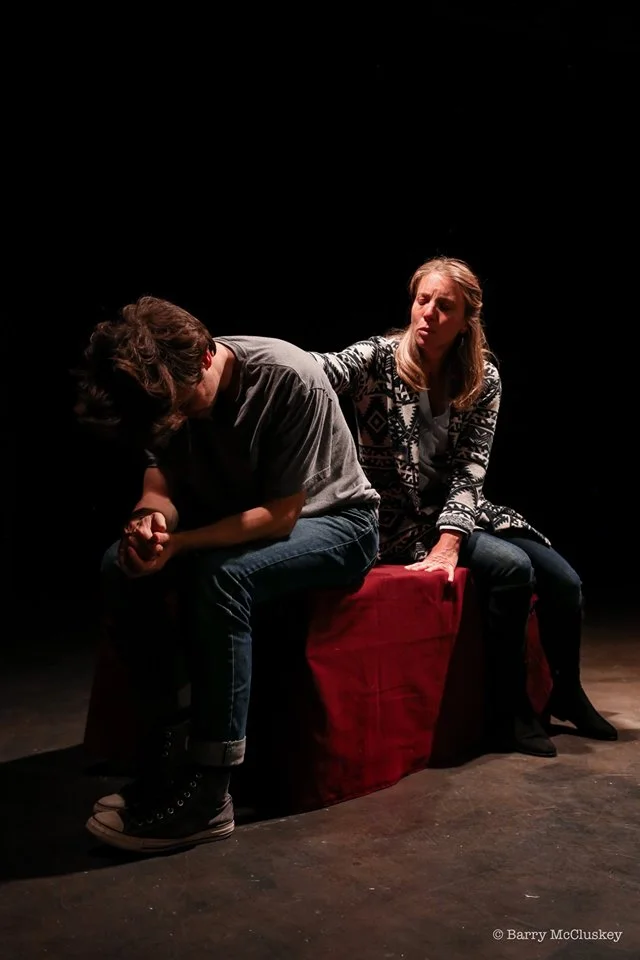
Michael Williamson and Amanda Jane Smith, photo by Barry McCluskey
These characters represent two families affected by mental health and their stories intersect building ever more drama and focus on the issues of “the valley” of depression. Connor is a young man lost in the confusion of post secondary education and the rigours of finding oneself. His ever-patient single mother similarly is lost as she searches for answers while she creeps towards the edges of emotional trauma. Dan is the police officer caught up in the confrontation with an agitated Connor who is seemingly threatening a public space. Dan must deal with his actions in the context of his young family, especially with his newly rehabilitated wife who is a recent mother. This, again, is a source of difficult emotional valleys.
Michael Williamson, playing Connor, has a robust presence on stage. His facial expressions are distinctive, demonstrating forced calmness, anxiety, confusion and fierce anger. His voice ranges from soft to explosive featuring different stages of depression. Sometimes his voice is too soft for the audience, but the contrast is important. Amanda Jane Smith plays the pragmatic mother, Sharon, whose emotional control is usually just a moment away from exploding. Her fine acting is best highlighted as she impossibly absorbs jarring blows from the son she loves.
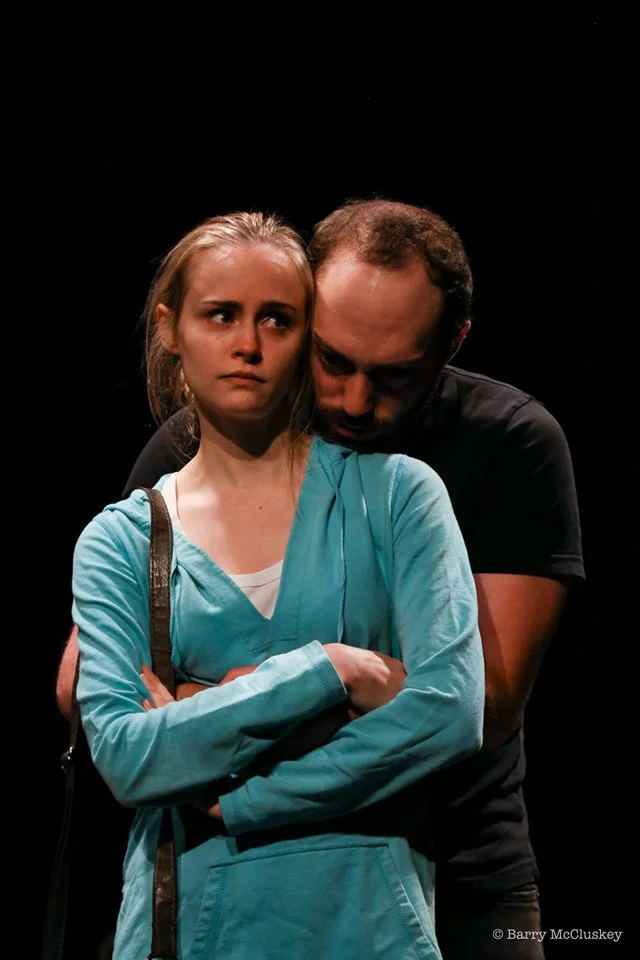
The circular theme continues with the interaction of the two families. Duncan Gibson-Lockhart plays the police officer clad in ominous body armour. His stage presence is bold and confident, but with the pressures of the day behind him, the pressures of wife and child are humbling. He, like Sharon, sometimes loses control as the “valley” issues wash over all the characters. Lexi MacRae gives a distinctive performance as the fragile young mother trying to stave off the darkness of addiction. Ms. MacRae is adept at plunging into the depths of suicidal behaviour, but also demonstrates sound leadership as she confronts both Sharon and her husband.
Victor Svenningson is responsible for a resonating soundscape that offers strong, but subtle highlights to the action. From the urban cacophony of an airport to the brutal drumming during confrontation, the sound augments emotion. Stephen Rensink’s haunting flute embraces the audience and reminds us of the First Nations themes. Lighting by Colin Hughes was inventive as warm light was used for character interaction and a more cool light was reserved for monologues.
The staging decision to leave all actors onstage at all times was purposeful. The characters’ lives and difficulties were intertwined and they revolved around each other quietly observing even when not in the spotlight. The themes of connecting and supporting were prominent near the end. Sharon and Dan begin with making a sandwich – baby steps. Clearly mental health difficulties do not always have happy endings, but Joan MacLeod uses her play to point to hope. Dan’s greatest fear is when he must ask “questions you don’t want the answer to.” This production raises difficult questions and issues with distinction and grace.
The Valley runs through August 3, 2019. For more information about the company, visit their website.