• SLOW -
  • SLOW -
  • SLOW -
  • NEWS -
  • SLOW -
  • SLOW -
  • SLOW -
  • Photos by Mikki Simeunovich -
Menu

SLOWCITY.CA

  • SLOW -
  • SLOW -
  • SLOW -
  • NEWS -
  • SLOW -
  • SLOW -
  • SLOW -
  • Photos by Mikki Simeunovich -
×
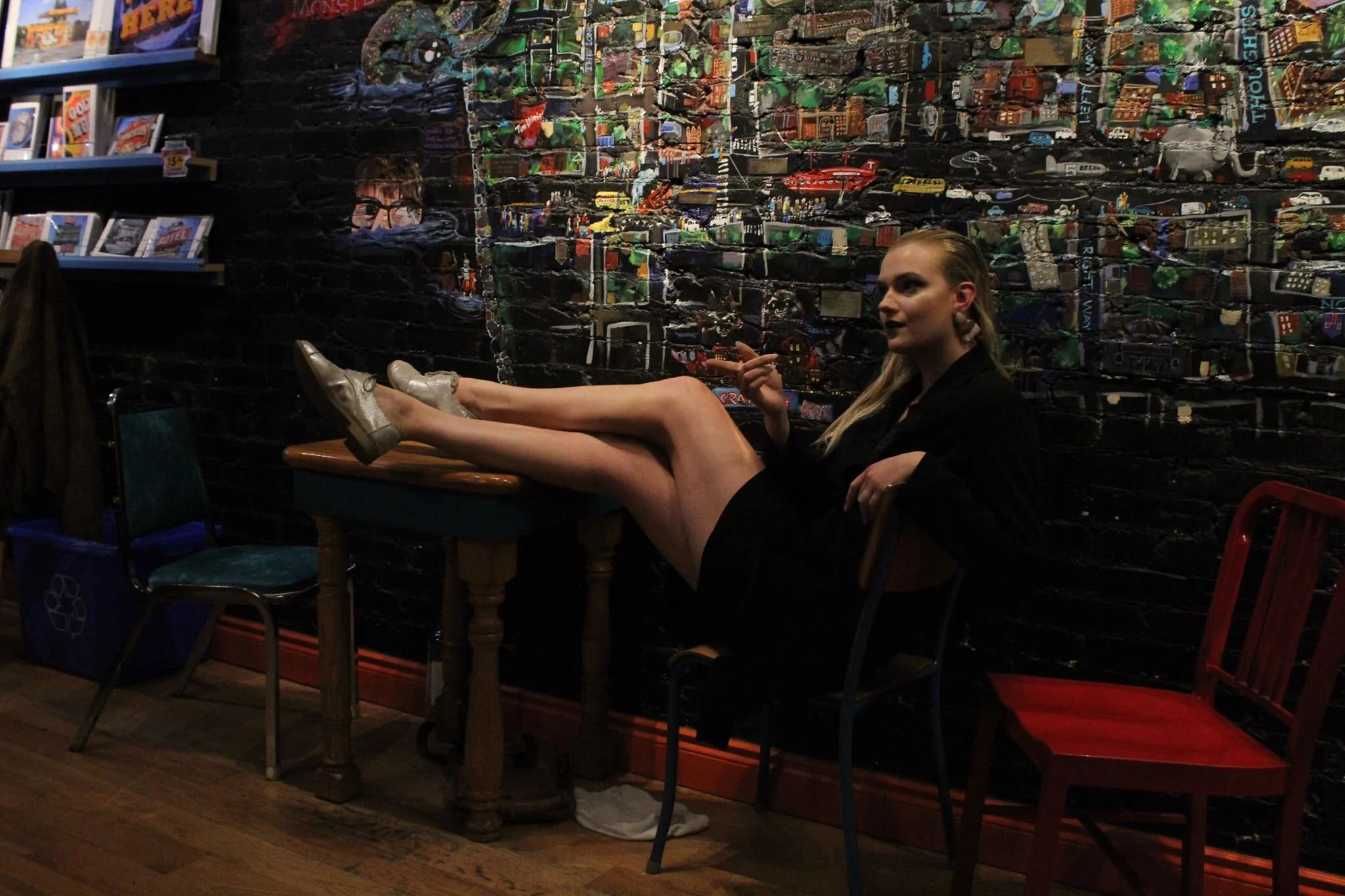
Manon Ens-Lapointe as Petrushka in ‘The Bartender’, photo by Michael Williamson

Manon Ens-Lapointe as Petrushka in ‘The Bartender’, photo by Michael Williamson

Set 'em up Joe reviews 'The Bartender' at Malcontent Theatre

Will McGuirk September 15, 2019

By Joe Szekeres

I gotta see more indie Toronto theatre, and I encourage playgoers to do the same. Just a point of clarification - I believe the Toronto indie theatre scene includes the Fringe in July, Summerworks in August plus other opportunities to see low budget/no budget theatrical presentations.

The reason I stopped attending? Several summers ago, I saw some July Fringe productions that were plain awful. Some plots were absolute hell, some performances were dreadful, some so wordy I’m sure I had fallen asleep. Was it worth my time and effort to come into the city to see and pay for awful theatre? I didn’t think it was and just didn’t bother going anymore.

And then it dawned on me tonight on the train ride home after seeing Malcontent Theatre Company’s production of ‘The Bartender’ written and directed by Duncan Gibson-Lockhart. Indie theatre introduces up and coming talent that we need to get out and support because these are the very individuals who will grace our future stages as they continue to grow and learn more of the craft. Yes, there will probably be some stinkers, and yes there will probably be some bombs, but performers must get out and perform in front of audience as much as possible.

One may get lucky and see a solid production. One may be fortunate to see a good production with some areas that still need work.

In July, I had the opportunity to hear a staged reading of ‘The Bartender’ in Port Perry. I will be honest and say that I didn’t care for its’ plot as I could not make any personal connection whatsoever. When I heard it would be staged in Toronto in September (in a bar, nonetheless), I had given some thought again and made the choice to go and see it again with a fresh perspective.
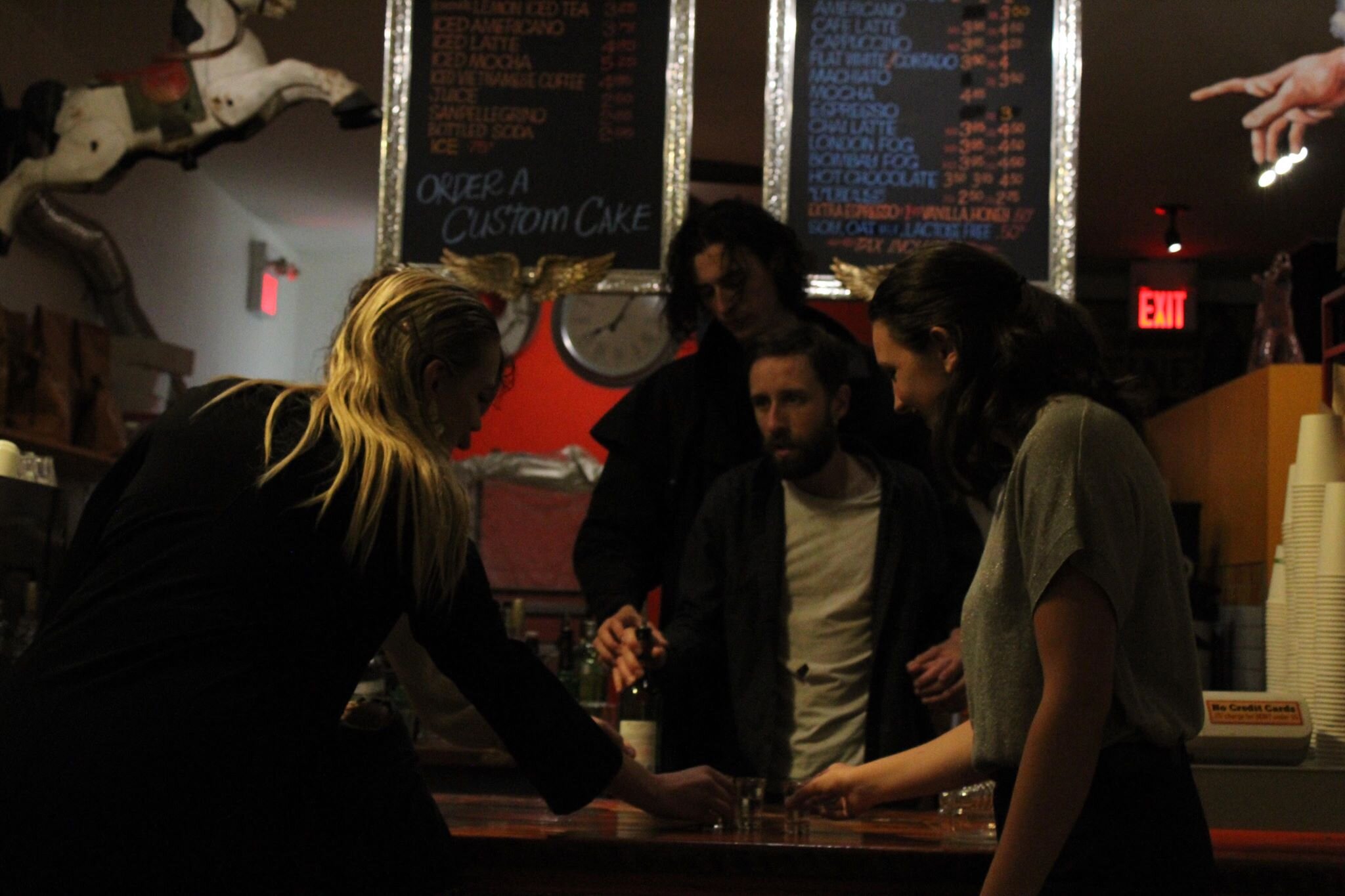
Photo by Michael Williamson

Photo by Michael Williamson

And I am happy to write that I have had a change of heart about ‘The Bartender’. Mind you, the script is still not up to a polished version for me, but seeing it staged with movement and developed with varied characterizations did hold my interest for ninety-minutes sans interval. It is a good production for its innovative creativity from Director Gibson-Lockhart (who makes a cameo appearance, but I’m not going to tell you where. Mea culpa for the spoiler). Some elements still require another look.

We enter Toronto’s Flying Pony café in the Gerrard East/Coxwell area. The café looks to be the local hangout for the locals for its’ kitschy appearance. There are no stage lights for the natural lighting through the windows. Actors make their appearances through the door to the café while some never leave the stage. Michael Williamson’s original music composition underscores well the time forgotten motif that strings throughout the play. Frances Loiselle’s choreography near the conclusion of the production is feverish at times, stylized at times, playful at times and awkward at times. But her work fits nicely into the theme of the play.

Gibson-Lockhart writes in his Director’s Note, “In a modern twist on a classic myth, Demeter (Victoria Zubick), the Greek Goddess of agriculture has turned the world barren after her child, a willow tree, was unwittingly cut down in a barley field. All that remains in a world turned to sand is the Flying Pony, a bartender (Jonas Trottier), Jerry (I think, as I couldn’t hear the name clearly from my seat at the back of the café). There is a same sex couple, Sam (Lily Scriven) and Lou (Catherine Teichmann), with all the problems that can arise in a world with nothing in it. It’s also been raining, something which has not happened since.” It has been a very long time since there have been other patrons of this pub, but on this day two beautifully tempting women, Petrushka (Manon Ens-Lapointe) and Petia (Natalie Scagnetto) enter the bar and play havoc with the relationship between Sam and Lou. Finally, The Crow (Nick Eddie) enters and changes the tone and direction of the play.

The first highlight of the production at this performance was the strong ensemble work from this seven-member cast. Although each character brings a deliberate form of restlessness about his or her life, each always appeared to be in the moment. If the action was focused elsewhere, the other cast members listened attentively and did not drop the persona he or she played. For example, Ms. Zubick subtly did not upstage any of the performers in her role as Demeter. She responded when necessary through her eyes and her nervous tic which spoke volumes about her characterization.

A few minutes before the production began, Jonas Trottier quietly took his spot behind the bar and immediately began to assume his characterization quietly while opening remarks were given. Nice work there as he made me want to pay attention to see what was possibly bothering him. Nick Eddie’s The Crow was the second highlight of the production. His lanky stature and height, while dressed in black, made me pay attention to every single word he spoke along with the relationships he developed with each of the characters. From the fact he is dressed in black, one can almost guess what his character in this world represents.

Where the production still needs further editing is the wordy exposition in some of the dialogue. Too much about life is thrown at us – from relationships gone sour, to positive same sex relationships, to friendships, to faith, to philosophy. It’s all thrown upon us that we don’t have a chance to think about what is being said and the implications.

‘The Bartender’ is still a work in progress, but it’s worth checking out. Performances run September 13, 14, 18, 19, 20 and 21 at 7:00 pm at The Flying Pony, 1481 Gerrard Street East, Toronto. To learn more about the company, check out Malcontent Theatre Company on their website.

Kerrie Lamb, Alex Saul, Mickey Brown, Holm Bradwell and Davis Okey. Directed by Maureen Lukie (centre). Photo credit: Thomas Kowal

Kerrie Lamb, Alex Saul, Mickey Brown, Holm Bradwell and Davis Okey. Directed by Maureen Lukie (centre). Photo credit: Thomas Kowal

Take a trip down the 'Rabbit Hole' with Scarborough Players

Will McGuirk September 9, 2019

By Dave Rabjohn
Guest Reviewer

Rabbit Hole, by American writer David Lindsay-Abaire, is the story of acute grief and its impact on relationships, families, and individual psyches. Choices people make on their road through grief are displayed in raw terms in this award-winning play that is now presented at Theatre Scarborough by the Scarborough Players. A number of strong performances elevate this production although some aspects seem flat and lacking in energy and pace.

We open with Becca who is folding a basket of children’s clothes while bantering with her sister Izzy. The play slowly helps us realize that Becca’s four year old son has died in an accident involving his chasing a dog into the street and the unfortunate timing of a passing car. It has been a number of months and Becca and her husband Howie are managing grief in very different ways. Input from the mercurial Izzy and the well meaning but meddlesome mother, Nat, provide complication as well as various insights. The young, guilt ridden driver of the car gives us further insight into grief analysis as his efforts at connecting with the family produce awkward reactions. The audience is challenged with various truths about grieving, but the ending seems rather empty.

The opening scene feels flat as there is almost no passion between the sisters. Lines are delivered automatically and little tension is delivered even with the entrance of Howie. Understanding that emotion and pace need to build incrementally from a calmer beginning, this beginning was almost flat-line. Some lines were difficult to hear as actors walked away from the audience. Energy did pick up as Becca (played by Alex Saul) and Howie (played by Holm Bradwell) launch into their first main argument giving us a window into Becca’ distancing from her son and Howie’s need to hold on.

Alex Saul’s performance was the backbone of this production. All of her skills were slowly presented as the play moved forward. She creates these hollow, angry, searching eyes that rivet both her husband and the audience. Ms. Saul knows how to enunciate without a word. Another highlight is her ability to paste on a smile that no one is buying – even herself. The tension of the meeting with Jason finally breaks with the classic contrast between Jason’s bright narrative about prom and Becca’s devolving into tears. Her breakdown is thoroughly genuine – both aching and subtle at once. Director Maureen Lukie makes some fine decisions as she allows Ms. Saul to lead the cast – an example is blocking in the second act where Becca paces around the kitchen describing the grocery store scene while the other characters are still.

Holm Bradwell, as Howie, demonstrates subtlety as the tortured father who presents us with a mask. The first cracks develop as we observe him obsessed with video tapes – as he watches his son we start to see his breathing increase and his chest slowly moving up and down – a great, quiet performance. We also observe Mr. Bradwell’s ability to explode as he chases Jason away even though he knows his behaviour is inappropriate. Kerry Lamb as the impulsive sister demonstrates physical humour and timing that parallels her chaotic life. Her legs and arms are always flopping and busy as she crawls awkwardly onto furniture (much like a four year old?)

Mickey Brown’s strong performance as the mother Nat is most demonstrated in her second act dialogue with Becca as they clean out the bedroom. She seems to make Ms. Saul’s acting more animated. Nat’s character is charged with most of the comic relief in the play but some comic opportunities were not fully realized. Davis Okey, playing the young awkward Jason was at times too awkward and nervous as some lines speeded up and became lost. Mr. Okey had a good grasp of situations that required meaningful pauses.

Mentioned earlier were some pacing problems. An example would be Nat’s call for more wine which took forever to get fulfilled. The action almost halted until she was satisfied. This was balanced by some strong pacing in the scenes with Jason and Howie and in the confrontation between Izzy and Howie.

The set design by Arash Eshghpour was sharp and serviceable. The domination of the elevated child’s bedroom served the theme of inescapable grief. The sound design by Dan Schaumann was particularly effective. Mournful strings enhanced the lonely themes of loss and struggle.

Mr. Lindsay-Abaire’s Pulitzer prize- winning writing has obvious strength and depth as he examines the psychological toll of grief and the complexity of blame. The ending however seems hollow as it founders on the “we’ll see” moment. Oftentimes this kind of examination into life leaves us with heartening and discerning questions that help with understanding – and Rabbit Hole does some of that. Unfortunately it also raises that more frivolous question – where is the sequal?

Playing at Theatre Scarborough through to September 21, 2019. For more information see the website.

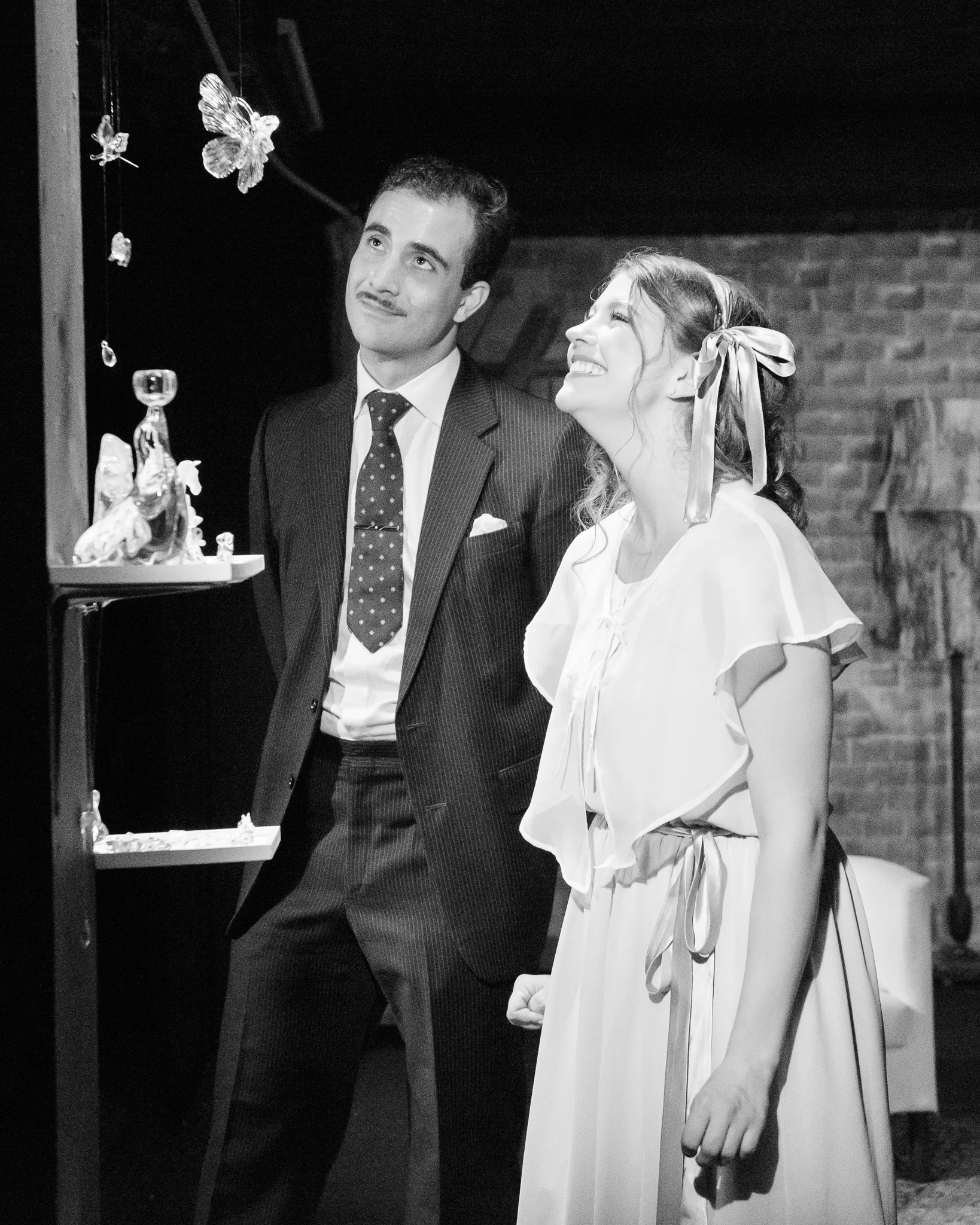
Jacob Klick as Tom and Claire MacMaster as Laura. Photo by John Ordean

Jacob Klick as Tom and Claire MacMaster as Laura. Photo by John Ordean

Village Players' 'The Glass Menagerie' is magical - review by Joe Szek

Will McGuirk September 8, 2019

By Joe Szekeres

I’m always impressed how non-professional/community theatre companies are inventive in staging twentieth century theatrical classics for a twenty first century audience. It’s necessary to sustain interest in these treasures as they are something to which all actors and productions must and can aspire.

Such is the case with The Village Players’ current production of Tennessee Williams’ classic ‘The Glass Menagerie’, a challenging play to stage. I applaud Director Victoria Shepherd’s creativity as she and the cast, along with a diligent working crew, have created a memory play of poignant and amusing moments of the Wingfield family. Nevertheless, there were a few moments in this production that puzzled me somewhat.

The three-quarter thrust stage of the intimate setting of the Village Playhouse works extremely well for this production. It’s a closed curtain the audience sees upon entrance. From my seat, I could see a few of the glass figurines from Laura’s collection poking out. I loved the big band sound music from the 1930s as pre-show and interval music.

It’s 1937, St. Louis, Missouri. Narrator Tom Wingfield (Jacob Klick) appears from the back of the auditorium and walks to the front of the stage where he begins to tell us a bit about his life. In her Director’s Note, Ms. Shepherd points out “The Glass Menagerie is Williams’ autobiographical work. It is an exorcism of an unshakable past, love letter to his beloved sister, a yearning for change and a fascinating examination of the magic of memory.” Tom makes us candidly aware of Ms. Shepherd’s statement in his opening monologue.

For me, memory plays are fascinating to watch. As we don’t recall every single bit of the setting in which something takes place. The same can be captured on stage. It was pure magic to watch Tom open the curtains to take us back to his family’s home. I don’t want to spoil when a magic effect takes place between Tom and Laura. It worked magnificently and I wondered how it was done, so kudos to consultant Shaun Ferguson.

John Shubat as Jim and Claire MacMaster as Laura. Photo by John Ordean

John Shubat as Jim and Claire MacMaster as Laura. Photo by John Ordean

Alexis Chubbs’ set design nicely fills the stage, but there were some problem areas that I couldn’t see from my seat. For example, I couldn’t see the hanging picture of Tom’s father that is front and centre in the cramped apartment, so I had to look at it during the interval. Laura’s collection of glass figurines is at the apex of the three-quarter thrust stage. I only could see part of it and wished I could see more. This also posed a blocking challenge especially when Laura is present as Amanda and Tom are fighting. Laura should be next to her glass figurines as they give her comfort in times of distress. Instead, she sat at the dining table and watched what was going on with quite a distance between her and the figurines.

I thought the dining room table and other chairs worked well for the period, but the dining room chairs looked too art deco see through plastic and periodically brought me out of the moment. The painting of the fire escape on the back wall worked well as that area signifies outside the apartment. The terrace/fire escape for the Wingfield apartment is at the apex of the three-quarter thrust stage and it worked nicely to focus our attention.

I understand and respect completely for safety precautions of the actors and audience that no cigarettes and candles are lit during the performance. Not a problem there; however, the lighting of the candelabra after the lights go out in the second act needs to be timed sharply. When the audience laughs at the missed timing, you know that must be looked at once again.

Livia Pravato-Fuchs costume designs with assistance by Marcella Pravato, nicely reflected the era. I liked the suit the gentleman caller wore in the second act as it worked well and to John Shubat’s work.

Performances are solid all round for the most part. As narrator Tom Wingfield, Jacob Klick’s lanky stature made me pay careful attention to him upon his first entrance in Act 1 from the rear of the auditorium. Mr. Klick has subtly captured an earnest restlessness within Tom which makes him sometimes unbearable to be around. If you are aware of Tennessee Williams’ personal life, the repetition of Tom’s habitual ‘going to the movies’ possibly meant he was indulging in other opportunities. Mr. Klick captured finely that nebulous and vague side of Tom especially when, at the dinner table, he wishes he could share with his mother so much more about who he is. Mr. Klick’s accent is fine, but he periodically slips away from using it.

As the matriarch of the house, Deena Baltman captures the southern gentility and grace of Amanda, a woman living and thriving on what happened in the past combined with the stark harshness of what the real world holds for her now. Like Mr. Klick, Ms. Baltman tries her best to maintain a consistent Southern accent, but I could hear a bit of North American slip in near the end. Ms. Baltman does not venture over the top in her performance, but I wonder if the audience on this night truly understood that Amanda is a sad character. Yes, there are some funny bits in which she indulges in conversation with others, but Amanda is a woman who lives life through her children and wants them to behave in the way she does. I don’t know if the audience was getting this as the laughter sometimes was uproarious as in a farce. Amanda is not a caricature and Ms. Baltman does not play her as such.

Claire MacMaster is wonderful to watch and to hear as the painfully shy, Laura, older sister to Tom. Ms. MacMaster’s face conveys tremendous emotion throughout her performance. Watch carefully her face as Ms. Baltman scolds for the deception about the business college. My heart was bleeding for Laura and Ms. MacMaster boldly captured that moment. There is a believable chemistry between she and Mr. Klick in their conversation as brother and sister especially when Laura tries to get Tom to apologize to Amanda.

The highlight of the performance for me was the scene in Act 2 between Ms. MacMaster and John Shubat as Jim O’Connor, the gentleman caller. This scene was so naturally played from Mr. Shubat’s entrance with the candelabra right to the moment when he leaves the apartment. Highly authentic realism was poignantly captured between Mr. Shubat and Ms. MacMaster who commanded the stage with grace, hope, poise and dignity. Marvelous work here. To say anything more would certainly spoil its beauty for future audiences.

‘The Glass Menagerie’ runs to September 28, 2019 at 2190 E Bloor Street West (just east of Runnymede subway). For more information visit their website.

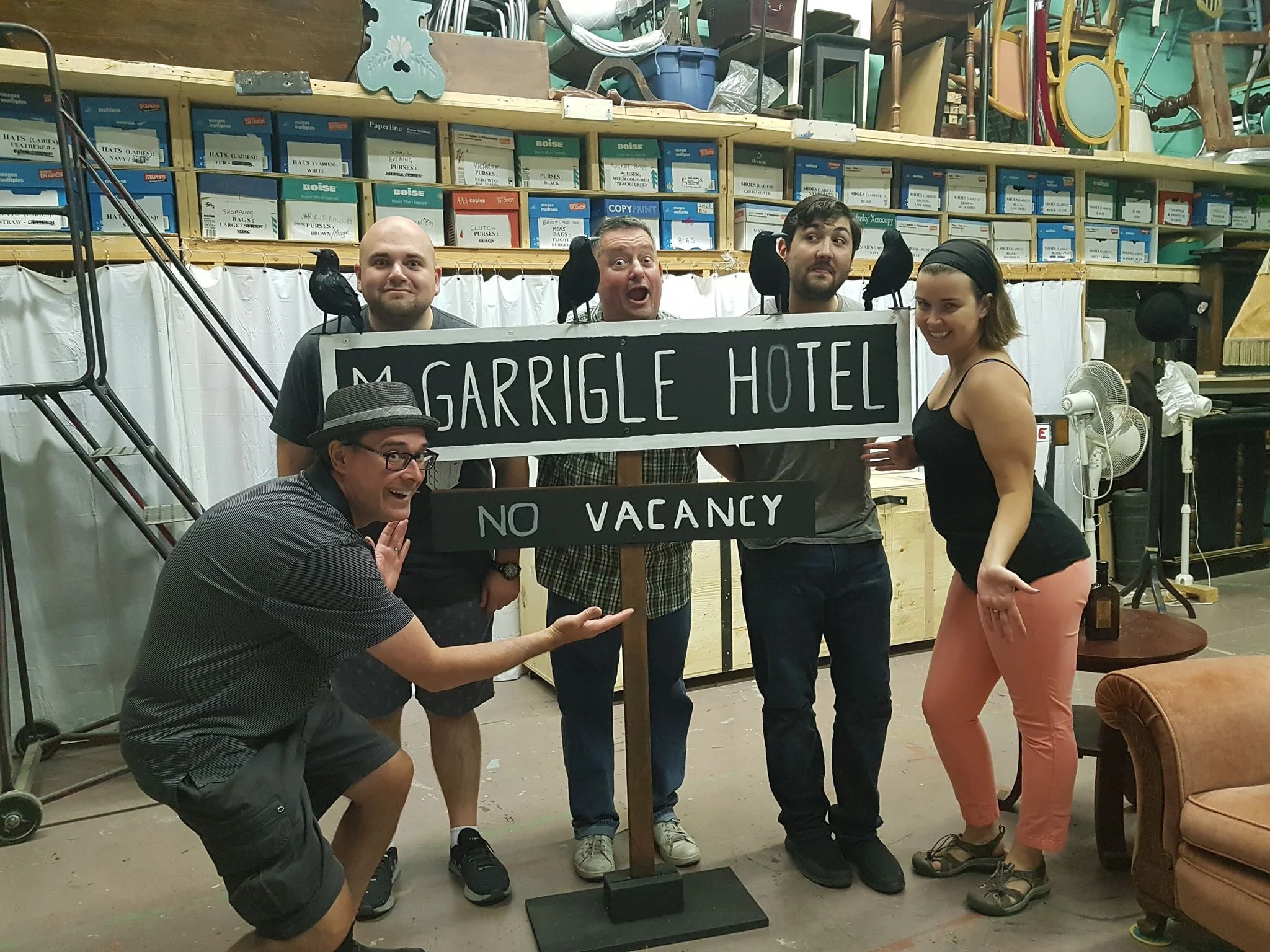
L – R: Kevin Shaver (director), Paul Bryant (Clown), Tommy Boston (Clown), Rob Magee (Richard Hannay), Lindsay Bryan (Annabelle, Pamela, Margaret). Photo by Darlene Thomas.

L – R: Kevin Shaver (director), Paul Bryant (Clown), Tommy Boston (Clown), Rob Magee (Richard Hannay), Lindsay Bryan (Annabelle, Pamela, Margaret). Photo by Darlene Thomas.

Scarborough Theatre Guild's "39 Steps' - a step by step preview by Joe Szek

Will McGuirk September 7, 2019

By Joe Szekeres

Who doesn’t love a good suspense story especially if it has been influenced by the master himself, Alfred Hitchcock? Movie lovers remember such classic films like ‘Rear Window’, ‘The Birds’ and ‘Psycho’ that had us on the edge of our seats wondering what would happen next.

For its 61st season, The Scarborough Theatre Guild (STG) will stage ‘The 39 Steps’ by Patrick Barlow, “a ‘loose parody’ of the classic 1935 Hitchcockian film” according to STG director, Kevin Shaver, who is quite the film aficionado himself. One of Hitchcock’s favourite themes was the innocent man getting unintentionally entangled in some dilemma. This same theme is also found in ‘The 39 Steps’ and contains the elements of a good story in this film tradition – intrigue, romance and an innocent man on the run. The Guild’s production will remain true to the period and flavour of the 1940s.

I can recall a Durham Region amateur theatre company staging ‘The 39 Steps’ several years ago. It was my first time seeing the play and I remember how rapid the pace of that production was as there are only four actors who play over 150 roles. That alone was enough to intrigue me to see how it would be performed live. I wasn’t disappointed as so much was happening so quickly.

I often wonder if millennials would even have any interest in seeing a Hitchcockian suspense story today since there now appears to be instant gratification for all kinds of tastes. Mr. Shaver counters with an interesting comment about this style of film that is unmistakably deep rooted and enduring:

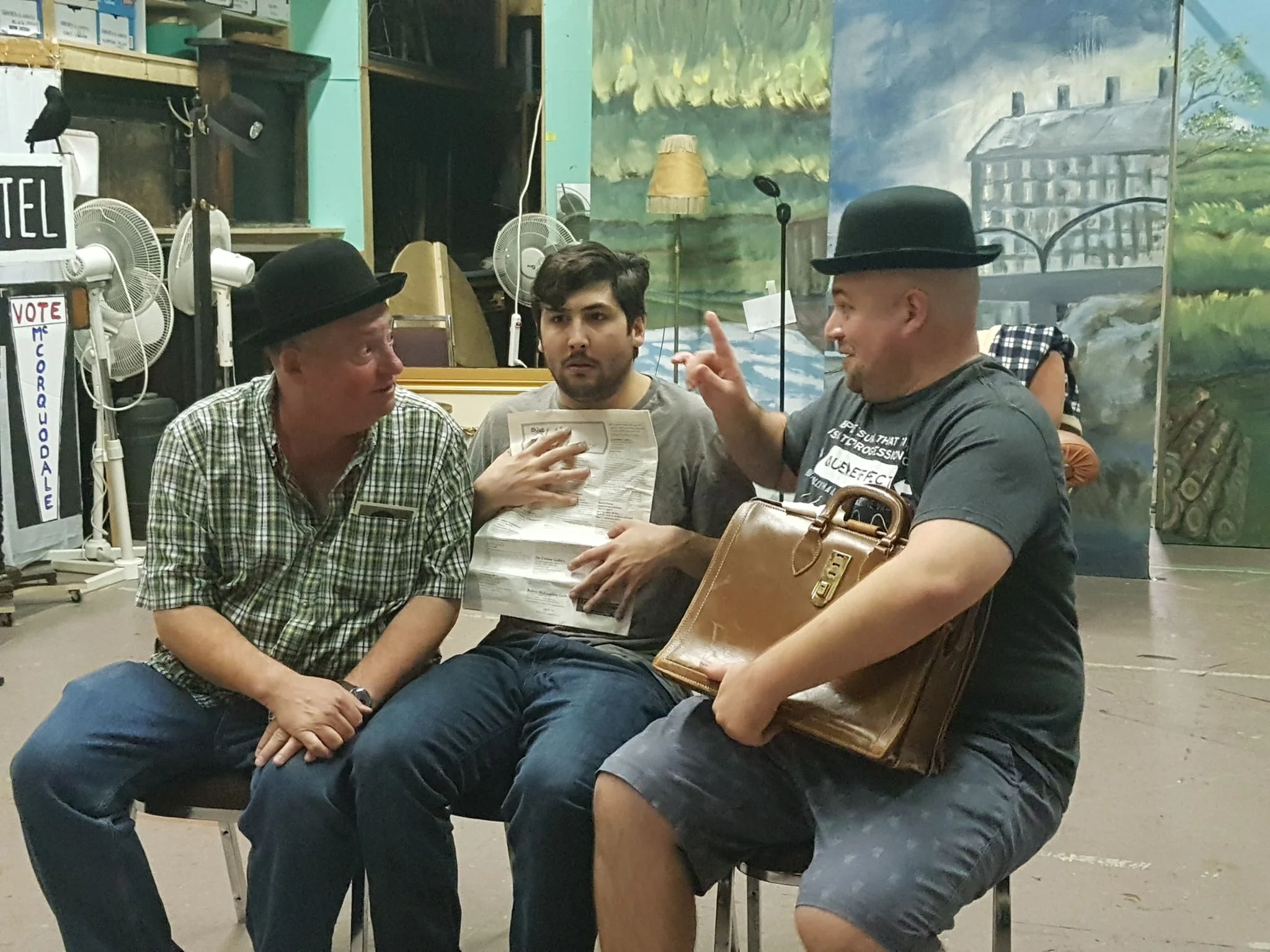
L – R: Tommy Boston as Clown, Rob Magee as Richard Hannay, Paul Bryant as Clown. Photo by Darlene Thomas.

L – R: Tommy Boston as Clown, Rob Magee as Richard Hannay, Paul Bryant as Clown. Photo by Darlene Thomas.

“The original ’39 Steps’ film provides the foundation of the play (along with several references to his other films), but the Theatre Guild’s structure and pace of the show is more like Hitchcock meets Monty Python with a twist of Mel Brooks,” he says.

How can anyone not like the quirkiness of Monty Python or the irreverent humour of Mel Brooks?

Today, it is unique marketing which helps to sell in our world of instant gratification. Alfred Hitchcock was the first film director to market himself cleverly along with his films. His own silhouetted profile is probably one of the most recognizable images in film history, ranking up there with Charlie Chaplin’s Tramp. Hitchcock was also known for making cameo appearances in his films. I asked Kevin if he would do the same during each performance:

“Anyone who knows me, and my sense of humour, may recognize a few signature moments or references. And as for a cameo, there wouldn’t be any suspense if I tell you,” he says.

Shaver avows if anything that audiences are in for a good laugh in seeing ‘The 39 Steps’:

“At this time when we are inundated with the craziness of an upcoming Canadian federal election, the shenanigans of US President Donald Trump, and sadness permeating our world, ‘The 39 Steps’ is a great escape to an afternoon or evening of entertainment where we don’t have to be concerned about anything nasty or negative,” he says.

And what of his production team and cast?

Shaver is proud to say that he is privileged to work a talented crew who have worked hard from the first day of auditions and rehearsals including Darlene Thomas as Producer with Teresa Bakker as Stage Manager.

Additionally, the cast is composed of experienced actors who can think fast on their feet and move quickly within the rapid-fire structure of the play. The actors have adapted quite well to the minimal staging of the production and have each contributed to their characters and scenes. They get the ‘joke’ of this playful homage and have been able to run with it. Cast members include Rob Magee as Richard Hannay, Lindsay Bryan as Annabelle, Pamela and Margaret, Tommy Boston and Paul Bryant as two Clowns.

Performance dates of ‘The 39 Steps’ include October 4-6 inclusive, October 10-13 inclusive and October 17-19 inclusive at the Scarborough Village Theatre, 3600 Kingston Road, Scarborough. To purchase tickets online and to learn more about the Scarborough Theatre Guild, visit the website.

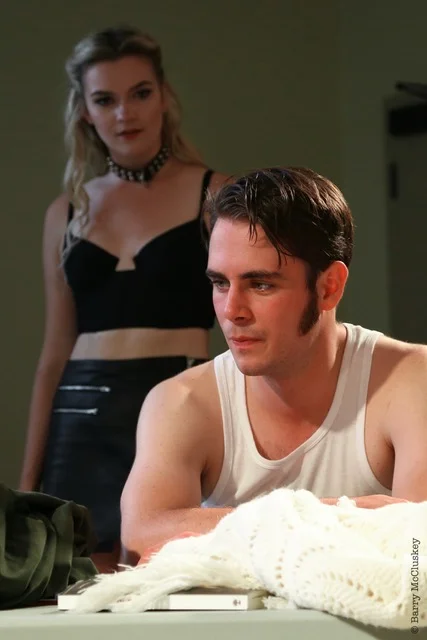
Manon Ens-Lapointe and Jack Copland, photo by Barry McCluskey.

Manon Ens-Lapointe and Jack Copland, photo by Barry McCluskey.

Theatre on the Ridge presentation of 'Venus in Fur' is an intimate experience

Will McGuirk August 12, 2019

By Paul Love
Guest Reviewer

Venus in Fur, by David Ives, is about a play that is an adaptation of the 1870 erotic novel, Venus in Furs, written by Austrian author Leopold von Sacher-Masoch. The play, the play within the play, and the novel all hold a lens to male-female relationships — how they are shaped by traditions, norms, and expectations, and how they are affected and challenged by individual desires and perceptions, as well as status and power.

The show opens with Thomas Novachek (Jack Copland) — the author of the play within the play — agonizing to someone on the phone about how frustrating it has been to audition actor after actor for the female lead due to the seeming lack of acting ability and intelligence of today’s young female actors. A young woman named Vanda (Manon Ens-Lapointe) explodes into the audition room, claiming to be hours late for her audition appointment due to a series of mishaps and unfortunate events, and talking faster than a human should be capable of. She is brash, vulgar, and seemingly clueless. After hearing Thomas’s lamentations, we know that he has already decided she is not right for the part. She convinces him to let her audition anyway, and that’s when everything changes. With everyone else gone home, Thomas is forced to read the role of the male lead, Severin. As Thomas and Vanda explore the play’s text together, so do they begin to explore each other — discovering each other’s notions of submission and domination as they engage in a playful yet increasingly intense battle of wills.

It must be said that a powerful two-hander like this can only be performed effectively if the two actors playing the roles of Thomas and Vanda are highly skilled. Thankfully, Mr. Copland and Ms. Ens-Lapointe are more than up to the challenge. Vanda is very different from Wanda (the character Vanda is auditioning for), so watching Ms. Ens-Lapointe switch from the rough-around-the-edges Vanda to the calm, elegant Wanda is truly entertaining. But the way Ms. Ens-Lapointe suddenly makes Wanda disappear as Vanda excitedly gushes about some aspect of this moment in the play, only to melt into Wanda again at the end of the emotive outburst, is mesmerizing. Thomas’s charming, self-effacing, yet troubled nature is presented subtly and naturally in Mr. Copland’s performance, and it is in his soulful reactions and facial expressions that we see so much of what is hidden beneath Thomas’s cool facade.

The play-within-a-play concept is used well by Ives, and the two stories interweave with each other incredibly well. They both develop and change parallel to one another, making it seem as though the development of Severin and Wanda’s relationship and the development of Thomas and Vanda’s relationship are informing and affecting each other.

Director Carey Nicholson smartly forgoes the traditional theatre setting for a more intimate one — Town Hall 1873’s green room (with audience seating on three walls) — which works well for a multitude of reasons. For the sake of realism, the room used for the performance is exactly the kind of small space where an audition like Vanda’s would be conducted. This creates an intimate setting where the two characters are forced to be close to one another, which helps ratchet up the tension between Vanda and Thomas. Ms. Nicholson contributes to this tension with the movement of the actors around the set and each other containing many peaks and valleys, perfectly mirroring the psychological jousting between Thomas and Vanda and Severin and Wanda. The structure of the room forces the audience to be a part of the intimacy of the show, as well. With the lighting being bright enough for each audience member to be visible, the experience of watching the show is much different — and, I would argue, more in line with the atmosphere of Venus in Fur — than it would be if the audience members were further from the stage, cloaked by the anonymity of the darkened auditorium. Finally, this setting allows the actors the opportunity to add nuances to their performances — twitches of the eye, furtive glances, stressful licking of the lips — that add richness and realism that an audience seated further away would be unlikely to pick up on.

Venus in Fur is truly a unique theatre experience that challenges long-held notions about relationships between men and women in a very powerful, often funny, and entertaining way. Highly recommended.

The play’s strong language and sexual themes are not suitable for younger audience members. The show is being staged at the historic Town Hall 1873 in Port Perry, 302 Queen St. Remaining performances are August 13, 14, 15, and 16 at 7:30 pm. For more information, visit the website.

← NewerOlder →
Screen Shot 2026-02-18 at 9.55.53 PM.png
Screenshot 2023-06-10 at 10.18.16 PM.jpg
TownBrewery.jpeg
SecondWedge.png
Avanti_logo.png
11666057_10154039986198378_4496427229864055720_n.jpg