• SLOW -
  • SLOW -
  • SLOW -
  • NEWS -
  • SLOW -
  • SLOW -
  • SLOW -
  • Photos by Mikki Simeunovich -
Menu

SLOWCITY.CA

  • SLOW -
  • SLOW -
  • SLOW -
  • NEWS -
  • SLOW -
  • SLOW -
  • SLOW -
  • Photos by Mikki Simeunovich -
×
Archive
  • December 2025 3
  • November 2025 5
  • October 2025 7
  • September 2025 8
  • August 2025 5
  • July 2025 8
  • June 2025 8
  • May 2025 8
  • April 2025 7
  • February 2025 2
  • January 2025 5
  • December 2024 4
  • November 2024 10
  • October 2024 8
  • September 2024 9
  • August 2024 1
  • July 2024 8
  • June 2024 14
  • May 2024 6
  • April 2024 5
  • March 2024 9
  • February 2024 7
  • January 2024 2
  • December 2023 14
  • November 2023 6
  • October 2023 16
  • September 2023 4
  • August 2023 2
  • July 2023 6
  • June 2023 9
  • May 2023 6
  • April 2023 6
  • February 2023 1
  • December 2022 8
  • November 2022 9
  • October 2022 13
  • September 2022 5
  • August 2022 5
  • July 2022 4
  • June 2022 7
  • May 2022 11
  • April 2022 2
  • March 2022 3
  • December 2021 6
  • November 2021 6
  • October 2021 9
  • September 2021 4
  • April 2021 1
  • January 2021 9
  • March 2020 2
  • February 2020 1
  • January 2020 4
  • December 2019 6
  • November 2019 8
  • October 2019 4
  • September 2019 4
  • August 2019 4
  • July 2019 2
  • June 2019 2
  • May 2019 3
  • April 2019 7
  • March 2019 4
  • February 2019 5
  • January 2019 1
  • December 2018 4
  • November 2018 8
  • October 2018 6
  • September 2018 3
  • August 2018 1
  • July 2018 3
  • June 2018 6
  • May 2018 2
  • April 2018 8
  • March 2018 10
  • February 2018 8
  • December 2017 7
  • November 2017 9
  • October 2017 9
  • September 2017 5
  • August 2017 2
  • July 2017 4
  • June 2017 2
  • May 2017 3
  • April 2017 9
  • March 2017 7
  • February 2017 2
  • January 2017 6
  • December 2016 2
  • November 2016 5
  • October 2016 7
  • September 2016 6
  • August 2016 3
  • July 2016 1
  • June 2016 1
  • May 2016 2
  • April 2016 5
  • March 2016 5
  • February 2016 5
  • January 2016 2
  • November 2015 1
  • October 2015 3
  • September 2015 5
  • August 2015 12

Annual juried fundraiser, RMG Exposed is a reflection on water.

Will McGuirk October 24, 2015

Loss and mass are two themes which occur in the photographs selected for RMG Exposed, a fundraising auction of juried photography taking place Saturday, Nov. 12, 7-10 p.m. at the Robert McLaughlin Gallery in Oshawa, Mass, or Volume,  is represented by water, pattern and architecture while loss shows up in various forms including urban decay and erotic longing (Sam Pierre's "Boys" and Sara Heinonen "Love It Here".

There is an interesting juxtaposition between the various photographers in the exhibit; Bill Hornbostel celebrates the architecture of Toronto City Hall and Cobourg train station as bulwarks. In form they are as sturdy as the rocky landscapes of Carolyn Doucette's featured works. However others focus on architectural decay; Oliver Stein's Manhattan, Tim McGhie's Regent Park, Tom Ridout's Michigan Avenue, Jeffery Gardner's Snow Horse focus on broken buildings, houses, barns, stores as does Gary Chappelle’s On Ice. Is this longing for a past, fear of a future?

Mass is selected in the ice and snow of Chappelle and Gardner but also the Tabular Iceberg of Paul Teolis. Mass is amount, a calculation of volume. Volume measured in repetition of elements, in patterning: Tristan Mitchell's "Sewer Grate", Danna Yuhas' "Balconies, Barcelona, Spain" and AJ Groen's "Tree Line". The patterns shown are mostly curves, waves ( Avi Cohen's "Rice Terrace and Farmer"). Are they sea waves, air waves, radio waves, sound waves? Is mass lost because mass fragments, liquidfies? Do icebergs that sink ships just melt away? Are mountains just piles of dust?

“How many years must a mountain exist before it is washed to the sea? sang Bob Dylan or as Shelly put it in Ozymandias, “Nothing beside remains. Round the decay/ Of that colossal wreck, boundless and bare/ The lone and level sands stretch far away”

Leif Petersen’s “Morning Shadows” features those lonesome sands, curved by the winds into waves. But it is not the desert, dry and arid that is the stuff of these photographs but the abundance, the richness of water that washes over the juried show. Water is the central subject matter and speaks maybe to the flood of information we dip into, surf over, are awash in and the challenges it presents. 

The "Midsummer Children" of Laurie Crew are ready for a dip. (Children get new technology so much faster don’t they), perhaps into Chad C. Kirvan's "Blue Line". Lora Moore-Kakaletris's subject has already broken the surface. Michele Taras' study is titled "Floating Reverie", it could be Ophelia, free now to just be, carried by the currents. Do we give up and drown in information or rage against the stream, gasping for answers? Do we tune out the flood of information or break the surface and dive in deep, seeking survival?
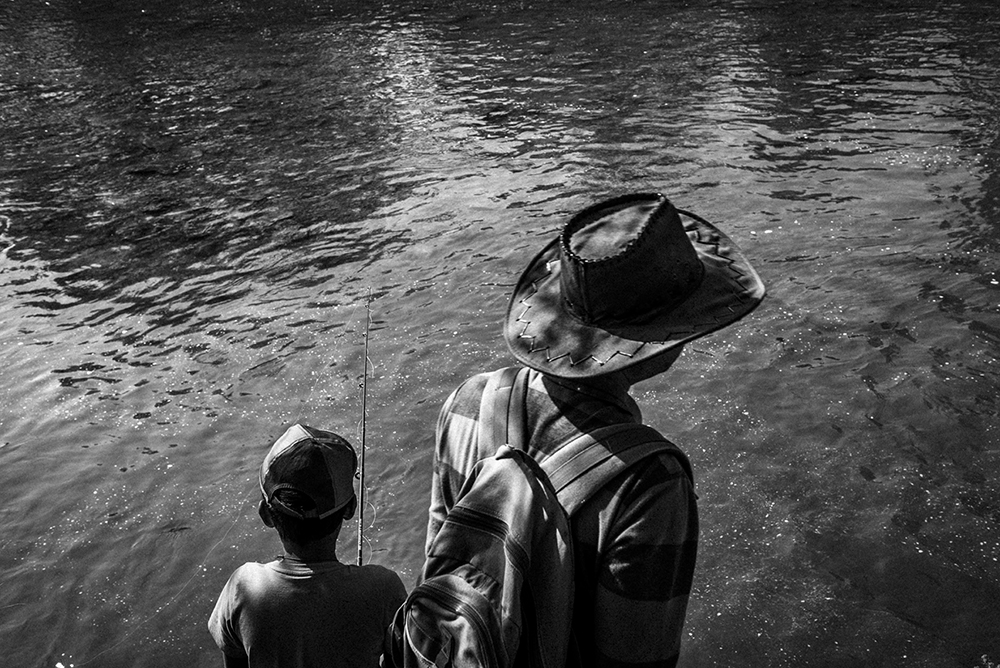
Natalie Austin's "Fishermen" stare into the information stream, seeking food, life. The stuff of life steeps in the soapy water of Jordyn Stewart's "Displaced", (a sly fish float sits in the sink with the dishes). In Dawn Brooks' "Mist", a photo of a shoreline there is a reminder water beats rock and the architecture of Hornbostel will become the stuff of Brilynn Ferguson's "St. Agnes" or Kirvan's "When The Engine Dies" or even Tom Ridout's "Machine Age".

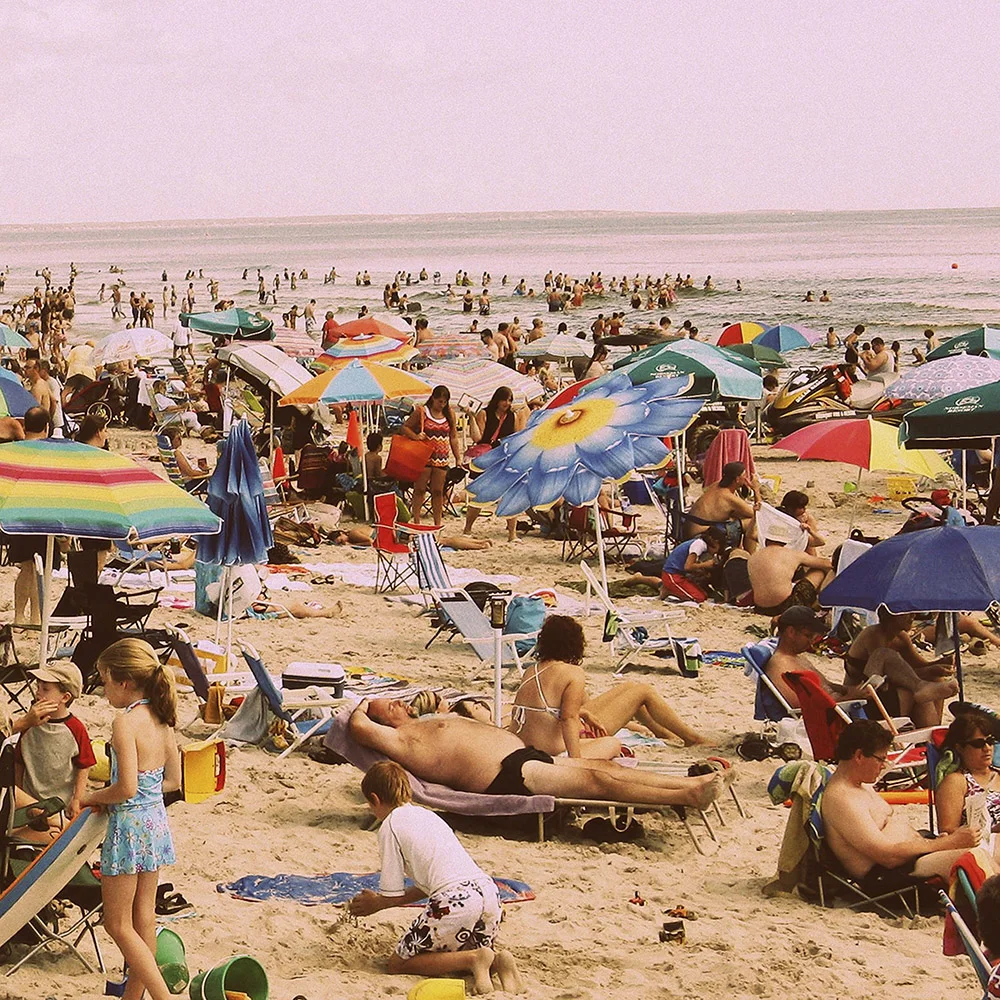
For the most part these artists are sharing with us fair warning but there lies within this selection something that speaks loudest to our present circumstances. There is something of Nero fiddling in the fires of Rome to Jen Yeaman's "Big Beach". There is the volume of humanity blindly soaking up the sun, a mass of bodies, each one engaged in its own bubbling skin, relaxed, amid the landscape of flowery umbrellas and the vast sands of the beach. This is the stuff of now, akin to the humans in Pixar's Wall-Eye, the roly-poly hedonists sipping on Big Gulps and watching screens. On "Big Beach" humans flop on the sands like a herd of walruses, while in the background the water rolls on in, wave after wave after wave.
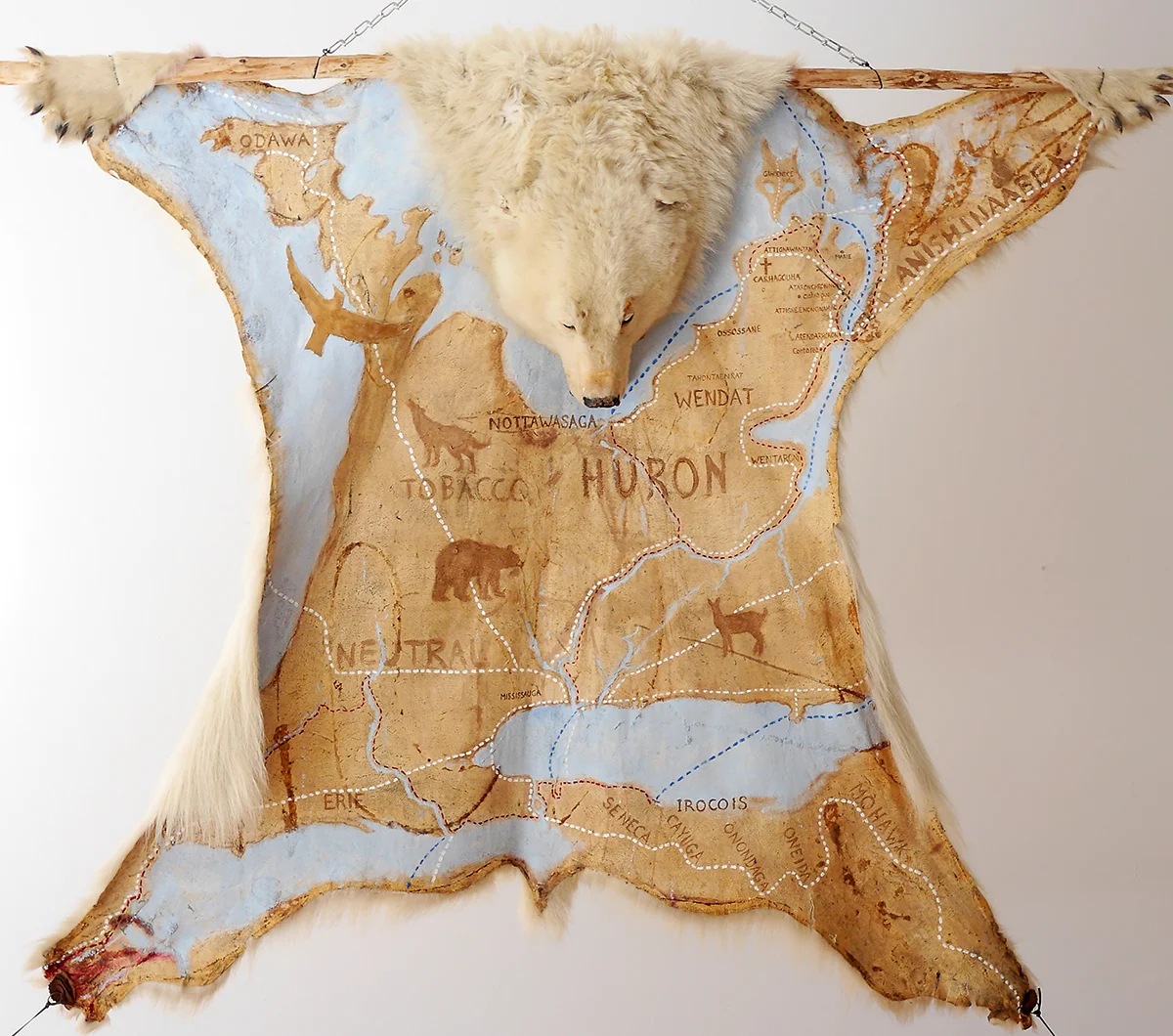
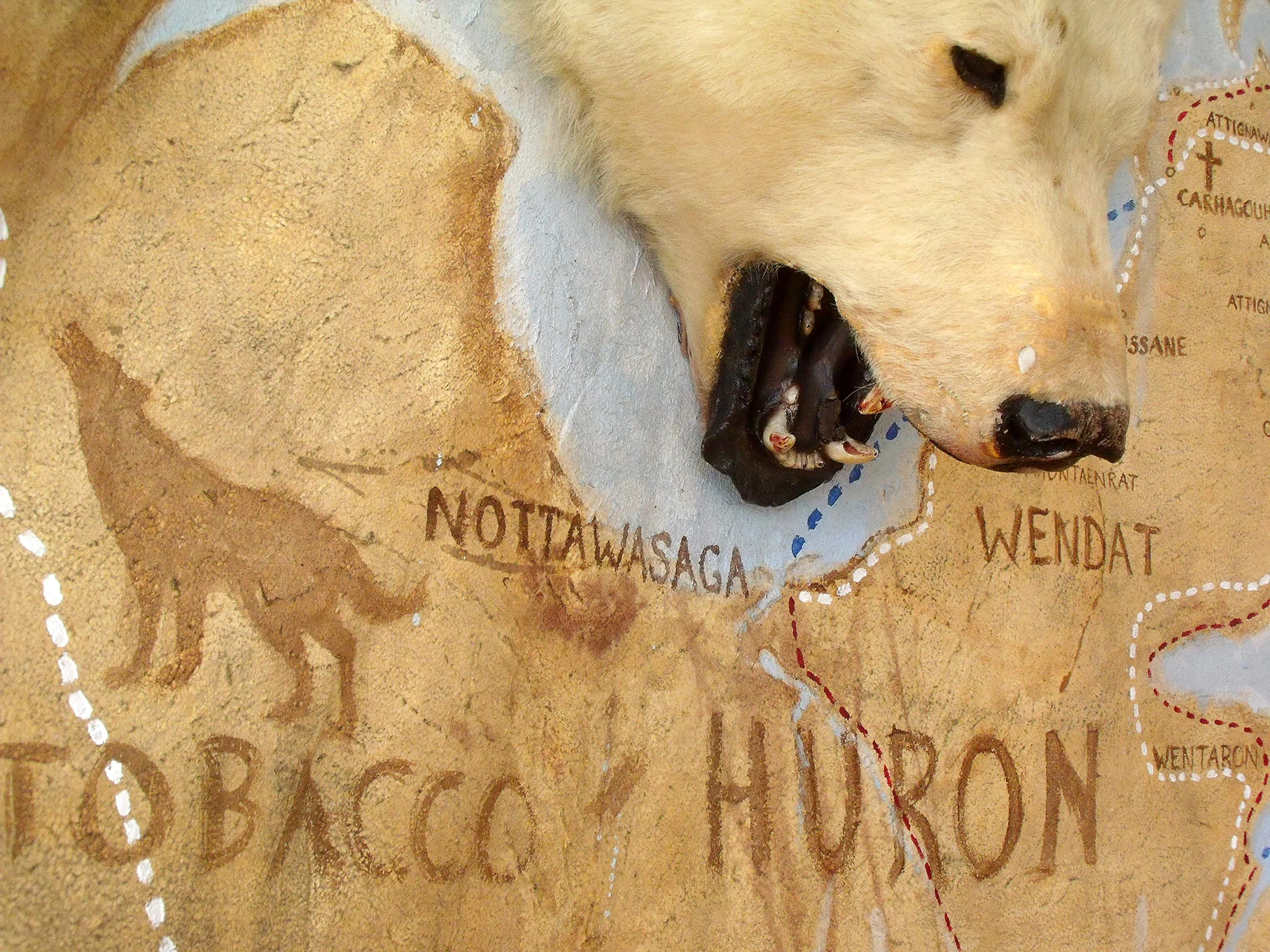
Deer Crossing at Station Gallery in Whitby

Will McGuirk October 14, 2015

Visual artist Patrick DeCoste's solo exhibit will open at the Station Gallery in Whitby, ON, Oct. 17, 2015. DeCoste explores his Nova Scoatian/Métis heritage in the show titled Deer Crossing. It is a multimedia installation incorporating paintings, projections, skins and sound clips. The work is sourced from DeCoste's encounter with a Métis shaman and through the him his spirit animal. DeCoste will speak about the exhibit at the opening reception at 1 p.m.


Forging a new identity through art at the Robert McLaughlin Gallery

Will McGuirk September 30, 2015

It’s a Canadian affair, this Domestication of Distance. Its also the title of an exhibit on at the Robert McLaughlin Gallery, Beyond Measure: Domesticating Distance, on now until January 2016. It’s ostensibly about the immigrant experience but it is more. Crossing borders, boundaries, cultures is the stuff of the newcomer but in this wide country it is also the stuff of the resident. Beyond Measure: Domesticating Distance is presented in association with the South Asian Visual Arts Centre and features five contemporary artists, Meera Margaret Singh, Surendra Lawoti, Abdullah M. I. Syed, Asma Sultana, Tazeen Qayyum. The exhibit explores the composition of duality, the coupling of the two and the resulting oneness of the hybrid. The show has been curated by Ambereen Siddiqui and Linda Jansma of the McLaughin Gallery The RMG hosts a Douglas Coupland sculpture on its outer wall. It is a tribute to Painters 11 but it utilizes Coupland’s concentric circles imagery. They look like targets but they are transmitters. They communicate over distance. They are symbols, they bring two solitudes into one sphere. It’s a Canadian thing, bringing the two sides together, whether it’s the zipper, the bra, the Blackberry, the Telephone or many other inventions,  this country is built by joining two extremes together, doing so fast. Speed is the thing, its cold, its wild, pass fast, use the boards, use the borders, skip over the middle. The need for speed is the source of Hockey and the canoe. Get there quicker, get the message there faster, snap, snap, ziiiiiiiiip, done in a jiffy. The domestication of this dangerous vast emptiness known as Canada is ongoing. It’s a task for all who come here and all who live here. It’s survival of the fastest but to truly know this country, any country, any culture we must map the in-betweens and step back from the edges.

Absolutely Free sculpt new soundtracks for McLaren NFB films.

Will McGuirk September 9, 2015

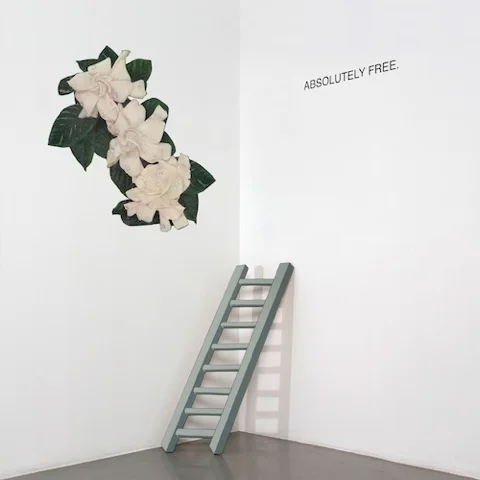
To celebrate the centenary of Canadian filmmaker Norman McLaren’s birth, the Toronto International Film Festival commissioned psych-synth band Absolutely Free to compose soundtracks for six of McLaren’s films to be played live as the films were being projected outside This re-imagining of McLaren’s work occurred Sept 7 2014. The National Film Board and Chart Attack were also involved and the films with their new soundtrack are being slowly made available via ChartAttack’s YouTube. "Re-Sounding: Synchromy" and "Re-Sounding: Mosaic" have been previously released and "Re-Sounding: Spheres" is also now available. The score is for McLaren’s 1969 animated choreography of pearl-like shapes. Absolutely Free’s debut self-titled album is available on Arts & Crafts Records and the three-piece have scheduled appearances at POP Montreal Sept. 19, the Bloor-Ossington Fest in TO Sept. 20 and a date at the Music Gallery also in Toronto on Oct. 18.


Ralph Alfonso's Photography Retrospective on tour with The Diodes

Will McGuirk September 8, 2015

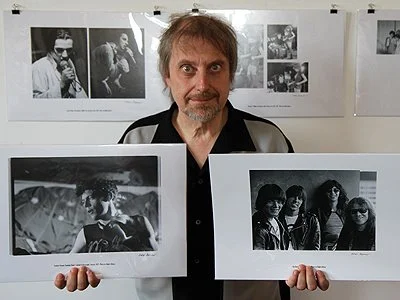
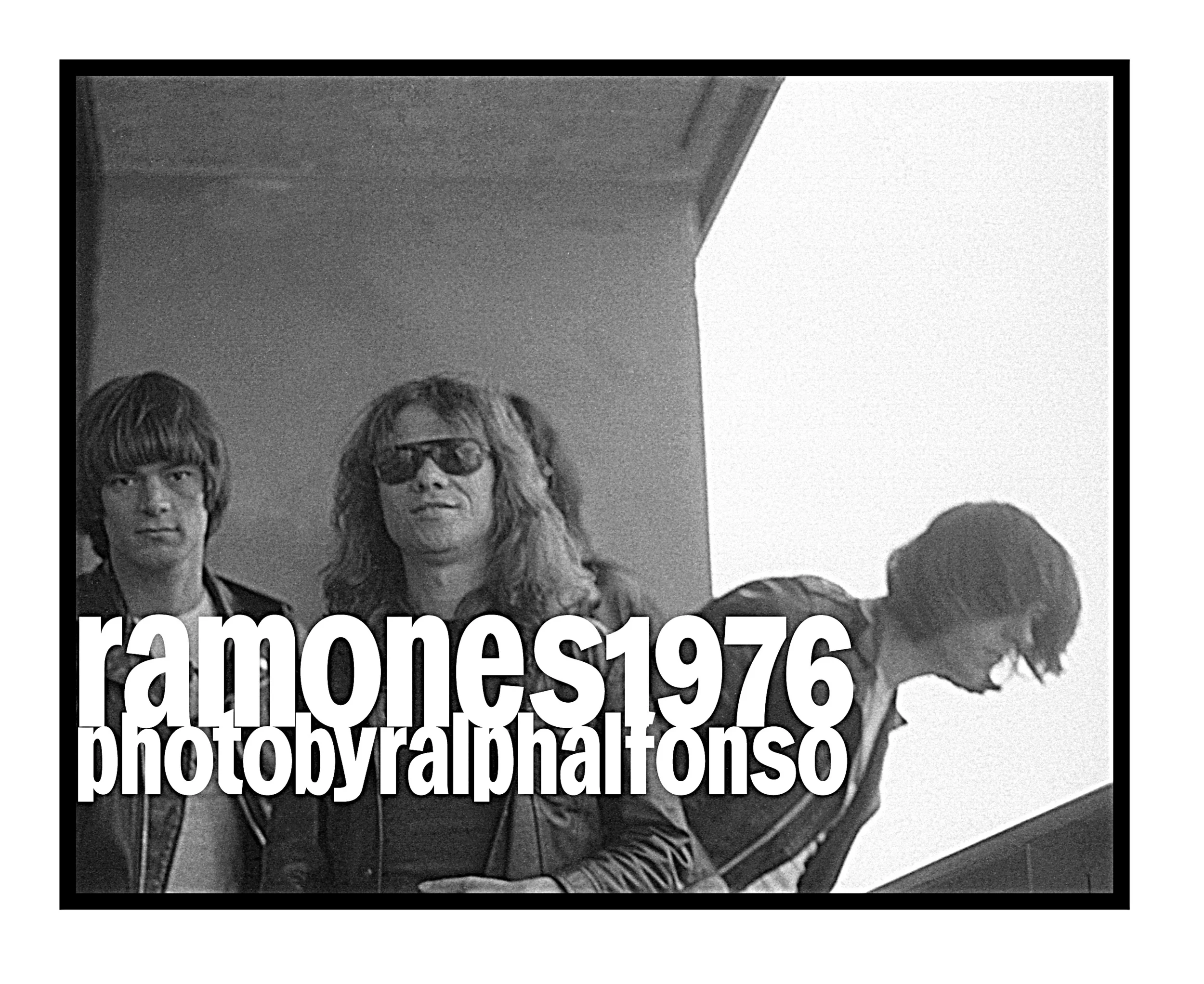
Bongo Beatnik Ralph Alfonso is a legend; a writer, musician, poet, band manager, author, photographer, record exec, label owner, art gallery owner, graphic designer, publisher and publicist who has been documenting the Canadian art and music scene from its early outsider roots to its present insider status.

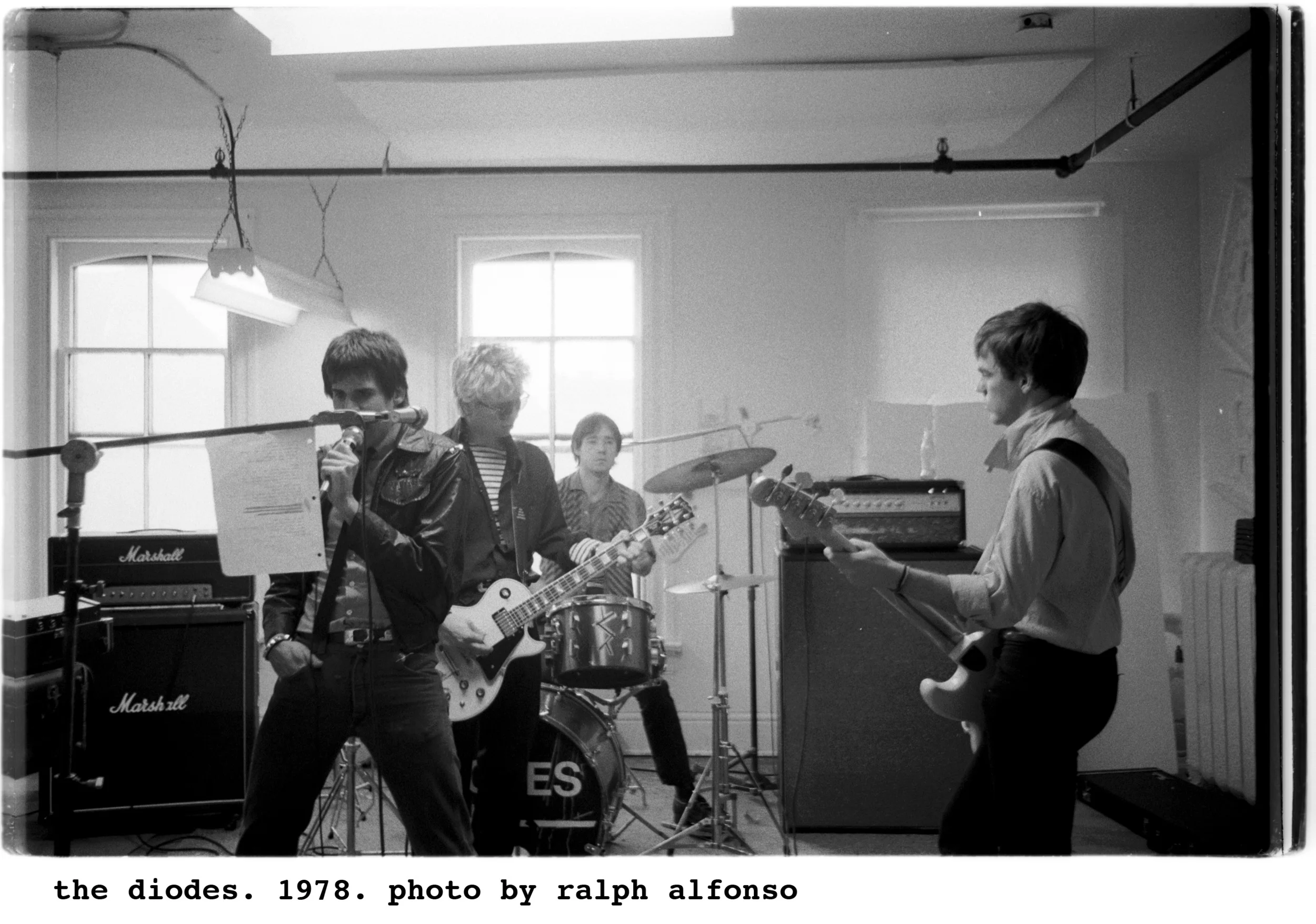
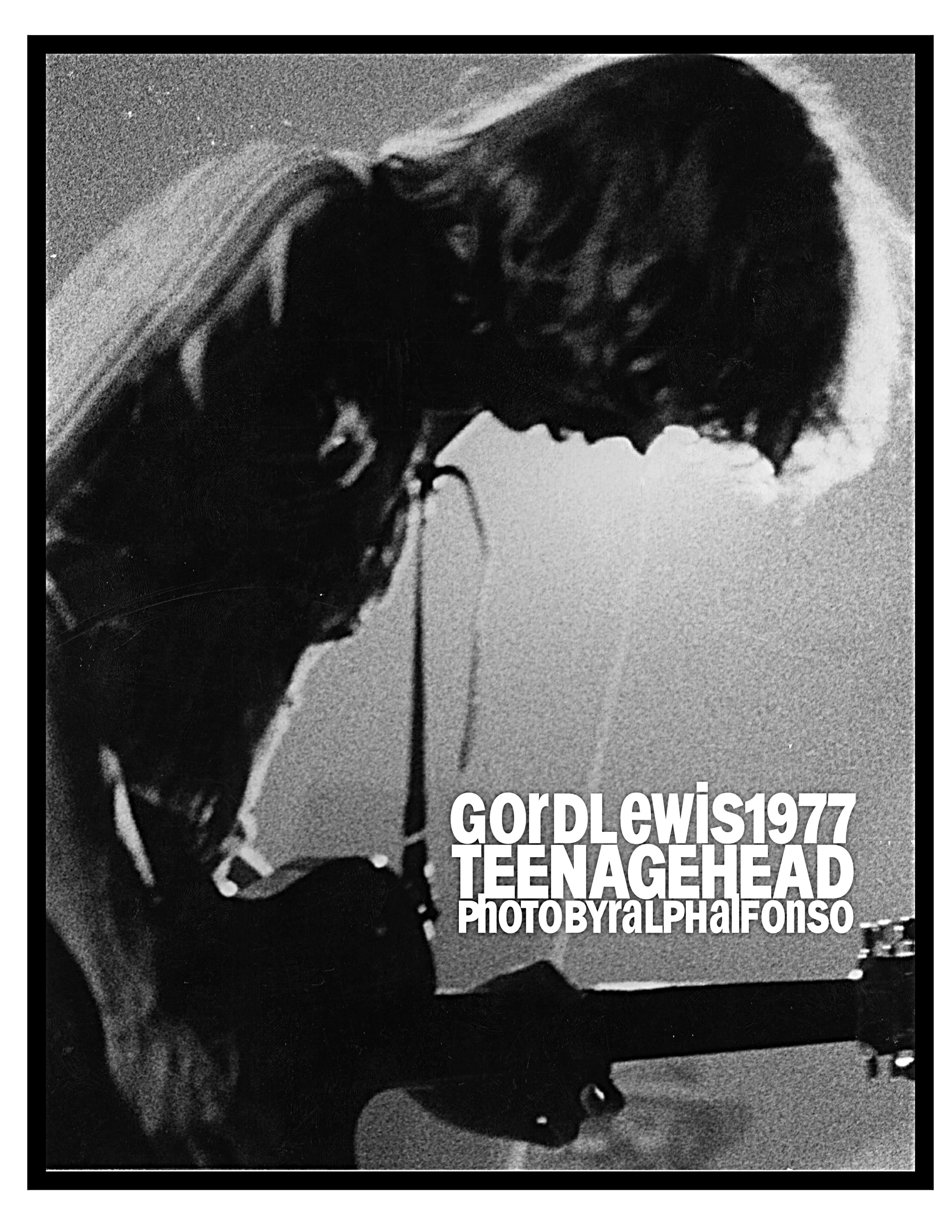
But before he was a legend he was Ralph Alfonso, a comic book fan who became a journalist writing about the emerging punk scene of the mid 70s. A one time one hour interview with Toronto punk debutantes, The Diodes, became four decades of managing those self same rockers. Together they became legendary having opened the infamous punk rock club, The Crash & Burn, which did, metaphorically. But not before it was documented on film, a film that will be shown, along with a gallery of Alfonso’s photographs from his vantage point smack in the middle of what we call Punk Rock!, at the Diodes upcoming reunion gigs to be held at The Phoenix in T.O., Sept. 11, Hamilton’s It Ain’t Hollywood Sept. 13 and the Station in Brantford Sept. 15. Gord Lewis and Dave Rave of Teenage Head will open the Hammer and Hogtown gigs. The Diodes will also play Pop Montreal Sept. 17, and the Manantler Craft Brewery in Bowmanville Sept. 12. Manantler will brew a special tribute IPA, “Time Damage” which will be available at all the shows.

Time hasn’t done much damage to the Diodes, their songs or to Alfonso who says 2015 is just as exciting time in Canadian music as was 1975. He gives the thumbs up to labels, Bonsound in Montreal and Dine Alone in Toronto as well as to Arts and Crafts co-founders Jeffrey Remedios, recent appointment to CEO of Universal Canada.

Alfonso says the development is interesting in so far as Universal chose not to promote from within but from without but when it comes to the argument about indie vs major he says they are just words to describe an approach to business. When he began he says there was no word for the music being made. It was just new sounds and a new sense of possibility.

“I found it like a door opened. you could do whatever you want,” says Alfonso. “There were no rules, no labels. It was a magic window for 1977 and most of 1978 but then the rules and regulations came in. And they came in from England. The British were the masters of packaging and invention. . . . So they repackaged it and it became Punk and this is how you look and this is how you play. A lot of their stuff was genuine too because there were real political problems in England and punk became the music of the proletariat.”

While punk was happening at the same time in London, New York and TO it was doing so for different reasons. It was a voice for the working class in Britain but it was the voice of the middle class in North America.

“We didn’t have the poverty here so there was nothing really to rage against,” says Alfonso. “Also at a certain time there an artificial dividing line where some were art rockers but others were ‘We’re from the streets man!’ But Caveat Emptor, all is not what it seems because the supposedly street cred guy was from a middle class family and he was really revolting against his folks but if he ever got into trouble he could always call Dad. There was something artificial about it but ultimately the music from here was on a different level.”

A level different enough to survive the damage time can do, a level that crossed classes and genres, labels and categories and entered a timelessness. Alfonso has survived through all his manifestations, “Some people think of me as a major label guy. Some people see me as the Indie guy. But I run into other people and they say ‘oh you’re the guy with the art gallery in Montreal,” he says. The Diodes too, live on, in photographs, on film, on record and on stage.


← NewerOlder →
Screenshot 2023-06-10 at 10.18.16 PM.jpg
TownBrewery.jpeg
SecondWedge.png
Atria_logo.png
apologue_logo2.png
kv_eyes.jpg
Avanti_logo.png
RMG SQ.jpg
11666057_10154039986198378_4496427229864055720_n.jpg
COnvergenceSQ.png