• SLOW -
  • SLOW -
  • SLOW -
  • NEWS -
  • SLOW -
  • SLOW -
  • SLOW -
  • Photos by Mikki Simeunovich -
Menu

SLOWCITY.CA

  • SLOW -
  • SLOW -
  • SLOW -
  • NEWS -
  • SLOW -
  • SLOW -
  • SLOW -
  • Photos by Mikki Simeunovich -
×
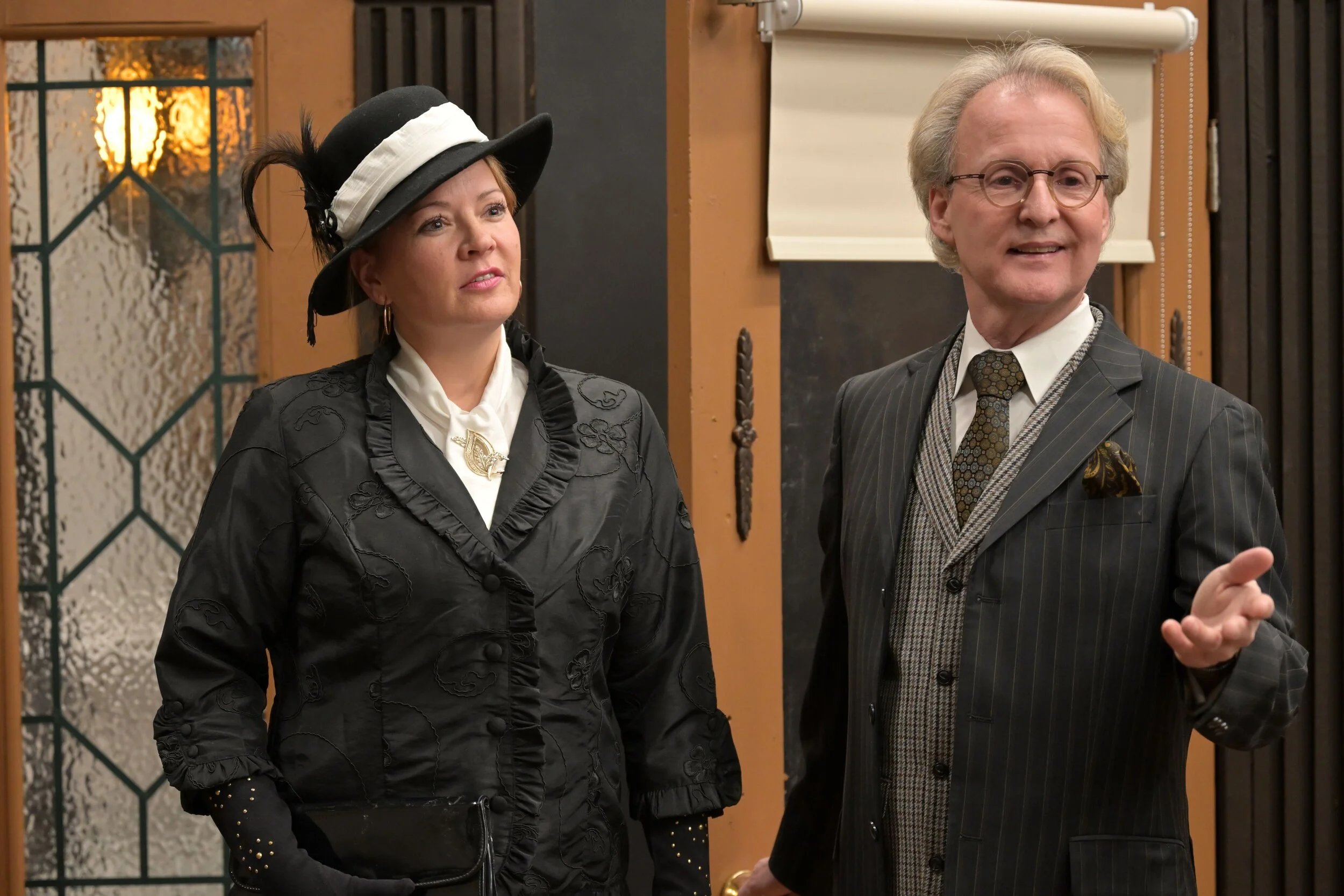
(L-R): Cindy Platten and J.B. Pierre Rajotte

(L-R): Cindy Platten and J.B. Pierre Rajotte

Stage Centre Productions Presents 'The Gentleman Clothier' at Fairview Library Theatre.

Will McGuirk February 5, 2020

By Paul Love
Guest Reviewer

After discovering theatre in the early 1980s, Norm Foster began writing plays at a relatively feverish pace; to date, he has more than 50 plays that have been produced across North America and abroad. One of his newest plays, The Gentleman Clothier, was first produced only six years ago and is now being staged by Stage Centre Productions at the Fairview Library Theatre.

Have you ever felt as though you were born in the wrong time? That very notion is the essence of Norman Davenport (J. B. Pierre Rajotte), a self-proclaimed confirmed bachelor, who longs to live in a simpler time, when people were well-dressed, well-mannered, and not rushing about all the time. The show opens with Norman preparing for the grand opening of his men’s clothing store in Halifax. A brash young woman, named Sophie (Nikki Hogan), walks into Norman’s shop unannounced and insists that he hire her as a tailor. Another unexpected visitor arrives, this time a sophisticated woman named Alisha (Cindy Platten), who is hoping to have a suit made for her husband’s birthday. Alisha and Norman hit it off immediately, and he finds himself rather smitten with her. On the day of the shop’s opening, a man named Patrick (Dayjan Lesmond) comes in, begging Norman for a job, with the promise that he’s very handy. Throughout the first act, Norman speaks of wishing that he lived in the late 1800s, claiming that life was better then. After making a wish on a stray ladybug, Norman is surprised to discover that wishes can true, as he is whisked back to 1894 London (complete with nineteenth-century versions of Sophie, Alisha, and Patrick) for the second act.

J.B. Pierre Rajotte and Nikki Hogan

J.B. Pierre Rajotte and Nikki Hogan

Though he is in the time in which he always wanted to live, Norman discovers that there are many downsides to living in the nineteenth century. The message of the play seems to be that every time has its good points and bad points, so instead of wishing you were in a different setting, you might as well enjoy the here and now that you’re in. Or something to that effect. The play doesn’t delve too far beyond reminding us that the rights of women and the LGBTQ+ community have improved, and that medical advancements have improved our quality of life. This is a comedy, after all, and the play tries not to get too serious about such things, but at the same time, there are moments where Norman gives twenty-first-century advice to the 1890s Sophie and Alisha that is completely irresponsible.

Mr. Rajotte plays Norman as a kind-hearted but fussy man. His portrayal of the character matches nicely with the notion of a man who seems like he doesn’t belong in the twenty-first century. Ms. Hogan adds an energetic spark to the production with a Sophie who has strong opinions that she doesn’t mind sharing, and this juxtaposes nicely with Norman’s fuddy-duddy nature. She enhances some funny moments with good physicality. Mr. Lesmond’s Patrick is kind and eager but rather helpless. He has some good moments with the other actors. Ms. Platten gives a dynamite performance as Alisha. She carries a wonderful energy with her the entire time she’s on stage, and she shows a nice contrast between the two versions of her character. Her mannerisms and facial expressions are spot-on and often hilarious.

Mr. Rajotte’s set is, in a word, breathtaking. From the moment you walk into the Fairview Library Theatre, the Davenport’s Gentlemen’s Clothing store immediately draws you in with its opulent beauty — warm wood finishes, luxurious fabrics, pops of colour, and ornate detailing everywhere. From the quaint hand-drawn shade over the door stage right to the cozy wingback chairs stage left, no detail is missed. Not only does the set serve its purpose of being a men’s clothing store but it is dressed with such painstaking detail that it is the embodiment of Norman’s stylish, old-world sensibilities. Even the symmetry of the store’s display area mirrors Norman’s traditional sense of style. The costumes, which were also designed by Mr. Rajotte (is there anything this man can’t do?), matched the characters’ personalities nicely. 

Director Todd Davies makes good use of the set, never crowding his actors or having them move around just for the sake of moving around.

Performances are at the Fairview Library Theatre, 35 Fairview Mall Drive in Toronto, next to the Fairview Mall. Remaining performances are February 5, 6, and 7 at 8 pm, with an additional matinee performance on February 8 at 2 pm. Tickets are available at the door, by calling 416-299-5557, or by visiting their website. 

(L-R): J.B. Pierre Rajotte and Dayjan Lesmond

(L-R): J.B. Pierre Rajotte and Dayjan Lesmond

Saja Kilani as Jomana, photo by Malak Abu Atal.

Saja Kilani as Jomana, photo by Malak Abu Atal.

'Tales of a City by the Sea' at Theatre Passe Muraille: review by Joe Szek

Will McGuirk December 9, 2019

By Joe Szek

The Canadian Friends of Sabeel present a remount of an award-winning play ‘Tales of a City by the Sea’ by playwright Samah Sabawi. According to its website, “Members seek to raise Canadian awareness of the struggle of Palestinian Christians living under oppression. The members do this primarily through education and solidarity projects in Canada.”

I do recall from the news the atrocities that occurred on the Gaza strip. I couldn’t even begin to imagine the horrors that were faced by individuals living there.

Ms. Sabawi’s play (woven from real experiences of people) is the story of Jomana (Saja Kilani) and Rami (Anas Hasan) who meet and fall in love on the besieged Gaza strip and the atrocities which occur there. Jomana is a Palestinian woman who writes poetry on the beach. Her intended, Rami, is an American born Palestinian doctor and activist who has just arrived on one of the first free Gaza boats in 2008. Both Jomana and Rami are met with struggling challenges as their relationship grows. Ultimately, a decision must be made – Rami will have to choose either to stay with Jomana in Palestine or return to his comfortable life in Texas. This decision is a tough one for Rami. If he selects to stay in Palestine, he leaves his family and career behind for a life ravaged by war. To leave Palestine means to lose Jomana and to ignore the atrocities of the Palestinians.

Obviously not a comedy by any means. Yet the script does manage to find some humour amid the tragedies. At times, the dialogue is poetic in nature. The story reflects the importance of belief in sustaining one’s identity, heritage and culture in a world of change. I believe this is of tremendous importance in our rapidly ever-changing world of the twenty first century.

Poster Sabeel.jpg

Yes, the plot sounds a bit like ‘Fiddler on the Roof’ for the references to tradition, but I was interested to see where the story would take me.

Kayla Chaterji’s two level Set Design designated four playing spaces and fitted the Mainstage of Passe Muraille nicely. Actors appeared periodically on the second level above the stage. Stage left was the living room of the Texas home of Rami and his mother. Centre stage was a gigantic Fig Tree (according to the Director’s Note) with pillows under the tree. The roots of the Fig tree are defiant and resourceful. Stage right was Jomana’s home with her father Abu Ahmad (Basel Daoud).

Matt Lalonde’s Sound Design was quite effective especially in that moment when the bombing begins whereby Jomana and her father must leave immediately.

With these four distinct spaces, lighting each area should not pose any problems. But Lidia Foote’s lighting design was not focused. There were many shadows cast on both sides of the stage. Even with my perch from the front row, there were times where Rami’s mother was in shadow and I had difficulty seeing her face clearly. There were times when lighting sequences were a bit slow and the pace came to a grinding halt briefly. Hopefully, for remaining performances, this will be rectified immediately.

I did like the solo song at the top of the show and the choral singing at the end. I had no idea, however, what was being sung. There were some audience members around me who mouthed the words as the performers sang. It might have been a good idea to let us know in the programme what these songs signified.

This production of ‘Tales’ at Theatre Passe Muraille is a non-professional/community-based group of actors. Given its subject material, it’s a tough one to stage because there is a great deal of intensity and tension that is needed to sustain interest in the story.

Unfortunately, there’s a continual imbalance in Director Rahaf Fasheh’s vision which didn’t make the story as powerful and realistic for me as it could have been.

For one, there are a few moments where Ms Kilani and Mr. Hasan don’t capture the horrific moment of intensity. Both occur in their individual monologues they deliver to the audience. Monologues are challenges in themselves as an actor must first understand what is being said before he or she decides how to deliver it. Instead, all I heard was a great deal of shouting and raising voice when necessary for emphasis with no breath control. Shouting and yelling don’t ring true and believable for me. At one point during their monologues again, I could see Ms. Kilani and Mr. Hasan on the verge of tears. The tears came but they seem to get over it quickly. It usually takes a few minutes for someone to calm down if he or she is crying. If that technique is going to be used, it is the actor (under the director’s vision) who must decide how to incorporate this emotive technique on stage.

The supporting characters do have the odd moment of natural believability, but they also fell into the same trap as Ms. Kilani and Mr. Hasan. Understanding what is being said first and foremost is tremendously important. An actor doesn’t have to shout or yell all the time to gain attention. Let the story and the dialogue do that work.

FINAL COMMENTS: In her Director’s Note, Ms. Fasheh writes that she aims “to present truth, evoke change and inspire activism.” This play is an extremely important one that needs to be shared so we can discuss these issues. And again, hopefully for the remaining performances, the actors will continue to review their scripts and to think about what they are saying first.

There are some talkback sessions after certain performances. There wasn’t one on the night I attended, but I strongly encourage future audiences to stay for them if they can. I always learn more about the play with these question and answer sessions.

‘Tales of a City by the Sea’ runs to December 15 at Theatre Passe Muraille, 16 Ryerson Avenue, Toronto. For further information, visit the website.

Gift to Remember_SCP.jpg

Stage Centre Productions' 'A Gift to Remember' is memorable - Review by Paul Love

Will McGuirk December 3, 2019

By Paul Love

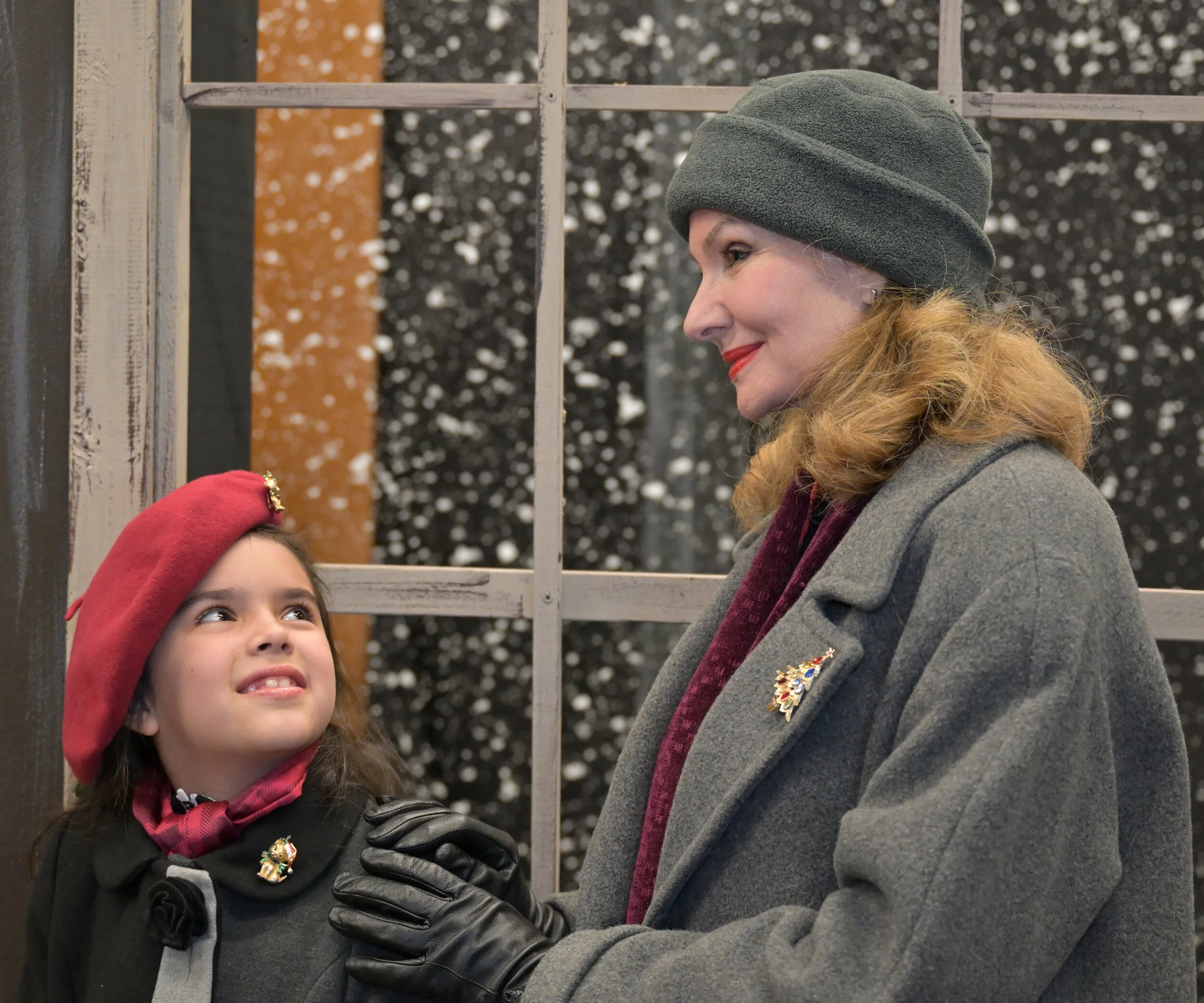
Stage Centre Productions has decided to forego the usual Christmas season classics — A Christmas Carol, It’s A Wonderful Life, and their ilk — in favour of a lesser-known seasonal offering called ‘A Gift to Remember’, which is a Joseph Robinette adaptation of Debbie Macomber’s 1998 book, ‘Can This Be Christmas?’

(L to R): Gracie Palmieri and Heather Goodall, photo by Fabio Saposnik

(L to R): Gracie Palmieri and Heather Goodall, photo by Fabio Saposnik

The play follows the well-worn trope of a group of strangers finding themselves stuck together in a remote location, forced to interact with one another. Matthew (Will van der Zyl) is an under-appreciated software salesman with a marriage that is on the rocks; Len (Jacob Cartwright) is a young naval officer who is trying to get home to his girlfriend so he can pop the question; Nick (Connor Cooke) and Kelly (Jen Hashimoto) are a young couple with a newborn baby; Elise (Heather Goodall) is a single mom with her young daughter, Kate (Gracie Palmieri); Sam (Peter Bannon) and Louise (Christine Dick) are soon-to-be grandparents; and Cathy (Susan Sanders) is a kind-hearted woman on her way to her daughter’s for Christmas. Helping the unfortunate travellers as best he can is the station master, Clayton (Robert Frances).

Admittedly the script is, at best, by-the-numbers with the way it develops the notion of these travellers all becoming very close and familial in a very short amount of time. At worst, there are moments that are a bit saccharine and others that are downright confusing. To be very clear, though, these issues are about the script, not the performances. It is in the performances (as well as some technical highlights) where the good in this production shines through.

Mr. van der Zyl delivers an enjoyable and nuanced performance, giving us a Matt who is a bit prickly at the beginning but whose cold-ish heart really starts to defrost as the play goes on. Ms. Sanders is a delight to watch and listen to as the warm, compassionate Cathy. Mr. Cartwright brings a focused energy to his performance, which contrasts nicely with the more relaxed, subdued performances from most of the other cast members. Mr. Frances brings a warm, gregarious tone in a lovely performance as the always-helpful station master. Kudos to young Gracie Palmieri who really shines in her entertaining performance as the precocious Kate. The rest of the cast did an admirable job, as well. Wonderful singing by visiting carolers (Olivia Jon, Brenda Totman, and Laura Wilde) gave me my first real sense of the holiday season.

Set Designer Pierre Rajotte has created a warm and inviting train station, which, thanks to the effective lighting design of Marc Siversky, contrasts nicely with the sense of forbidding cold in the world just outside the station doors. The assortment of mismatched and various benches, chairs, and stools gave a real sense of small-town America, and the small touches like an out-of-order phone and weathered posters added much realism. My only minor quibble is the fact that anyone exiting stage left in the outdoors reappears through the unseen wall of the station, which diminishes the contrast of warmth inside the station and cold outside. Gayle Owler’s costumes were simple and appropriate.

Director Lorraine Kimsa ably handled the challenge of a play where several characters are essentially trapped together in one room for the entire show. Character movements around the set always seemed natural and sensible. Having the cast stay on the set during the intermission was a nice touch, further strengthening the sense of stranded, weary travellers.

With A Gift to Remember, you can start the holiday season by essentially watching a Hallmark Christmas movie live on stage. It’s a good opportunity to see some great moments performed by some talented actors. Performances are at the Fairview Library Theatre, 35 Fairview Mall Drive in Toronto, next to the Fairview Mall. Remaining performances are December 4, 5, and 6 at 8 pm, with an additional matinee performance on December 7 at 2 pm. Tickets are available by visiting the website.

L-R: Cathy Johnston-Thompson, Jane Hickey, Dave Edwards, Shari Thorne and Jo-Anne Adams, photo by Ajax Community Theatre

L-R: Cathy Johnston-Thompson, Jane Hickey, Dave Edwards, Shari Thorne and Jo-Anne Adams, photo by Ajax Community Theatre

Ajax Community Theatre presents 'The Cemetary Club' - review by Joe Szek

Will McGuirk November 16, 2019

By Joe Szekeres

This is the third time I’ve seen ‘The Cemetery Club’ over the last few years since I began reviewing. It’s interesting how each community theatre production has made its comparison to the wildly successful run of NBC’s mega television hit from the 1990s entitled ‘The Golden Girls’.

I understand why this specific marketing technique is used because the community theatre wants to draw in the crowds if an audience can make a preliminary connection to the show. Yes, there are similarities between ‘The Golden Girls’ and Ivan Menchell’s ‘The Cemetery Club’. Two out of three women are widows. There is a feisty one, a sex starved one, and the loyal one. The women have developed solid friendships through the hardships life throws its way from time to time.

The last two productions I’ve seen of ‘The Cemetery Club’ worked well because each production successfully moved beyond that sitcom format to present a story of real people who deal with life the best way they can.

Ajax Community Theatre’s production does just that too. Under Ray Porrill’s careful direction with a central cast of three dynamic dames who go for broke in delivering the one-line zingers back and forth, this ‘Cemetery Club’ strikes an even balance between capturing how extraordinarily funny life can be at one point while dealing with the stark reality of what life can also throw its way without it becoming melodramatic or schmaltzy.

Three Jewish widow ladies, Ida (Jane Hickey), Lucille (Shari Thorne) and Doris (Cathy Johnston-Thompson) meet once a month to go visit their husbands at their graves. We learn these three couples did everything together before the women helped each other through the loss of their spouses. It is while visiting their husband’s graves one day the ladies meet quiet and shy local butcher Sam (Dave Edwards) who is also visiting his wife’s grave. The ladies begin to take a ‘shine’ to Sam and the ‘fight’ is on. In the second act, we are also introduced to Mildred (Jo-Anne Adams), an acquaintance of the ladies who craves attention and focus most of the time.

Jennie Archambault’s set design of Ida’s living room in Forest Hills, New York, is comfortable looking with tasteful décor throughout. A piano/organ can be found stage right while a bar/drinks table is found stage left. There is the central door upstage centre with an archway upstage left leading to the kitchen. There is a stairway upstage right leading to the bedrooms of the house. Chris Northey’s lighting design brightly focuses our attention where necessary. At the top of the show, we see the three headstones of the husbands. Five minutes before the play opens, these three headstones are removed.

I especially liked Mr. Northey’s lighting focus on the three headstones when Ida, Lucille and Doris are at their husbands’ graves. There was nice work from all three during their individual monologues where they talk to their husbands.

The theatrical chemistry between Jane Hickey, Shari Thorne and Cathy Johnston-Thompson is a treat to watch. These three gals are a solid ensemble of performers who immediately captured my attention at their first entrance while innately never pulling focus from each other. Instead, each has presented a very real person while not duplicating a television screen counterpart from ‘The Golden Girls’.

Jane Hickey’s Ida appears to be the most grounded and sensible of all three. Yes, Ida misses her husband tremendously and is most appreciative of her friends who have helped her through her grieving. But Ida begins to understand that there is more to life than simply visiting their dead husbands and wants to start anew somehow. As man hungry Lucille who wants to ‘get going’ again, Shari Thorne deliciously uses her feminine wiles to comic effect one minute (pay close attention to the seduction of Sam in the second act) while showing us a very humane side near the end of the play. Cathy Johnston-Thompson’s Doris is quite touching at times. Ms. Johnston-Thompson’s eyes convey so much about her characterization of Doris. It has been four years since Doris’s husband passed away, but Ms. Johnston-Thompson uses her eyes to convey poignantly that she could begin to cry at any moment because she misses her husband so much and remains loyal to him and his memory.

Dave Edwards’ nice ‘guy’ Sam offers an effective on-stage juxtaposition to the rapid-fire dialogue between the three ladies. Again, pay careful attention to how Mr. Edwards beautifully conducts his reaction to Lucille’s seduction without upstaging Ms. Thorne’s work. As the ‘show-off’, conceited acquaintance Mildred, Jo-Anne Adams bursts onto the stage with much fanfare to offer another amusing view on how the three friends deal with her. (Can everyone say MEOW?)

FINAL COMMENTS: In his Director’s Note, Mr. Porrill writes how this play ‘handles a very sensitive area of death and memory with humour and heart and dialogue that has bite and warmth’. How very true with this local theatre production in Durham.

Give yourselves an early Christmas/ holiday gift, or even one more JUST GO to see some fine local entertainment here in Durham Region.

‘The Cemetery Club’ continues to November 23. For further information, visit the website.

Julia Hendrik and Scott Simpson, photo by Jennifer Etches

Julia Hendrik and Scott Simpson, photo by Jennifer Etches

‘MURDER WEAPON’ by Village Players is hand on knee slapping fun: review by Joe Szek

Will McGuirk November 10, 2019

By Joe Szekeres

What’s not to like about the entertainment genre of the British murder mystery? It’s another staple of the community theatre scene with fun in trying to piece together what happened or how this oddball character is connected to events for whatever reason. The sometimes-convoluted plot of upper-class folk who are usually seeking revenge, involved in a salacious love triangle, or covering one’s tracks to get money from a will are only three sample plot elements.

Don’t bother looking for heavy Shakespearean themes in a murder mystery. It’s just a good evening out for entertainment. Over the years attending community theatre, I’ve seen some God-awful productions of murder/suspense mysteries. But fortunately, The Village Players’ production of Brian Clemens’ ‘Murder Weapon’ does not fall into that category. I thoroughly enjoyed myself as I tried to piece together the events, so it made sense to me. The challenge for me in this review is not to spoil so much of the production that you don’t want to go and see it.

GO AND SEE IT. It’s a fun filled night.

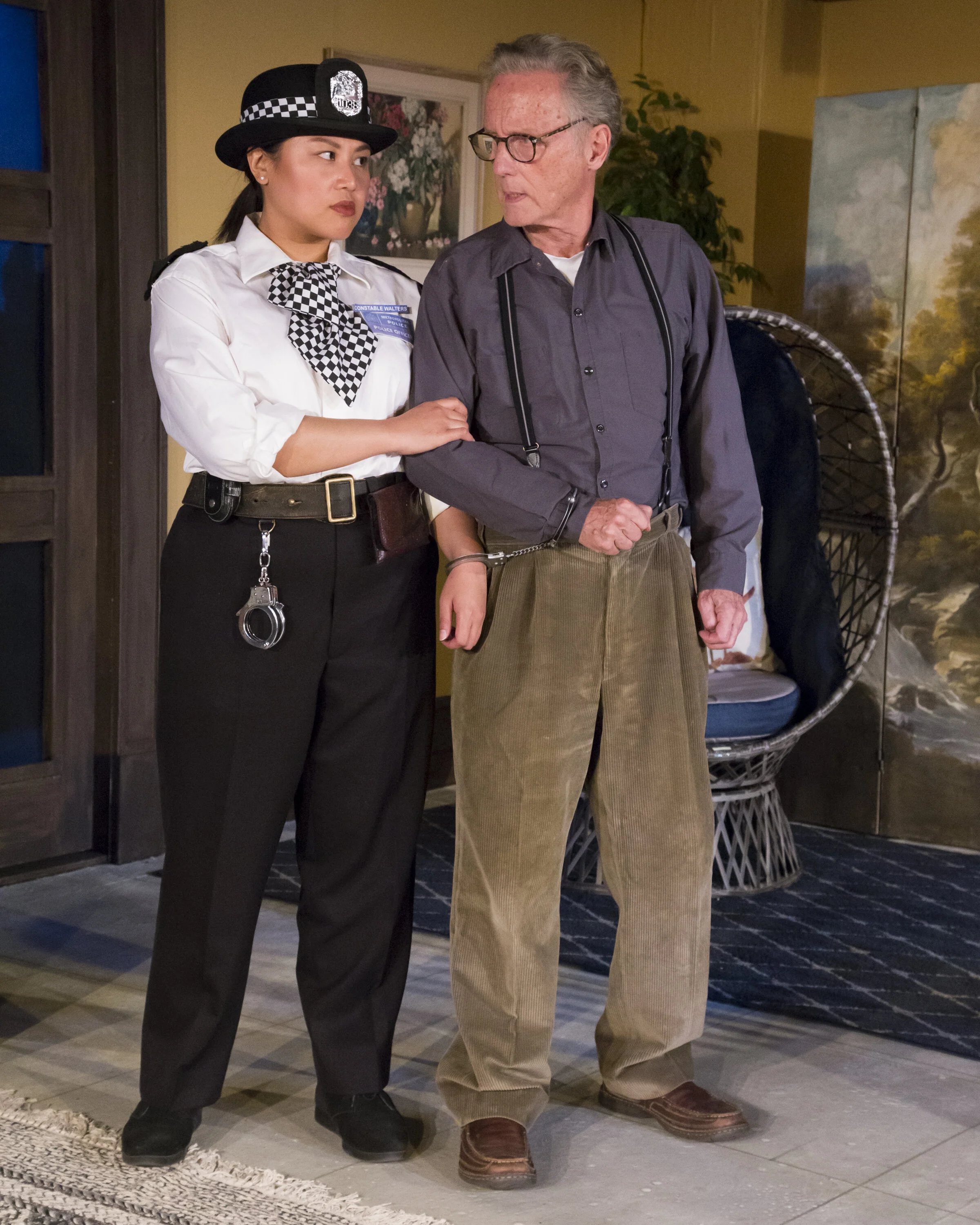
The action of the story takes place on a Saturday and Sunday in the updated Victorian conservatory of Dysart Hall. Chief Inspector Jessica Bligh (Julie Kern) accompanies her friend Diane Tulliver (Julia Hendrik) home to Dysart after they have spent an evening at the local theatre/opera production. The ladies arrive to find an extremely horrifying scene. Diane’s husband Paul (Scott Simpson) has been shot dead and ex-convict Charley Mirren (Don Baker) stands over the body holding a gun. To all of us, it appears as if there is no doubt about the evidence presented, but Ms. Bligh and her colleague Inspector Fremont (Steve Ness) begin to dig deeper into events and soon discover that these events are not what they seem and appear to be.

There, that’s all I want to give away about the story as doing more would only spoil the fun. I followed Director Jennifer Monteith’s direction in her programme note by keeping “the curtain drawn for now so you can discover the show for yourself.”

The intimacy of the three-quarter thrust stage of the Village Playhouse lends itself extremely well to the comfortable quarters of the conservatory with an excellent design by Rosemary McGillivray. There are French doors centre stage with another door just off stage left. A bookcase containing many books and titles of play scripts can be found next to the stage left door. A bar/drinks table is at the apex. A desk is found down stage left. A comfortable looking love and seat and matching chair are found up stage right with a window. There is a circular wicker chair stage left upon entering through the French doors. Many of the set pieces enhanced the look of the conservatory. Costumes designs by Theresa Arneaud and her team helped delineate specific characteristics of each person.

Fraulein Almariego and Don Baker, photo by Jennifer Etches

Fraulein Almariego and Don Baker, photo by Jennifer Etches

Director Jennifer Monteith certainly had her eyes everywhere because so much goes on in preparation for a murder mystery. I was pleased that she and the cast made the good choice not to adopt botched British accents as that would have been painful to hear. I was also fascinated with the incorporation of flashbacks in this production and how they were staged. It was a seamless transition back and forth so kudos to Ms. Monteith and lighting designer Trevor Marlatt.

For me, an important element of a mystery is to ensure the pacing keeps moving along nicely as there is always a great deal of exposition to get the story going. And Ms. Monteith did keep the pacing up. She has selected a cast who innately knew how to keep things moving while pausing in the right moments to create a suspenseful or tense moment.

Julie Kern is an assertive chief inspector who knows what she is doing and wants things done when they are to be done. Ms. Kern still maintains her feminine dignity and persona even in those moments where she must be aggressive in her question of murder suspect, Charley Mirren. In this production and script, it was intriguing to see a take charge woman instead of the male dominant one. As the sometimes-fumbling colleague, Steve Ness’ characterization of Inspector Freemont becomes a likeable, bumbling sidekick who gets annoyed periodically with Chief Inspector Bligh as she orders him around or teases him. Fraulein Almariego’s supporting role as Constable Walters once again nicely reflected the dominant role of women in authority in this script.

As the confused, dazed and sometimes hapless suspect and ex-convict Charley Mirren, Don Baker’s performance (and resemblance to the late actor Richard Mulligan) deserves a standing ovation. Mr. Baker only had five days before opening night to learn the role as Alex Bortoluzzi, who was originally cast, became ill and unable to perform. With this knowledge, I was quite impressed at the top of the show when Mr. Baker made his first entrance sans script. It was about ten-twelve minutes in before I saw the script in his hand, but it did not detract at all from my enjoyment of Mr. Baker’s work. Nice work to keep the production going, Mr. Baker.

As Diane and Paul Tulliver, Julia Hendrick and Scott Simpson add a touch of mystery and intrigue in their relationship with each other and with Charley. As the Tulliver’s eccentrically odd friend, Hugo, Mark Dallas connivingly and masterfully puts his friendship to the test with Diane and Paul. Mr. Dallas’ adoption of an English flavour did appear consistent to my ear for the most part.

The one slight quibble I did have was the use of the blackout in the theatre. Blackouts should be used sparingly and quickly so the audience doesn’t lose focus on the story. I realize that blackouts are needed possibly to bring props on and to ensure actors are in place for the ‘surprises in store’; however, the blackouts here are just a tad too long where my concentration was broken momentarily.

‘Murder Weapon’ continues to November 23 at The Village Players’ Theatre. For further information, please visit the website.

← NewerOlder →
Screenshot 2023-06-10 at 10.18.16 PM.jpg
TownBrewery.jpeg
SecondWedge.png
Atria_logo.png
apologue_logo2.png
kv_eyes.jpg
Avanti_logo.png
RMG SQ.jpg
11666057_10154039986198378_4496427229864055720_n.jpg
COnvergenceSQ.png