• SLOW -
  • SLOW -
  • SLOW -
  • NEWS -
  • SLOW -
  • SLOW -
  • SLOW -
  • Photos by Mikki Simeunovich -
Menu

SLOWCITY.CA

  • SLOW -
  • SLOW -
  • SLOW -
  • NEWS -
  • SLOW -
  • SLOW -
  • SLOW -
  • Photos by Mikki Simeunovich -
×
Photo by Thomas Kowal

Photo by Thomas Kowal

It’s a Wonderful Show — Scarborough Players Take on a Christmas Icon

Will McGuirk December 6, 2017

By Paul Love
Guest Writer

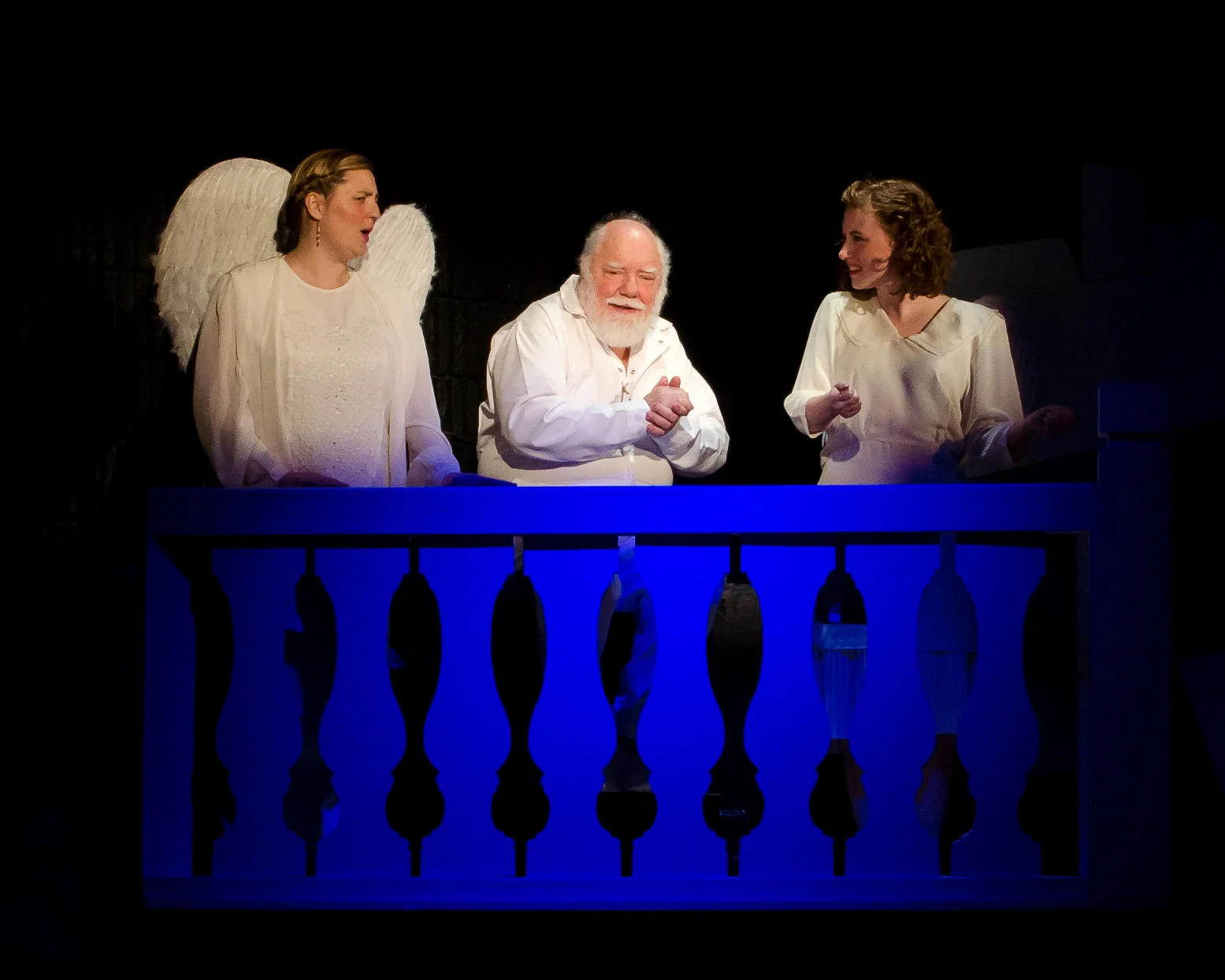
Ask people how they might finish the sentence “It’s not Christmas without ____ “, and one response you will probably hear a lot is “It’s a Wonderful Life”, the beloved 1946 Frank Capra film that has become a traditional piece of holiday season entertainment. Despite its initial tepid box office reception, the film, which starred James Stewart and Donna Reed, has become truly loved over the 70+ years since, leading not only to the traditional annual viewings, but also the development of musical theatre and radio play adaptations. In 2007, playwright Doug Rand decided to create a theatrical adaptation that was faithful to the film, and that is the version of IT’S A WONDERFUL LIFE being performed by the Scarborough Players this holiday season.

Rand’s play is faithful to Capra’s film, almost to a fault, but the real gift of this production is in seeing other talented actors breathe new life into a story that many of us know well. First of all, kudos must be given to lighting designer, David Buffham, and set designer, Anthony Jones, for drawing us into their lovely, uncomplicated vision of Bedford Falls. Buffham alternately gives us a sense of the cold, wintery outdoors, and bright, warm interiors, and even uses his lighting magic to answer the question “How are they going to deal with the gym floor?” Jones, understanding that there are too many locations to have a fixed set, instead gives us props and small set pieces that come swirling on and offstage—much in the way they might when a person’s mind switches from one memory to the next—to give us just enough of a sense of setting for each vignette of George’s life. Much of the play is, in effect, a memory play, and the technical achievements of Buffham and Jones, along with Lorraine Kimsa’s solid, natural direction pull this off to great effect.

Photo by Thomas Kowal

Photo by Thomas Kowal

Greg Nowlan is our George Bailey in this production, and despite the gravity of playing a character so ingrained in our collective pop culture unconscious, Nowlan carries the production along with wonderful energy, and an affability necessary to convince the town--and the audience—that George is someone to root for. Matching him step-for-step is Elaine O’Neal, who infuses her performance of Mary Bailey with a wonderful, soulful warmth, coupled with a confident, one-step-ahead-of-you smile. It’s a really nice bonus that Nowlan and O’Neal have great chemistry together.

Chip Thompson plays the villainous Mr. Potter, and refreshingly chooses to carve his own path with the character, giving us a performance that is in many ways different from that of Lionel Barrymore’s, but is still very good. The all-important Angel Second Class, Clarence, is performed—with great theatrical instinct—by Ian Fox. Fox deftly walks a tightrope between wise old man, and innocent, naïve angel, giving the scenes with Clarence and George much depth and power.

Special mention must be given to the children in this production, who were eager and enthusiastic and maintained believable characters, really adding to the show’s beating heart. Abby Hamilton-Diabo was impossibly adorable as Zuzu, particularly in the scene where she’s sick in bed. Kudos to Isabelle Pelowich in her wonderful portrayal of Young Mary, whom she presents as an exuberant girl with a self-awareness that extends well beyond her years. Pelowich’s performance ends splendidly with her giddy declaration of undying love for George.

Whether you’ve never seen Frank Capra’s It’s a Wonderful Life, or you’ve seen it 20 times, for the sake of this well-acted, well-staged production, you owe it to yourself to start the Christmas season off right with Scarborough Players at the Scarborough Village Theatre. You probably shouldn’t delay—rumour has it that this production is selling out quickly.

Photo by Thomas Kowal

Photo by Thomas Kowal

Photo by Jonathan van Bilsen

Photo by Jonathan van Bilsen

A Beast of a Good Time — Scugog Choral Society Stages Beauty and the Beast: The Musical Pantomime

Will McGuirk November 28, 2017

by Paul Love
Guest Writer

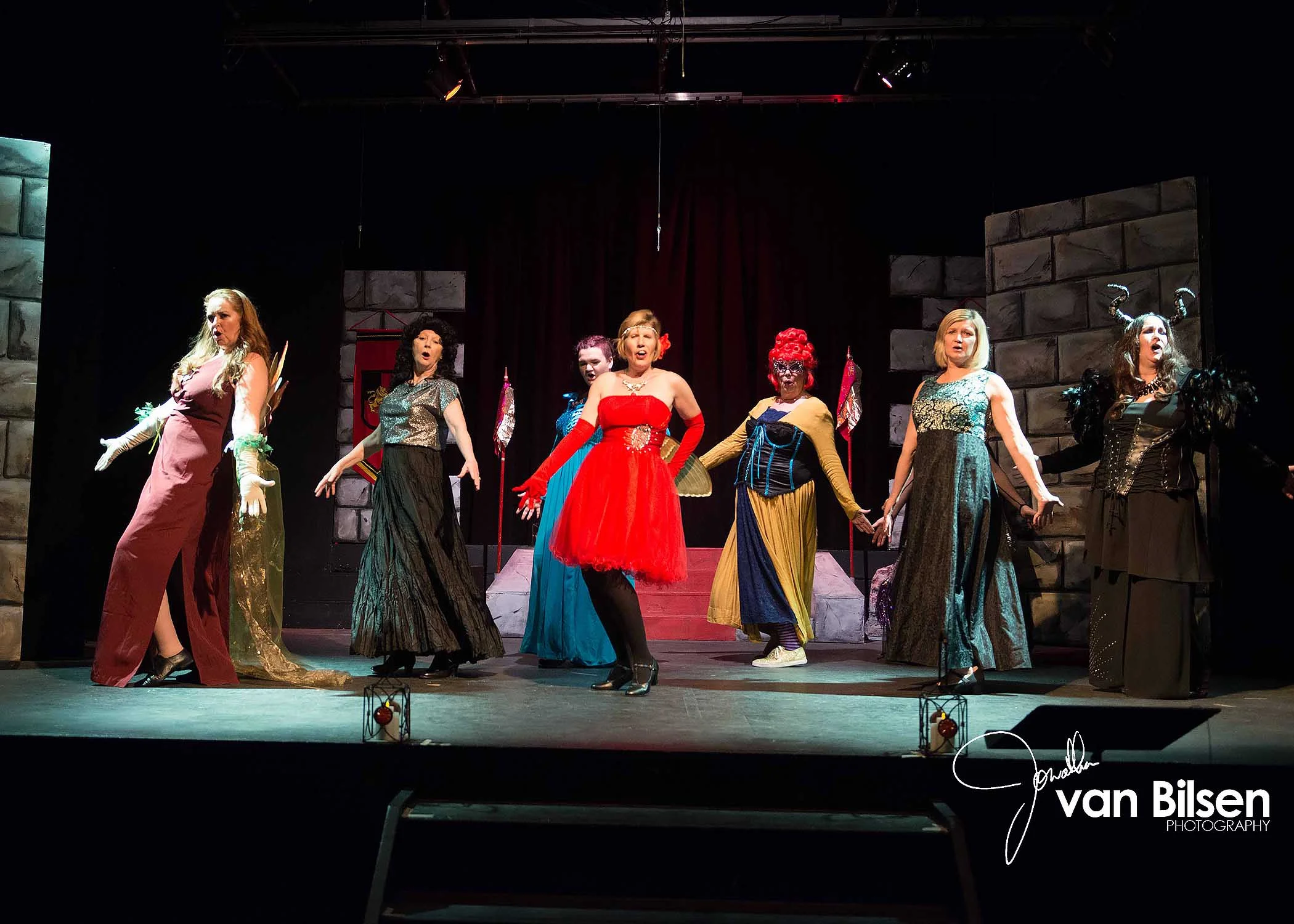
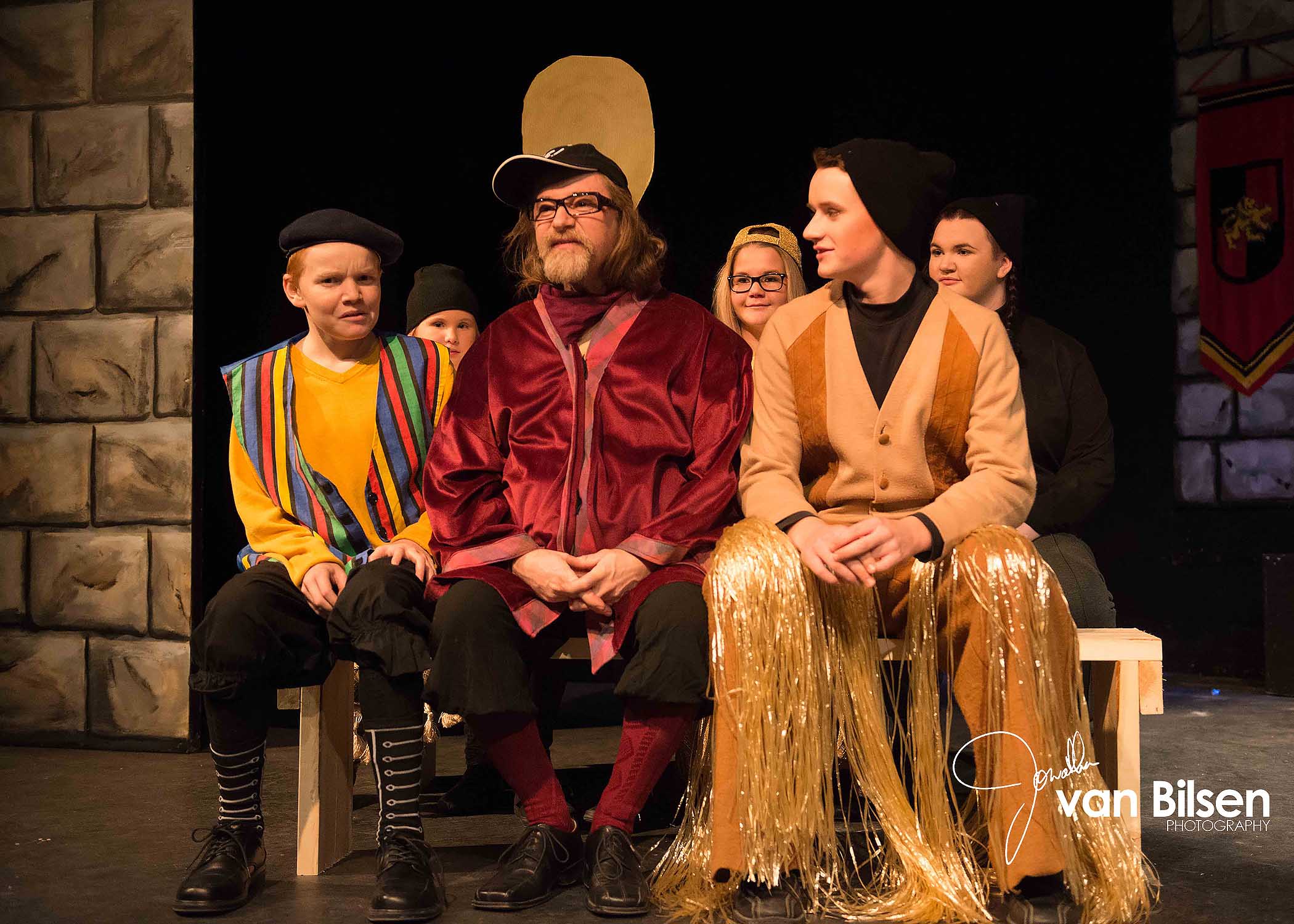
Pantomime is a time-honoured musical theatre style that was developed in England, and whose roots stretch all the way back to ancient Rome. It is characterized as a mixture of singing, dancing, topical humour, and slapstick comedy, usually based on a well-known fairy tale. The Scugog Choral Society’s BEAUTY AND THE BEAST is all of that and much more.

The story of Beauty and the Beast has become a popular one these days, thanks to Disney’s live action version being released earlier this year. The main story is there—a prince is cursed and turned into a beast, and only true love will break the spell; a socially outcast woman meets the beast and is determined to bring out the good in him. But the story takes a backseat to a cavalcade of jokes, pop culture references, silly but fun song and dance numbers, and—literally—toilet humour, all with enthusiastic audience participation.

Speaking of audience participation, the person who is most effective at bringing the audience along on the adventure—while also making them roll in the aisles with laughter—is David Hooker as Bertie. Hooker has such a gift for improv and humour that he seems as though he’d be perfectly at home headlining at a comedy club. With his warm smile and the twinkle of glee in his eye, he had the audience—particularly the children in attendance—totally captivated. Bringing a more madcap, clownish—and very funny—style of comedy to the proceedings is Kathy Knight, who plays Dame Fifi Latrine. Knight, in her zany, colourful costumes and applied-with-a-slingshot makeup, was game for lots of crazy high-energy antics, which also endeared her to the kids—and the grownups—in attendance.

Photo by Jonathan van Bilsen

Photo by Jonathan van Bilsen

Photo by Jonathan van Bilsen

Photo by Jonathan van Bilsen

Also adding to the laughs and silliness are Jim Knight as eccentric Professor Baguette, Don Coverley, using great physical comedy as the evil Claude, and Jeannie Herrold, who wonderfully embraces her role as the main villain, Diabla. Young Luke Spadzinskii holds his own with the grownups as the troublemaker Billie. The title characters, played by Skylor McQueen and Donald Bark, provide warmth and a romance with their on-stage chemistry.

Music is used effectively in the show, with standards from Disney’s Beauty and the Beast like “Be Our Guest” and the title song being intermingled with classic oldies like the Turtles’ “Happy Together” and modern pop songs like Bruno Mars’s “Uptown Funk”. Despite the focus being predominantly on the big laughs, the show has a wonderfully poignant moment when Belle and the Beast turn the gorgeous, under-appreciated Keane song “Somewhere Only We Know” into a touching duet that really resonates with their story.

No show is perfect, and there were a few flubbed lines and miscues throughout the production, but the real genius about this clever cast is that they were able to work their mistakes into the show and even mine them for laughs.

Although some of the humour is aimed straight at the adults in attendance, this show is definitely a lot of fun for kids. In the words of 7-year-old Carter, “It was great. I like how they added new characters, and how they kept making references to the real world. That was so funny.”

If you’re looking for a fun musical theatre experience that you can bring the whole family to see, check out Scugog Choral Society’s production of BEAUTY AND THE BEAST at the beautiful Town Hall 1873 in Port Perry before it’s gone. Remaining performances are November 30th and December 1st at 7:30, and December 2nd at 2 pm.

Photo by Jonathan van Bilsen

Photo by Jonathan van Bilsen

Photo by Peter Yu

Photo by Peter Yu

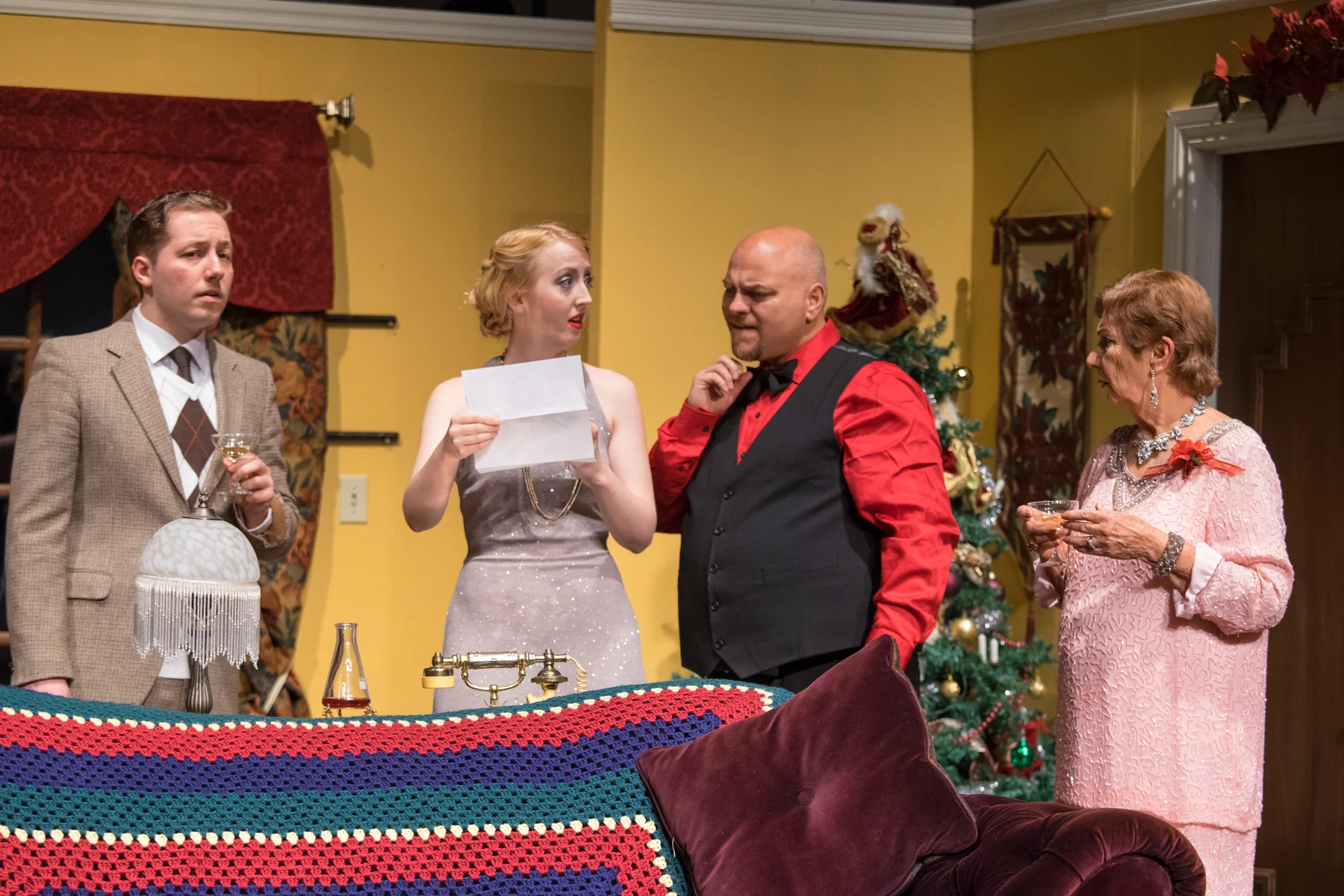
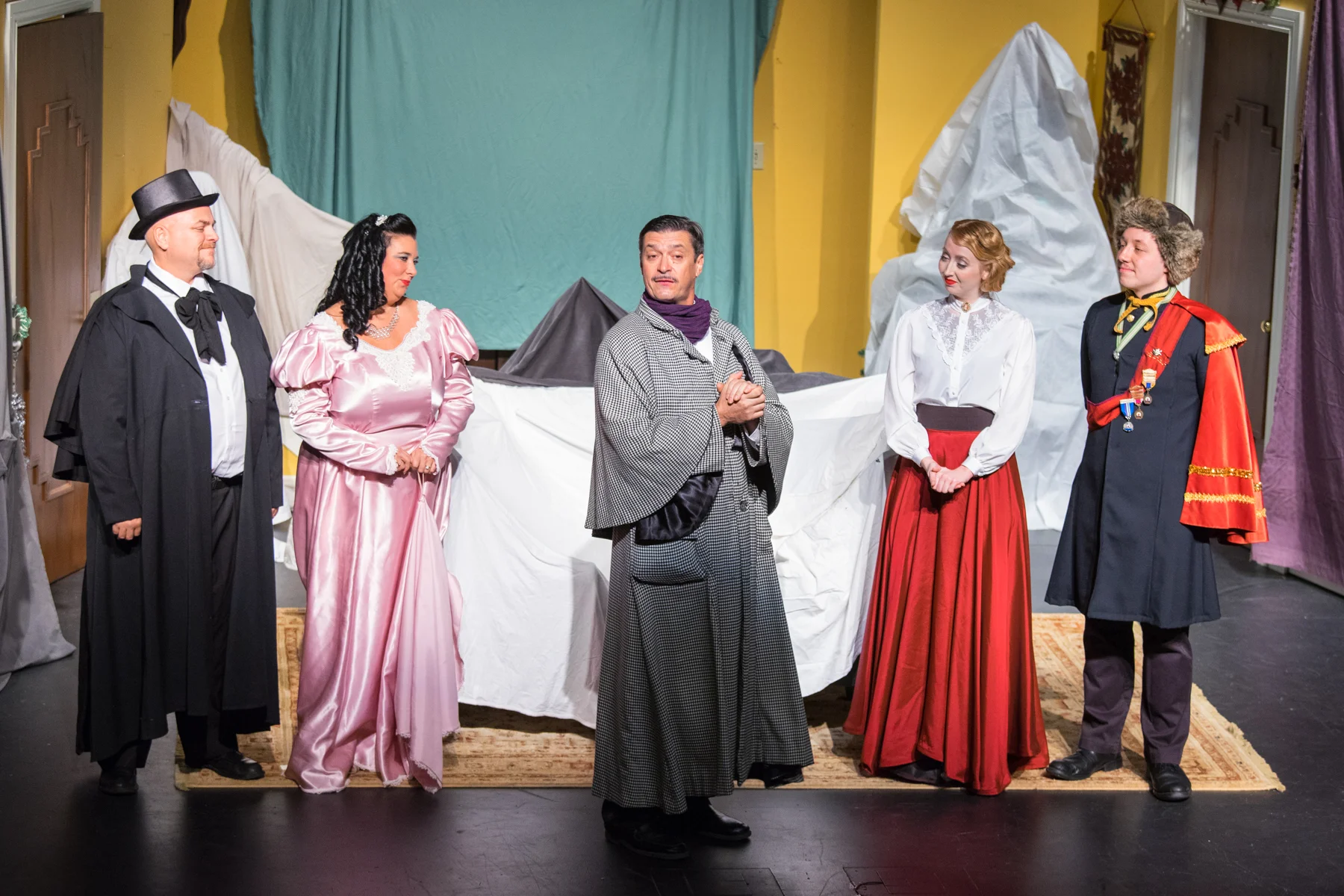
Holmes Is Where the Heart Is — Ajax Community Theatre stages The Game’s Afoot

Will McGuirk November 21, 2017

By Paul Love
Guest Writer

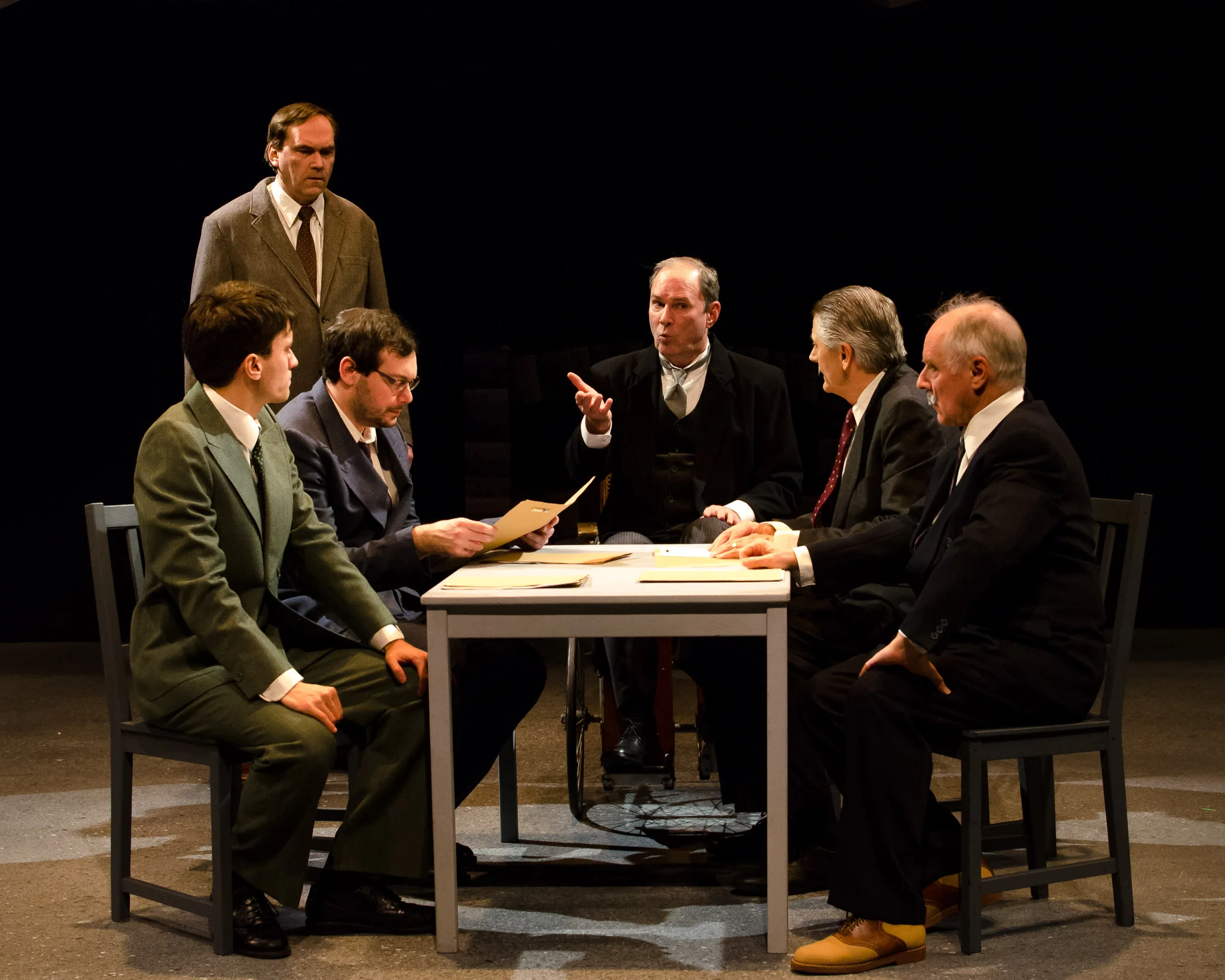
Sherlock Holmes, according to the Guinness World Records, is the most portrayed character in the history of film, television, and stage combined. That’s a lot of built-up history to take on when you decide to create a new Holmes story. In 2012, Ken Ludwig, of Moon Over Buffalo and Crazy for You fame, decided to do just that. But instead of following the straight-up drama formula so often used with Sherlock Holmes, he chose to create a mystery-comedy, and called it THE GAME’S AFOOT; OR HOLMES FOR THE HOLIDAYS.

Photo by Peter Yu

Photo by Peter Yu

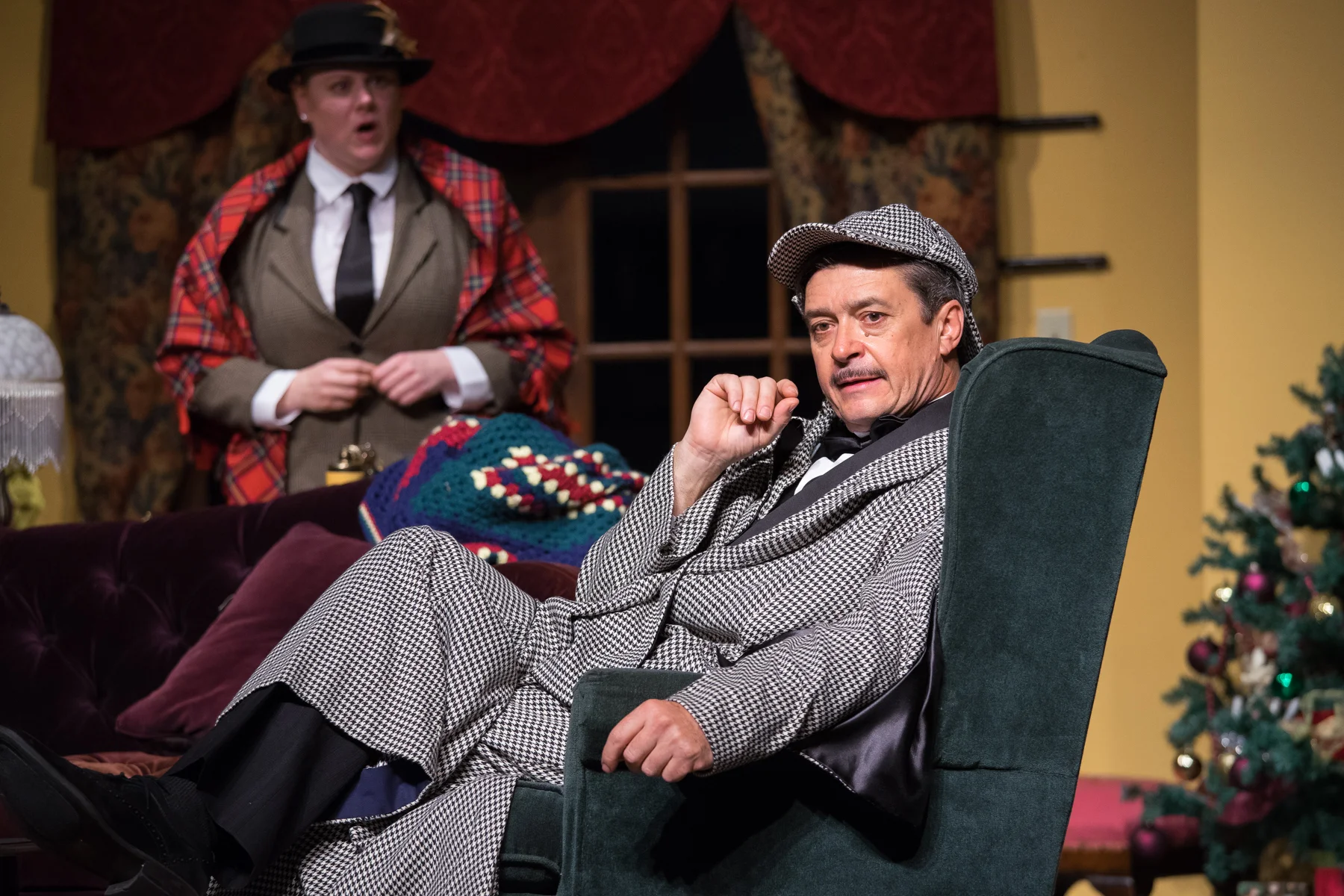
Ajax Community Theatre is currently staging this enjoyable production at the St. Francis Centre in Ajax. THE GAME’S AFOOT is a fictional story about a real person. William Gillette was a Broadway star who loved playing Sherlock Holmes so much that in the early 1900s, with the blessing of Sir Arthur Conan Doyle,he wrote a new Holmes play that was such a smash success that Gillette went on to perform it for decades.

THE GAME’S AFOOT begins, surprisingly, with an ending — the ending of a performance of Gillette’s play. The actors’ purposely hammy performance of these final few moments of the play-within-the-play have a wonderful over-the-top quality reminiscent of what you would see in the films of that era. It makes you wish you could view this production in its entirety. During the curtain call for Gillette’s play, an unseen attacker shoots Gillette, and everyone rushes to his side amid the well-staged chaos. The remainder of the play takes place at the Gillette mansion in Connectiut on Christmas Eve, where Gillette has invited his cast-mates for a party, but with a hidden agenda.

The scene opens with Gillette’s mother, Martha, rushing around in late preparation for the party. Martha is played by Jackie Del Greco with a sweet delicate grace that is occasionally swept aside in favour of a tenacious mama bear who will protect her cub when she needs to. Filling the shoes of William Gillette is no easy task, but Craig Martin does it quite deftly, presenting us a complicated man who is world-weary yet still has a burning passion for theatre, his friends and family, and his beloved Holmes. Martin, dressed splendidly by costumiers Judy Dee and Kathlyn Angelo, not only bears a striking resemblance to Clark Gable, but he carries off his performance with all the wit and charm of Gable and his ilk. We don’t see much change in his character when he dons Holmes’ famous cloak and deerstalker cap, but that seems to be the point: after embracing and portraying a character for so long, the persona of the actor and that of the character eventually get lost in one another.

Photo by Peter Yu

Photo by Peter Yu

Adding to the mystery are Gillette’s guests — the cast of his long-running show. The cast and Ludwig give us an amusing insight into the way actors behave at social events — at times awkward and quiet, and at other times breaking into pieces of performance they have been embedded in their souls over the years. Mark Salonius is wonderfully bombastic as Felix Geisel, a loud, Shakespeare-quoting force of nature who will go to great lengths (and does so with some wonderful physical comedy) to help his friends. Always keeping Felix in check is his wife, Madge, played by Sarah-Liis Salonius with a hilarious eyes-that-shoot-daggers ferocity that plays well against the positive energy of the other characters. Aggie Wheeler, the young ingenue with a tragic past, is portrayed with a bright yet well-grounded spirit by Amber Dawn Vibert, who says so much with a mere facial expression. Dillon Hunter gives us the sweaty, awkward eagerness of young, up-and-coming actor Simon Bright, presenting a character that is both funny and relatable. Rounding out the cast is Rebecca Kingdon as Inspector Goring whom Kingdon plays with a wonderfully controlled effervescence that occasionally forces its way out to comedic effect. And finally, there is theatre critic and gossip-monger Daria Chase, played with venomous zeal by Catherine Speiran.

Though the production had a few glitches (doors that didn’t work properly, moments where stage hands could be seen), it excelled technically in many ways (thunderstorm sound and light cues were effective but not overwhelming, and the newsreel video was very well done).

Overall, the play was well-paced and well-performed. It’s not easy to fill your audience with mystery one minute and make them laugh out loud the next, but the cast of THE GAME’S AFOOT pulled it off nicely. If you’re in the mood for some solid comedy mixed with a bit of mystery and intrigue, check out Ajax Community Theatre’s production of THE GAME’S AFOOT before it’s gone. Remaining performances are November 23rd, 24th, and 25th.

Photo by Peter Yu

Photo by Peter Yu

MAMBO-BannerHomePage2.png

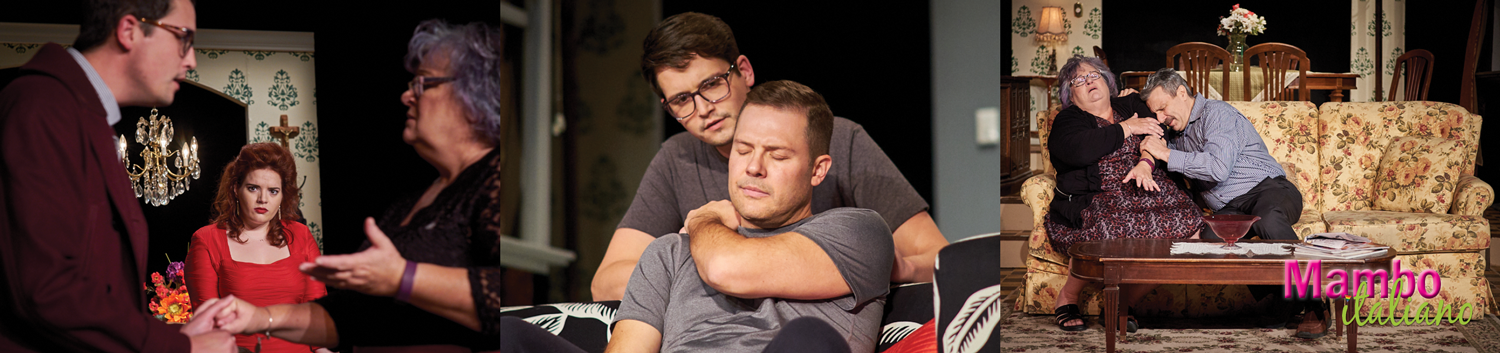
Viva Mambo Italiano, Whitby Couthouse Theatre's latest hit

Will McGuirk November 15, 2017
mambo.png

Mambo Italiano - directed by Edward Niles

by Velika Maxam
Guest Writer

he art of story telling certainly begins with a well-written script, but the interpretation in the hands of a focused director can tip the scales towards great entertainment.  The passion to produce an excellent stage play requires courage and finesse to mould a story such that the audience is swept away by the narrative and moved by the message behind it.  We see this in Whitby Courthouse Theatre’s season premiere of ‘Mambo Italiano’ with the artistic vision of first time Director Ted Niles who cleverly unfolds this comedic and often poignant tale of sexuality, identity, and culture with an interpretation that not only resonates but also delightfully converges comedic performance with truth.

A stage play written by Steve Galluccio, Mambo Italiano’s on screen debut in 2003 produced zany characterizations by Paul Sorvino, and Mary Walsh, to name a few, portraying two Italian-Canadian families forced to confront their own cultural expectations and identity when it’s discovered that their sons Angelo and Nino, are not just friends and roommates but lovers. Their startling revelation sends each family into a pizzelle, forcing them to decide between their sons’ sexuality and their culture and in turn questioning their own personal beliefs of love and family.  Both stage and screen versions touch upon the issues of machismo culture versus sexuality, and both are relevant pieces today in demonstrating the struggles of the LGBTQ community and how far our society has come in embracing sexual identity.  The stage play, however, allows the audience to form a more intimate connection with the emotional challenges of Angelo and Nino who struggle to find a place in their Italian Catholic worlds for their sexuality and gay identity. 

The opening night performance of this show was seamless, which could have been in part to the cast and crew’s hard work and preparation. However, the warm reception from their preview night’s audience may have also helped, which included attendance by invited guests from the Whitby Senior Activity Centre, staff and volunteers of the AIDS Committee of Durham, and staff and students of the Gay Straight Alliance of Anderson CI.  Including such pertinent groups to preview this play, one that touches on some important key issues in our community, shows a particular brand of networking that demonstrates well Whitby Courthouse Theatre’s understanding of their role in providing entertainment that is relevant to the audiences they serve.  They also must be applauded for straying from the regular community theatre fare, and taking a leap off course to deliver content that is not only entertaining but also edgy and relevant, leading the way hopefully for other theatres to follow suit.

Our story begins when Angelo (Darren Brunke) who decides to come out to his family, much to the reluctance of lover Nino (Mark Boyko), and there is just enough humour woven in by the playwright to carry us through the emotional depth of what is to ensue during the pitting of cultural disappointment by both families against the struggle of two young gay men yearning for personal truth and acceptance.  Both Brunke and Boyko blend their individual characterizations well, between their respective Italian identities and the truth of who they are as gay men. Throughout, each actor’s well-timed comic delivery, plus emotional monologues, draws us in further, wanting to see them triumph in their journeys. The pacing and blocking in this play is excellent, allowing for the humour necessary to the piece to be delivered well.  As well, kudos to not only the director but to both actors for displaying enough of their intimacy realistically, and in such a way that not only pulls us in to the beauty of their relationship but that we also transcend their sexuality and simply watch with empathy and envy two people lucky enough to find love.

As the story continues, each family battles with the issues of homosexuality and its clash with their cultural expectations.  The cast delivers their individual struggles of identity, self-acceptance and its ensuing contentions well, by simply presenting believable performances. Anna Barbieri (Genevive Hebert-Carr) as an example, Angelo’s sister and comrade in arms who encourages his coming out, is also the good Italian daughter expected to be a wife and mother, but the fight against her anxiety that arises from yearning for independence is made very clear on stage.  We see this same inner strife with Nino, who is steadfast to the expectations of his dead Italian father, and proud mother while balancing his love for Angelo, and this inner conflict resonates throughout his performance.  Even husband hungry Pina Lunetti (Laura McGowan), touchingly recounts her own dreams of becoming a fashion designer, which is quickly quashed by the expectations of her domineering Italian father, forcing her to join the family business, but leaving the audience anguished for her predicament.  In fact, each actor in Mambo Italiano has strong moments of truth, communicated well in their monologues. When emotions are conveyed as well as they are in this piece, an actor can still ask themselves, is there yet another layer of depth available to me in this moment? A cast as good as this one, is certainly of the calibre to meet that challenge

The play’s fluidity can be credited in part to a well-plotted and designed set, thanks to set designer Ian Handscomb.  Shifting between living room, to apartment, to nightclub, to cemetery, and back again, all done with such ease that we never lose focus in the story line.  With the aid of brilliant lighting and well-chosen music, we the audience remain engaged as scene changes are flawless, of which the crew needs to be applauded for.  We also get a true sense of the Italian immigrant experience from the Barbieri’s living room, which is juxtaposed next to Angelo and Nino’s urban minimalist flat.  Each of these rooms becomes a mirror of the other’s experience, or as Ted Niles mentions “the mirror idea in Ian’s set design is wonderful because although we are all individuals we carry our past with us.  So although the placement of the furniture is a mirror of each other’s style, it represents the individuals.”  As well, the hanging of the cross in Angelo and Nino’s flat (not indicated in the script), was cleverly placed and symbolic as it tells us, that being gay doesn’t simply eliminate one’s Italian Catholic identity.  This finishing touch in set design left me curious to learn how much of the written stage direction was utilized in the play, and to my gratification most of it appears to be Niles’ own interpretation, which is a welcomed change to see productions taking such artistic risks, particularly in community theatre.  

Between Maria (Barb Grenier) and Gino (Peter Mazzucco) Barbieri’s chandelier lit dining room, marital minded Lunetti’s roma tomato red evening dress, to the spitfire marinara delivery of Nino’s mother Lina Paventi (Gerri Sefi), we certainly get a primo tasting of Italian culture, which is necessary to the plot. The production team again needs to be applauded, through the director’s vision, in utilizing all the tools available to them to set a mood via well-chosen props, good costuming, and plain old home grown well-developed characters.  

The theme of self-expression and approval is strong in Mambo Italiano, leaving one to question, whether gay or straight, how true am I to myself, and must I sacrifice who I am for others, will I be rejected for who I am?  This question reappears throughout, and again is the mark of a good director, if we are able to absorb well the theme of the play.  It’s well cast, well acted, well conveyed, well directed, comedic, fun and funny, and with the guidance of President and first time Director Ted Niles, who has definitely left his mark on this piece and in a way that really works, the audience is left entertained. Whitby Courthouse Theatre has raised the bar in Durham community theatre, giving audiences the challenge they’ve been looking for in story lines that leave you thinking about your own truth and conviction.

As an aside, after opening night, I was fortunate enough while I was at the Centennial Building, to preview the handmade puppets for their upcoming 2018 production of Avenue Q.  I can definitely say that this upcoming production has left me with much anticipation, as the craftsmanship of the puppets is stellar, professional and certainly fantastical, with a level of theatrical flare not often seen in Durham community theatre.

Mambo Italiano continues on for two more weekends from November 16 – 18, 23-25, 2017, with tickets available at their website.
Picture on the right are Daryl Ledwon (Jean-Pierre), Johnny McGroarty (Dusty), Jim Leckey (Sarge), Jacob Brien (Dudley; obstructed behind Sarge), Jonathan Rosenstein (Pops), Cristien Rapp (Sharky). Photos by  @sammoffattphotography.

Picture on the right are Daryl Ledwon (Jean-Pierre), Johnny McGroarty (Dusty), Jim Leckey (Sarge), Jacob Brien (Dudley; obstructed behind Sarge), Jonathan Rosenstein (Pops), Cristien Rapp (Sharky). Photos by  @sammoffattphotography.

We will never get used to war, but sometimes we must acknowledge it

Will McGuirk November 6, 2017

An enormous thank you to the Curtain Call Players for their two gifts of experiencing the comfortable venue of Toronto’s Fairview Library Theatre, and for making this ol’ guy tear up near the conclusion of an incredibly moving performance of Peter Colley’s ‘You’ll Get Used to It! The War Show’.  Yes, it is the same Peter Colley who has also written the terrific ‘I’ll Be Back Before Midnight’ which can truly scare the hell out of you. I have heard of ‘You’ll Get Used to It’, but I have never had the chance to see it performed live until the Sunday afternoon matinee, and I’m pleased I had the chance to see it with this vibrant company.

Joe-Inside.png

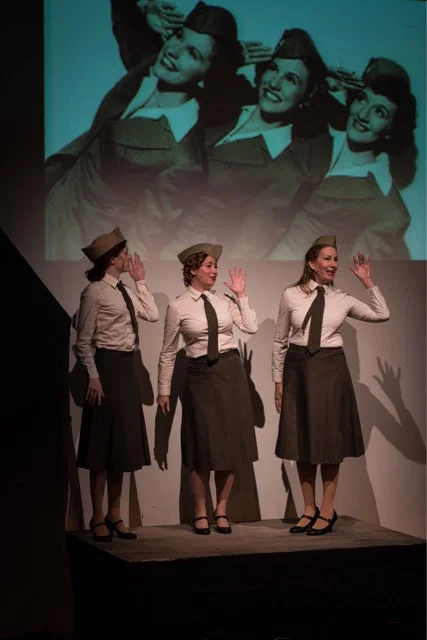
‘You’ll Get Used to it! The War Show’ bills itself as a drama with music. As a first-time director of a musical, Meg Gibson writes in her Program Message that Mr. Colley conducted interviews with veterans, factory workers, house wives, and war brides. Two different views of the war emerged: from a Canadian perspective, our soldiers were struggling through Europe while holding the torch of democracy. From the soldiers’ perspectives, they weren’t fighting but having the time of their lives through drink, song, carousing, debauchery and skirt chasing until the true reality of the war sets in for them and for us.

Thank goodness, this cast could find some humour and laughter mixed in with the serious subject matter of war. We are at the dawn of the war that was never to occur again where Canada has just joined the fight.  Dusty (John McGroarty) and his five platoon-mates:  bad Sharky (Cristien Rapp), dim-witted Dudley (Jacob Brien), dashing Jean-Pierre (Daryl Ledwon), wise-cracking Pop (Jonathan Rosenstein) and no nonsense Sarge (Jim Leckey). It was evident that Ms. Gibson cared about this show very much as she elicited six central performers to work keenly as a true core ensemble of players. There are no star trips and no egos among these guys. They eagerly listen and respond to each other appropriately when necessary during some of the hilarious moments and some of the poignant times.

The Ensemble Players (David Rudat, Lisa Ferreira, Laurie Hurst, Nikki Hogan, Jennie Garde and Jill Leger) become highly important characters who play a multitude of key roles and influences in the lives of these soldiers. Like the soldiers, the ensemble colourfully enhanced the mostly brisk pacing whether through song, dance or the sharing of historical information. From what I understand, Ms. Gibson also worked effortlessly and tirelessly on the choreography. Her efforts paid off tremendously as we see dance numbers where the actors and the audience members were enjoying themselves thoroughly.

What follows in this nearly three-hour performance are moments of corny jokes, saucy comedy and heart wrenching emotions which envelope this uniquely Canadian story of the most famous conflict in world history.

I have been seeing several period piece plays the last while, and I can understand how important it is that the era is captured as best as possible. From my seat in the house, the soldiers’ uniforms and women’s dresses and skirts nicely captured what would have probably worn in WW2. The toe tapping, big band soundscape as the audience enters had people thinking about such luminaries as Tommy Dorsey and others. There was no need to have lumbering set pieces for this staging.  Ms. Gibson and Producer Janet Flynn made the wise decision to make use of boxes and chairs to establish various scenes and locales.

Sound and lighting effects persuasively made us feel a myriad of emotions while heightening tense moments especially the sound effects of bombs dropping combined with red lights circling the entire auditorium.

Music Director James Quigley and his four-piece band are to be commended for their efforts to provide high quality musical content of an array of many songs from the period. Some of the more ribald content drew much laughter from the audience particularly in the two numbers ‘Der Fuhrer’s Face” and “Our Sergeant-Major’s Got a Helluva” Nikki Hoggan and the Company’s rendition of ‘Lilli Marlene’ was quite moving. A minor sticking point in the music for me was in the balance and volume from some of the singers. Some of the voices of the women were just a tad too amplified for me in the space provided especially since all the performers wore microphones. Sometimes, the volume from the men during the songs was overshadowed by the women.

Mr. Colley’s play becomes a touching tribute to those who sacrificed it all for the good of our country, and the story is a reminder for all Canadians never to forget especially as we approach this Remembrance Day in our 150th year as a nation.

‘You’ll Get Used to It! The War Show’ continues November 9 at 8 pm, November 10 at 8 pm with a final matinee performance on November 11, Remembrance Day at 2 pm. Tickets may be purchased at the box office before each performance, contact 416-703-6181 or visit their website for further information about this show and the upcoming spring production of ‘Sister Act’. The Fairview Library Theatre is located at 35 Fairview Mall Drive in North York.

Curtain Call 2.jpg


← NewerOlder →
Screen Shot 2026-02-18 at 9.55.53 PM.png
Screenshot 2023-06-10 at 10.18.16 PM.jpg
TownBrewery.jpeg
SecondWedge.png
Avanti_logo.png
11666057_10154039986198378_4496427229864055720_n.jpg