• SLOW -
  • SLOW -
  • SLOW -
  • NEWS -
  • SLOW -
  • SLOW -
  • SLOW -
  • Photos by Mikki Simeunovich -
Menu

SLOWCITY.CA

  • SLOW -
  • SLOW -
  • SLOW -
  • NEWS -
  • SLOW -
  • SLOW -
  • SLOW -
  • Photos by Mikki Simeunovich -
×

Stout talk from Irish brewer Seamus O'Hara

Will McGuirk August 16, 2015

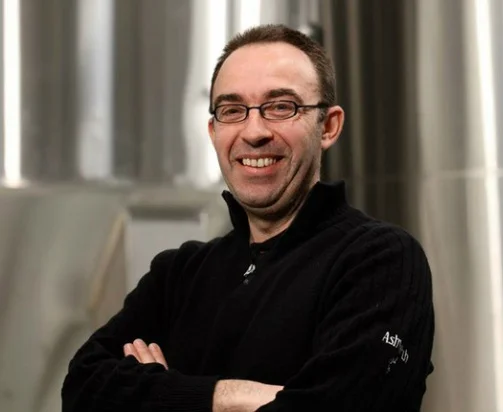
Seamus O’Hara of the Carlow Brewing Company, located along the River Barrow in the MIdlands of Ireland, says there is a reason for the Emerald's Isle long association with stout.
“The water here is very hard,” the award winning craft brewer says, “Its limestone based so its very good for stouts and ales. It adds to the texture and the mouth feel. We have good water for brewing that kind of beer.” 
Carlow Brewery is one of the many brewers that attended the 2015 Toronto Festival of Beer. The annual event takes place at Exhibition Place July 24, 25 and 26. There is a special focus on all things Irish and ten brewers are out to show the Emerald is more than green beer and Guinness. O’Hara says he will be bringing their flagship stout.
With our craft brewing approach,"  says O'Hara, "we are brewing the way it used to be done. People taste it and say thats how a stout used to taste. Its still fashionable to drink stout, good stouts are, but there’s a little more to it. Things are changing.”

O’Hara has been at the forefront of the change since he first opened in 1999. He says it was the fact of a few breweries dominating the market that spurred him to action. His background in biotechnology had given him an introduction and it was just a matter of finding like-minded beer fanatics.
“I studied biotech at college and as part of that we studied brewing and we had a pilot plant brewery. I didn’t immediately go into the brewing industry, I went into the pharmaceutical, biotech and healthcare," he says. "The first few jobs I had were in England and I was exposed to the beer culture there, cask-condition beers in the pubs, all the regional beers,  and it was only when I came back home that I realised we had just a limited choice. We have a history of it. People around the world think of us as a great beer country but we have little going on. So there was an opportunity, to take inspiration from the U.S. They were blazing a trail and that you can set up your own brewery.  A couple of guys can get together and do it and that’s what happened with us. I had a bit of knowledge from biotech studies and from home brewing and felt there was an opportunity and as a personal consumer I wanted to see more interesting beers. So why not start brewing your own.” 
The rapid growth in craft breweries and new beers has to be tempered with a warning that beer making is not for everyone he says. There is a reason why it’s called craft. It is a trade that has to be learned and it’s not a short road to riches.
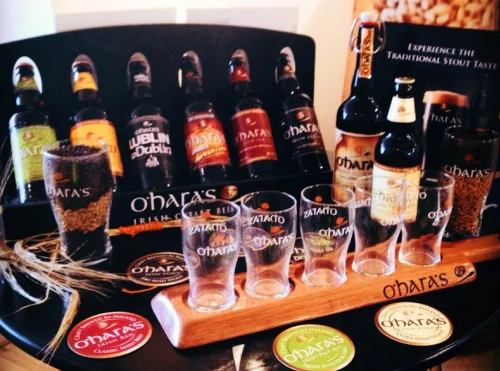
“Many of the people who come into the craft brewing industry, who set up their own breweries, they are very individualistic. They are very determined and ambitious but want to do their own thing. But they are very hard working and passionate about it. Anybody’s who is not is doomed to failure because it’s not an easy industry to be in. Most of the people who come into it are very passionate about it. They love the beer. They love what they are doing. They embrace the whole thing,” he says. 
O’Hara says their draft beer will be available for embracing soon in Canada. If you find yourself enjoying the natural original stout taste of the Old Irish you can now plan on enjoying even more of it after the festival has closed up for another year.

Ontario Culinary Tourism Alliance Feast ON program makes voyageurs out of foodies

Will McGuirk August 14, 2015

Angela Podgorski

Its a given that German wines are unlike French wines, British cheeses are different from Greek cheeses because in Europe it is easier to accept regional differences in food. North America not so much. More so in the States than in Canada perhaps, but is there really a difference between Niagara Region wines and Prince Edward County wines. Can Ontario produced foods be identified by their terroir, can place have a taste? Angela Podgorski, community manager for the Ontario Culinary Tourism Alliance says yes, place matters.
“There are regions that are known for things better than others. If you go up to Collingwood its apple country so they are known for ciders and apple pies. It’s the largest concentration of orchards anywhere . . . Oxford County is the dairy capital of Canada and there are quite a few cheese makers out there, doing beautiful things with grass-fed dairy. Wine regions are very distinct. The wines you get from up north are going to be completely different from the wines you get in the Niagara region where its warmer. We definitely have it. Its not as developed or celebrated as it is in parts of Europe or South America but it is happening,” she says.

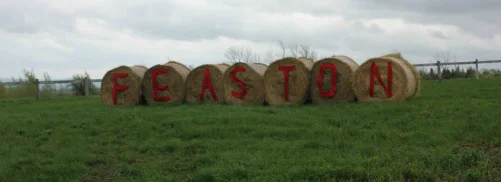
Some of it is happening because of the work the Ontario Culinary Tourism Alliance is doing. OCTA isa not-for-profit agency connecting local food producers and developers “from the farm up” with each other. By building communities first among growers, chefs, processors, restaurateurs, accommodation providers, government and others, OCTA can develop food tourism for an area, promoting a unique experience, a sustainable economy and most importantly telling its culinary story, its taste of place. But first they find the right story.
“Before you start promoting you need to do the development work, its not enough to just start telling the story,” says Podgorski. “One of the biggest problems in this province is what I like to call the ‘Shiny Brochure Syndrome’. Communities will spend a whole bunch of money they might not have, on a shiny brochure and distribute it everywhere and draw people from everywhere to come visit their area. But once there it doesn’t live up to the pamphlet. It’s really important to create those community connections, work with the stakeholders, make sure that customer service is up to snuff. If there is a sign on the door that says nine to five there is actually a person sitting at that table from nine to five. If someone is going to drive for two hours and they get there and its closed when they said they would be open, that sense of disappointment spreads like wildfire across social media,” she says.

Doing the development work is their (locally sourced) “bread and butter” says Podgorski. She says it can be frustrating to deal with government officials who measure success in column inches, tweets and overnight stays and don’t get the development angle.
“We get excited when there are internal communications and systems in place to source local food and farmers are getting paid on time versus other people might feel success is more people are visiting the area and media is talking about it,”says Podgorski adding OCTA gauges both and not one over the other. 
More are seeing the economic benefits of engaging residents as well as tourists but its about a 50/50 split among economic and tourism developers at the present she says.
“There are two kinds of developers in this province. The ones that spend all their dollars on marketing and will never understand and then there’s the ones that totally do. There are government grants and dollars available for the ones who do understand it. The government is supporting the initiatives. We have had massive support over the years. But there are always going to be the people who just hire a marketing firm and do all the marketing and that’s going to be enough,” she says.

To ensure that their marketing delivers on their promise OCTA has created its Feast ON Certified Taste of Ontario program. An accredited business can use the Feast ON designation in the telling of their own story and also to access OCTA social media and digital channels, events, partnerships and summits. OCTA also have a searchable data map on their website with profiles of the accredited businesses. Categories include Food Trucks, Takeaways, Cafes, Bars, Diners, Casual and Fine Dining and Bistros. Feast ON businesses can be searched for within a certain radius and location allowing people to build an itinerary of places to visit across the province or they can follow suggested trails already mapped out such as the new self-guided brewery route created in partnership with Greenbelt and the Ontario Craft Brewers Association.


“(Feast ON) is a program we run that celebrates chefs and restaurants that are sourcing locally,” says Podgorski. “What was going on for a long time in this province was that people were saying they were working with local farmers but not really doing it . . . its a way for people to find local food, to celebrate chefs that are actually working with local, to discover new producers and to showcase that taste of place and what makes Ontario eating and drinking so unique.”
For those who still think Ontario does not have its own food heritage Podgorski says the history is still being made, stories have yet to be written.
“Canada and Ontario, in general, is still in the midst of finding whats so special about us, it’s identity. Some people think poutine and canoes, moose and bears. We’re still pretty young, still trying to figure out what we all about, unlike most of the other food countries you would travel too. There’s a unique sense of discovery and development as you go along because every time a new business opens that’s doing something unique with food in this province they’re literally writing our food identity which is pretty exciting.”
Its exciting too for a foodie to have locally sourced experiences with the real possibility of being the first to experience them. Thats a win/win for all and a story worth sharing.

Rockstar chef Christian Pritchard digs the dirt

Will McGuirk August 14, 2015

Christian Pritchard is a resourceful man and the closer to home those resources are the better. A chef, a musician, an entertainer, a broadcaster, an educator, consultant and advocate Pritchard is seen regularly as a guest chef on TV and he has curated culinary tours of Ireland, Italy and the Yukon in Canada. All the while he seeks what is close at hand to make what is needed at the time. What is close to hand is also close to his heart. He lives in Brooklyn, Ont., close to what many say is the finest farmland in the country and he uses as much local, in-season ingredients in his work as possible. Pritchard is also a strong believer in 'terroir', the idea that soil adds its own special flavouring to what is grown in it. Its an old idea but it is being slowly adopted in this rather young Northern country he says.
“The great thing about Canada is the soil is so diverse. There is 'terroir' everywhere we go. We are a northern country and we never look at a northern country as being a good thing in food but it is, its a great thing. Things like root vegetables which are the salt of the earth, its very important. Ontario has deep rooted growth in that environment. I also do work in the Yukon. You never think of the Yukon as being a great place for food but it is. There’s history there, the First Nations, so it goes way way back,” he says.
Way back into the back country but also a lot closer to home. Even as farmland is being buried under urban sprawl across the Greater Toronto Area there is the possibility that culinary entrepreneurs will reclaim portions for their own tables through their own gardens, or by way of community gardens and partnerships with farmers. People moving onto land bring with them their own culinary traditions and their multicultural cuisine heritage married with 'terroir' can give rise to a unique Canadian food identity.
“For us in Ontario the soil is only one aspect of how great it is,” says Pritchard. “Its the people that have settled the land, the Irish, the Ukrainians, the English, everybody and they have sculpted their own history in our earth. It seems anyone comes to Canada, my own family included, we get on this whole ‘be polite thing’ and we don’t stand up for what we have. Its also got to do with being a new country. We are always trying to find out what is a Canadian dish or who are we. I have given up on worrying about that. In Ontario, in southern Ontario we are everybody. So its kind of exciting. Its OK to be a baby in this. Being a baby you grow. The country is only 148 years old but its a lot older with First Nations and you can get into what going on there too. Its exciting and we don’t recognize that. But when we do we are going to go places.”
Pritchard is going places to source ever more new ingredients for his dishes. The self-described culinary adventurist has another tour of the Yukon going July 29 to Aug. 2, 2015. He won’t be panning for gold but he will be digging the dirt for a more sustainable resource, its 'terroir'. 
 

The Healthy Irishman says eat local, seasonal

Will McGuirk August 14, 2015

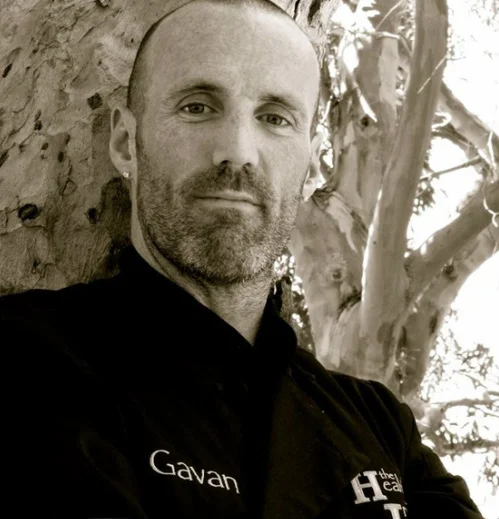
Irish chef Gavan Murphy, now living in Los Angeles, says he is seeing the results of climate change at his local farmer’s market. He has a strong advocate for eating seasonal organic produce for the health and economic benefits. But it may well be we will have no other choices.

“Last summer for example there was a drought all last summer,” says Murphy aka The Healthy Irishman and feature chef on Spike TV’s Bar Rescue. “So you can see the farmers are suffering because they can’t produce the food that would be known as Californian, like sweet corn, avocados, strawberries, melons, lettuce. It can be very difficult to get . . . the organic farmers in particular are suffering because they are not putting pesticides on their food. So if they’re not getting the water and it’s too hot they are not getting their produce out there to sell it.”

Murphy, who grew up in Ireland and learned his Eat Seasonal philosophy at Ballymaloe in Cork, is one of three celebrity chefs cooking at the 2015 Toronto Festival of Beer during the Beerlicious Grilling Experience. He will be joining Tim McCarthy and Dublin Pop Up for a look at Irish food and beer. It won’t be the usual fare he says but there will be the staples.

“The crux of Irish food is still meat and potatoes,” he says, “but it will be more refined than just that. Pub grub was once just a hearty stew or soup, coming back to our heritage. . . people came along expecting the weather not to be the best and wanting that warm comforting food in a bar. But now people expect it to be more. They expect it to have more intricate ingredients, more interesting cooking styles, which is great for everyone in Ireland. We are not just known as meat and potato drinkers, people are coming for a bit more sophistication and we are delivering that.”

It was the not-the-best weather that had Murphy seeking sunnier climes and the City of Angels. is where he now lives, works and teaches. He has been there for over a decade. What began as a food blog grew into a business sharing healthy recipes based on seasonally available organic ingredients. While the negative effects of climate change on cold weather crops are apparent hotter weather also means greater access to hot weather crops. It’s not all doom and gloom for the bloom however.

“Having watermelon in the middle of December is not something you should be able to get. But if you get 75 degree days then you are going to be able to get it,” says Murphy, “We are not talking two seasons necessarily but maybe one long summer into Spring back into summer. So we can get great fruits and vegetables all year round. That’s just because we live down here on the south west. It definitely affects my cooking style but I have a lot more variety because I can get a lot more product year round instead of just having winter vegetables and summer vegetables.”

Murphy, in all his teachings, stresses the health benefits of cooking in tandem with the season. Sourcing food locally, organically, overall is the most beneficial diet, Even if you live in an area with limited variety he says.“Its just one of those things where in the winter you will be having zucchinis and squash and peppers and by the winter is over, the roots vegetables, turnips, parsnips, you’re just sick to death of looking at them because you’ve been eating them for six months. But these are the vegetables that are supporting the farmers, the vegetables that are naturally growing at that time of the year so you will get the best nutritional value out of them because this is when they are supposed to grow.”

The road to healthy living begins with in-season produce whatever the season and that road starts with knowing your farmers he says.

“The key way to understand and know what’s in season is to go to the Farmer’s Markets. Whatever the farmers are selling on a particular day that’s what’s in season. Go to the market, see what’s on the stands, that’s what you should be focusing your diet on,” says Murphy and he should know. He is known as the Healthy Irishman for a reason.


← Newer
Screenshot 2023-06-10 at 10.18.16 PM.jpg
TownBrewery.jpeg
SecondWedge.png
Atria_logo.png
apologue_logo2.png
kv_eyes.jpg
Avanti_logo.png
RMG SQ.jpg
11666057_10154039986198378_4496427229864055720_n.jpg
COnvergenceSQ.png