
Montrealer Patrick Watson has released the video for Love Songs for Robots. Its a choreographed love dance by Mistaya Hemmingway of La La La Humans, think CP30 meets Cirque Du Soleil. The video was directed by Academy Award nominees Chris Lavis and Maciek Szczerbowski and inspired by the avant garde Oskar Schlemmer. The song is the title track of Watson’s new album available on Secret City.

Cowboy Junkies to release box set Fall 2015
Cowboy Junkies have announced a late October release for their upcoming four disc boxset. The set is comprised of three remastered albums, Open, One Soul Now and At The End of Paths plus an album of unreleased tracks titled Notes Falling Snow. The box set will be available on Latent Recordings.

Alabama Shakes - Drawl’ng notes, Interview with Zac Cockrell
Zac Cockrell / Alabama Shakes at Field Trip, Toronto
Photograph by Will McGuirk
The Alabama Shakes are the modern musical equivalent of the Southern Drawl. Sure, the Athens, Ala., four-piece’s career can be seen as a surge in popularity and a slow sustainable subsidence but it’s the music on their second album Sound & Color that gets the tail, holds on, inhales and then exhales in long slow sexy lingering moments; not just the track build but the hook and each and every note goes in, goes down, pauses slightly and then goes in deeper, goes down further and holds on to the sweet sweaty rollicking balls of it all.
“I think its something that me and Steve just have without trying that much,” says 27 year-old bassist Zac Cockrell. “We just naturally just rub against each other. But it works for some reason.”
The Steve he speaks off is the drummer Johnson. Ben Tanner is on keys for the tour, Heath Fogg is on guitar and the vocally ambidextrous Brittany Howard is up front.
The Alabama Shakes are front and centre of late. Their monster hit, Hold On, from their 2012 debut album Boys and Girls is both title and them. That’s their sound, the sound of drag, the sound of drawn-out, the sound of drawl, the sound of holding on and who can blame them. The rise has been sweet and swift; Grammy nods, late-nite TV, Rolling Stone, New York Times, The Guardian, festivals and sales. Nothing that four peripheral figures in their high school in a peripheral town in the America’s South would have ever dreamed off. Hold on.

“I sure never thought ever in my life I would ever be a touring musician,” says Cockrell. “I just liked doing it for fun. Who would have thought it would turn into this. It’s a crazy thing and I am proud to be doing it. I guess if I can do it there’s hope for a lot of people to be doing it.”
The pride is earned. It takes some doings to follow the muse even it that muse is Howard, a thrift shop siren with a soulful allure. They followed. They held on. Cockrell says he is takes pride in holding on and in his family too for the push solving the take it or leave it dilemma.
“I had to face a choice, should I quit my job and do this and maybe not make. My family was like we’ll give you money if you need it, just go out and do. I’m really proud of them for doing that.”
Chance taken and it’s been working since 2009, always doing it their way, but open to new ideas. Their sophomore album was released June 9 on Maple Music Records and in some ways it’s a departure, in some ways it’s an evolution, in some ways its sings to their roots. This is Alabama Shakes all shook up.
“I think a lot of that was just having the time to experiment with getting things we wanted to sound like. The first record was pretty quick, ‘it was boom, boom, this sounds pretty good lets use this,” says Cockrell. “This was more like, lets get those little details like that, that we really like, right and lets get them to happen on this record.”
This southern drawling devil is in the details, between sound and colour, barely discernable in the shadows of a languid summer night of an album. Whether on the Velvet Underground Palisades Park thrash-out of the appropriately titled “The Greatest” or the inappropriately titled disco-era Stones hiphunch of “Shoegaze” or the titular track, all xylephonic prelude, or the transcendental “Gemini” with its Erika Badu as Major Tom cosmology, the Alabama Shakes push, drag, push, drawl, and Howard’s vocals push just one more deeper. She is at the core of all that’s swirling around her and all is swirling around her. Alabama Shakes huddle around her and the overall feel of the album is of a band glad to be done with the glad-handing and back in the studio, making songs for an audience of five.

“We were definitely happy to be in there and happy to take the time we needed,” says Cockrell. “We didn’t have a record label, it was just a one record deal, so we went in thinking, lets just get this the way we wanted and we knew we had the time that we needed. It was a real happy time to know you had the freedom to do what you wanted. It took a little longer than we expected but we got a record that we are really happy with.”
It is a shiny happy record even at its most soulful as on “Give Me All Your Love”, “Future People” and “This Feeling” where Howard croons “I spent all this time trying to play nice. I fought my way here. See I’ve been having a me real hard time and its so nice to know I’m going to be alright. So I just kept dreaming, I just kept dreaming it wasn’t very hard. I spent all this time trying to figure out why nobody on my side. See I’ve been having a me real good time and its so nice to know I’m going to be alright.”
“This Feeling” is Superfly meets Madame Butterfly. It feels like Leonard Cohen’s unmade bed in the Chelsea Hotel and Howard is the satiny voice of the tale. She is Prince, Nina Simone and Etta James all at once and who wouldn’t want an unmade bed with all three. Sound And Color is This Feeling. The album is touch and taste, not sight and sonics. It is visceral.
“I think we wanted it to be physical,” says Cockrell. “Some of the songs are pretty aggressive. Yeah we like that. Shawn (Everett) our engineer brought out some of that out some of those aggressive sounds. It was cool. It was fun to hear our stuff that way. The first record was really raunchy but it wasn’t that aggressive. I like it, its cool.”
Everett and Blake Mills helmed the recording sessions at Nashville’s Sound Emporium with Mills helping out on tracks with Howard as well.
“It was a lot of help to have Blake in the studio. He was a great motivator. He got our gears turning pretty quick. A lot of the ideas we had going into there but he jut helped. At time we’d be not sure if that was the take but he was like no that’s definitely the one to keep. He has a good ear for that and he was good for minimal support. It was good to have him around,” says Cockrell.

Rather than just reproduce success the Alabama Shakes chose to get good people around and like they have always done is just hit record and play like no one’s listening. Its how they worked it in the past and he says its something for others to consider says Cockrell. The tools are accessible; just add desire and practise.
“I think it’s easy to make it yourself now. There’s really no excuse,” he says. “If you can get your hands on a computer you can record stuff. We did that a lot. It sounded pretty bad but we just really enjoyed coming up with ideas and hearing them played back. Even if it sounded terrible.”
The Alabama Shakes are a long way from terrible. They are a chart topping band of high school friends who know more about each other than ever before and still can huddle, close out the world and be in the moment, holding on, lingering on a note, just that little bit longer, just that ever so sweet bit longer.

via Bob Bryden . com - Coleman
Bob Bryden's discovery of new musical lands

BOB BRYDEN - Photograph by Kyle Weir
Hamilton-based but Oshawa-raised Bob Bryden was born in the country’s capital, Ottawa and moved to the General Motors capital when he was twelve. He was initially introduced to music by way of film soundtracks; Dimitri Tiomkin’s “The Alamo” was the first album he bought. He continues to collect soundtracks he says. Around the mid-1960s he picked up on the energy of The Beatles and The Rolling Stones. He joined The Outcasts, a high school band and he has played in several different bands in the interim years; The Things, Christopher Columbus Discovery of New Lands Band, Reign Ghost, Christmas, Spirit of Christmas, Benzene jag, Age of Mirrors. He has also produced; Durango 95 on the Star Records house label. It was because of Star Records that Bryden made the move from one factory town to another.
“One day in 1978 I was floundering and walked into Star Oshawa. Mike was on the phone with his cousin Paul and asked if I'd like to go to Hamilton now and manage the store. I told him, ironically, I had to be in Hamilton in a few days to do a TV show and I'd check it out. I walked into Star Hamilton incognito and it was like the Wild West,” he says.
He had stepped into his own version of The Alamo and had much to defend.
“For the first few months I was in Hamilton I felt just like a marshal in a Western sent in to clean up the town - ha! I wasn't popular with the Teenage Head gang because I basically had to stop their little 'reign' of the store. I quickly gravitated to The Forgotten Rebels anyway and we became a label and recorded them,” he says.

Although punk was in some quarters a backlash against the 70s prog-rock Bryden was familiar with through his own earlier bands, he gravitated towards the youthful energy and has stayed involved in the nascent Hamilton scene. He recently performed at a Joe Strummer tribute night hosted by It Ain’t Hollywood, a music venue run by another Oshawa ex-pat Lou Molinaro.
“I loved the punk scene in general except for the nihilism,” he says “but to say that it kick started popular (and unpopular) music again is an understatement.”
Bryden has been kick starting his own jams for almost five decades and has seen many bands and styles come and go. What keeps him going?
“It is too deep in the blood to get rid of it. Ha! I've tried to stop and I can't,” he says.

Five records you didn’t know you needed and why, based on the life experiences of Maïa Davies.
Guest Writer Maia Davies (Ladies of the Canyon, Lee & Billie Strange) goes through her record collection.

1. Days of Future Passed, The Moody Blues 1967 (Decca)
When you spontaneously decide to one day leave the big city and rent a 100-acre farm the very next, this record comes in very handy. On a late summer evening in Northumberland County, all of your life plans and possibilities on hold, your post-sunned body stretched out on your porch, glass of wine in your hand, you sure are glad to stumble upon this vinyl and blast it through your open windows, curtains fluttering and sunset lighting the mood. Recorded as a song cycle concept album,Days offers a folk-psychedelia bountiful musical journey. It begins, naturally, with an overture, and is accompanied throughout by a fictionally named orchestra (The “London Festival Orchestra” was in fact created by Decca records to lend some gravitas to the hodgepodge project). If you’re feeling halfway between Mozart and King Crimson, as one might all alone on an August evening by the shores of Rice Lake, this is the record you need. It cycles through the phases of a day in song, spews out a few recognizable hits along the way, and takes your imagination–no matter where you may be and if you just close your eyes–to that sunset lit field and that glass of wine in your hand. May I recommend Prince Edward County’s “Vintner’s Daughter Unoaked Chardonnay?”

2. King Tuff, King Tuff, 2012 (Sub Pop)
When it’s the year 2014 and while attending the Osheaga music festival in Montreal, you realize in one devastating moment, watching 13 bands in a single day that you have absolutely never heard of and keeping in mind that you are now in your thirties, that in fact, you are tragically not cool anymore. So you go home and do some quick homework. Pitchfork et al are flashing videos and clever headlines at you making you dizzy. You remember that Sub Pop records used to stand for this religion of underground edge. So, desperate, you start sampling their roster of new bands, and, success! King Tuff, pooling a great deal from 60’s garage rock, 70’s guitar flare, 90’s psych and bringing that extra special modern weirdo taste you’ve been craving. Who cares about cool anymore, you’ve stumbled onto greatness! After obsessively listening alone at night on your killer headphones, solo teenage-like dance sessions in your bedroom and head bopping while walking through Mont-Royal park on a sunny afternoon, all feels right again in the world. If you were born in the 80’s and haven’t heard a great record in a long time, then this is the one for you. Pair it up with some uninhibited behaviour such as dancing or kissing strangers.

3. Nigeria 70, Original Afro Classics, Various Artists, 2004 (Strut)
Otherwise known as “the cure for common radio”, this is your antidote to road trip auditory torture. No more flipping through stations for different versions of the same terrible tunes while trying to enjoy a nice drive out to a legendary studio in Kingston, Ontario. 1970’s Nigerian Afro-funk is where it’s at, my friends. Some damn fine song-writing, grooving and jamming on this tasty compilation. Be ready to be moved and overjoyed. If you’re already a Fela Kuti fan, this is where you plunge deeper. If it’s all new to you, just catch the vibe and let it run through you. Great pre-going into the studio listening choice: inspiration will abound. Also available: a box set of this series, highly recommended.

4.461 Ocean Boulevard, Eric Clapton, 1974 (RSO)
Immediately upon exiting the aircraft at LAX, set the volume level at 6 and no louder and start with the 3rd track, “Willie and the Hand Jive”, to build a perfect California memory, one foot in front of you and whatever adventures may come, the other firmly rooted in the 70’s L.A. vibe of this gem of a Clapton record. Before the blasphemy of the acoustic version of “Layla”, this guy had style. Skip back to the beginning now and listen to the whole record: it’s a beautiful lesson in quiet swagger. You should be on “I Shot the Sheriff” at approximately the time you are bumper-to-bumper on the freeway, so now lay your head back and chill, and gaze at the palm fronds ‘cause they’re amazing. Drop off your suitcase at your bud’s place, own a headphone splitter at this point in your life and share the music with him as you walk over to Venice Beach. Buy some freshly hacked coconuts with straws in them, go sit on the boardwalk just far enough from the drug dealers to avoid hassle and watch the joyous circus of Venicelife unfold as you sip fresh coconut water. Don’t forget to listen to the great organ riffs on 461: it should be your perfect companion to waves cresting in the California sun. There’s nothing else like the California experience, even the British can get with it.

5. Osez Joséphine, Alain Bashung, 1991 (Barclay Records)
When throwing a late night party with a room full of English-speaking artists, throw this one on for a twist. Need to know more about French-language music? Start here, if only because it’s an illogical departure point, neither classical “chanson” nor modern French sound. Where you will find yourself, however, is smack in the middle of some epically good song-writing, whether or not you speak the language. Bashung’s tongue is all poetry, folk music and blues. Call it “French Americana” if you will. A glass of pure malt rocks is your best bet at this juncture. As masterful songs like “Volutes” (check out the video) or “Kalabougie” unravel, watch as people dig it. Translate some lyrics for them so they can be deeper into the magic:
"I danced in torrential rains until you came one day, an elusive Arlésienne
I skewed, only skewed, until dawned on me, but diluted ideas, diluted
What have you made of me, lost heart and soul, in the powder room, with the torments of the upper class
I am the one that shines, dazzles and blinds, but by the light of a candle, and of lightning
Twice in a century but by the light of a candle, of a candle". (Kalabougie)
The album will end with a perfect “bow” tied for us here, we who need to trace the thread from one sound to another. Bashung does a version of The Moody Blues’ “Nights in White Satin” (Days of Future Passed).This charmer will work for a post-dinner party drinks session–if you can’t manage to stay awake all night.
Cheers and go buy some vinyl.

Programm revel in the darkness of doom-tronica
Programm multi-instrumentalist Jacob Soma (it’s a band of multi-instrumentalists with a core membership of Soma and the Games, Jackie and Mark, and drum duties shared between Andrew Reesor and Steve Reble) says they try to play at least once a month but have been spending a lot of time writing and recording their debut album. The debut, five years in the making, will be released as a series of EPs; the first, a four song EP “Like The Sun” is now available on The Hand Records. An appropriately an overcast, sexy video accompanies the titular track.
The four songs on the EP all have a menacing quality to them, a dark underwater feeling and its only when vocalist Jackie Game’s siren-like voice breaks through that there is any light to swim towards. Of course we know how following the Sirens worked out for Odysseus and his crew so do not swim towards the light People!! Programm also have two covers available, Clinic’s “Walking With Thee” and “Venus In Furs” by the Velvet Underground. Throw in a cover of Joy Division’s “ Atmosphere” with the aforementioned and you may have an idea of Programm’s overall sound but their influences are varied and each track on the EP is distinctive while still retaining their eerie atmospherics.

“I have a lot of influences and I have to force myself somewhat to stay within a certain boundary”, says Soma. “I would never stray too far, but because I'm writing for a band and not just myself, I have to stay within a certain area or the demo won't make it past the initial chopping block. Which is actually a good thing. Anything to help narrow down my options is helpful. That said, you'll hear our sound branching out quite a bit as these first EPs start to come out. Or that's the way we hear it anyways. To me, the first album seems like every song is different. There isn't another "Like the Sun" on the record, or another "ZeroZeroZero". They're all one offs in a way. Though the few that have heard the first album claim there's consistency. Which is great, but it's hard for us to hear. We're too close to it."
Soma says the members all have the same vision and while they have worked with several producers, including Alexandre Bonenfant (METZ, Crystal Castles) they prefer to absorb the advice and fit it to their ideas for Programm.
“We don't make rock music. We make, not sure how to put it, emotionally intense music, so it's our guts that are on the table, and no one else can really tell you how that's supposed to sound” he says. “If something is even slightly off in a song it can drive us nuts and kill the mood. Making music is like painting with emotion and if one of the colours is off we won't put it out there unless we've fixed it.”
Where outside help is most useful, he says, is on the technical side; the mixing, the production and the live experience. Signing to a label also helps; The Hand take on much of the admin work and that allows the band to write more, “That in itself is a dream come true,” he says.
Soma says he has been making use of that extra time to stroll around Toronto listening to mixes of new songs and writing lyrics. He says he realized while walking he likes lushly arranged songs that augment reality and add another layer to the experience of being in a moment.
“It adds another level to reality, and maybe we like to stir up certain emotions that are impossible without music, like a thick, concentrated mood that you pass through temporarily,” he says. “Recently I listened to "Awaken" by Yes, a song I hadn't heard in a long time and had a bit of an epiphany about where my influence comes from. My parents took me to see them when I was around 7 years old, and I remember at the time, being too young to really understand, it seemed like the stage was the gates of heaven, and they were these demi-gods surrounded by light and making this enormous, lush, gorgeous music. I think it had a big impact on me. That and the albums my parents would put on. My mom loved “Hounds of Love” by Kate Bush, which is quite lush with adventurous production. My Dad loved pro- rock and they also took us to see ballets and operas from a young age, as well as turning me on to contemporaries like Phillip Glass and the like. So I like really orchestral arrangements, as do the other members so I guess we try and push the limits of how big we can make it sound with just 4 people. On recording there are no limits of course but we have to make sure that it will translate live.”

The Constantines; Steve Lambke talks Massey Hall and new songs
Steve Lambke aka Baby Eagle / You've Changed Records
Photograph by Colin Medley
Massey Hall is a goal it seems for many bands, Canadian and non-Canadian. It is the place to have played. What does playing Massey Hall mean to you?
Massey Hall definitely does seem to have some symbolic weight, and a weight of history. I saw Johnny Cash and June Carter play there in 1996. I sat in the third row with my parents. My parents are coming to our show, and they don't check out too many Cons shows. Maybe there's some sense that if you are playing Massey then you are participating in the culture in a way that doesn't happen at just any gig?
Many songs were calls to action to young folks or offering advice for deeper living. Band members were not much older than their audience but always seemed to have an “Old Soul” vibe about them. Now that you are actually older are you more comfortable being The Cons than previously? Have you grown into yourself?
The Cons have always operated like things mattered, like life and the ways of living are important. In that way it's a passionate band. There's something of beauty and worth in the energy and the action of playing together, of making together, but when you talk about offering advice or deeper living or being an old soul, it sounds like wisdom and the Cons have never been wise. We've stumbled and strived. We've grown into a love and acceptance and understanding of each other that maybe ebbed and flowed a bit over the years.

The Constantines - Photography by Colin Medley
The Cons tore a deep gash across Canada’s musical landscape. There is no Canadian band I know that either The Cons sound like or sounds like The Cons. There was a kinship with The Hip in the intelligent lyrics but the Hip didn’t have the musical intellectuality. Where did The Cons come from? Was it records, was it landscape, was it books, was it the rural and urban mix of your surroundings?
The Cons started out in a fairly particular Southern Ontario punk scene of the mid-late-nineties; a lot of the bands were fairly abrasive, some were fairly technical, all of it was very energetic and committed. We were in bands that were playing these all-ages shows in community halls and church basements and dirty houses. We combined that thing with a legitimate love of The Rolling Stones, AC/DC, Neil Young....classic rock stuff that was on the radio. Obviously The Clash. Talking Heads. We didn't worry about being specific to any genre or scene, we just wanted the music to be exciting, thrilling, you know? Rock out.
From the outside The Cons seemed to be a closed world, guarded and self-contained. What does it look like from the inside?
What's it look like when you are standing in a forest? A bunch of trees; It's all very dark and mysterious. I don't know; in our own way we can all be kind of guarded and shy and quiet. For a band to function it's got to be pretty self-contained and socially we are mostly all the type that will listen and observe or disappear, but I think we can all be pretty warm and friendly in our own ways.

The Constantines - Photograph by Colin Medley
It seems to me that The Cons “retired” too early. Fans really, really want to see you guys live as evidenced by the continuing run of shows. How does the band feel about fulfilling the fans desires and how does doing so balance with the needs of the band members?
Playing the shows has been incredible. We've been met with such love and excitement and kindness. There's a real sense that the people coming to see us play get it, you know? They are coming to see The Cons, and not just for something to do. That's a very lucky and privileged position for a band to be in.
You have been careful about playing shows that have some resonance for the band. The “reunion” run have all been a nod to your heritage as a band. At what point does this become a band that looks forward and creates a new musical place for itself and not a nostalgia act?
When we got together at the beginning of last year I think we all a bit surprised to realize how much life there was in this music. We brought all of the things we'd learned together in the past, and learned apart over the last few years, and brought it back into the band and back into these songs. So it didn't/doesn't feel like nostalgia exactly. Music is strange; you step on stage or into the practice space and the job is to enact these things that were written before. You try and bring all your skill and spirit and person to it. That's the gig. To be present, to bring life to the moment.
Anyways, now we get together, we rehearse, but we jam too. Who knows?

Ottawa's HellBros - bring the punk party
Ottawa’s first brothers of punk, HELLBROS, are bringing their particular brand of subterranean rock ‘n roll to Wasted Space June 12. A decade into playing their gritty, dirty, muddy, foul sound the HELLBROS still love to dig in deep and party like they’re 18! The four-piece have quite the reputation for their live show, mixing Alice Cooper with mid-90s’ thrash, Steven on a skateboard.
“We’re playing a dirty high-energy rock ‘n roll,” says HELLBrother Pete. “We’re more influenced by early heavy metal Sabbath, AC/DC, some Motorhead but also by ‘90s’ skate punk, the energy, the production quality resonated. I started out in skate punk and it grew into rock ‘n roll. As you get older you start going back a little bit so the influence of that, also ‘80s’ hardcore and ‘80s’ thrash metal.”
It’s a murky stew says Pete, even if they wrote a pop song it would still have the HELLBROS all over it and it would become a grimy oily mess. A fun, grimy, oily mess however.
“We have a sense of humour about what we are doing. We keep it fun. The word partyrock gets thrown around a lot, because when we play a show it’s a party” say Pete adding he is working on writing a road movie about the band as rock zombies, potentially titled Tour of the Dead. “There’s an element, its not ironic, but its kinda carefree fun zany over the top rock ‘n roll. The theatrical side of rock always appealed to me, like Alice Cooper and that sort of stuff. Its definitely infiltrated it a little bit."
Party bands can quickly become parody bands and even Cooper has had to deal with being tagged a cartoon. But if the songs are strong, if they deliver, if they live outside the showmanship then there is nothing cartoonish about the act. HELLBros subscribe to the same philosophy.
“We don’t think about it too much, we just do what we think is right and trust our instincts," says Pete. "I guess there is a fine line and we’ve talked about it. You still always want an air of professionalism. As fun and carefree and party it can be as long as you are showing up on time, practising a lot, you’ve got your shit together and you put on a hell of a show than all the other stuff doesn’t really matter. The music and the live show speaks for itself . . . you can have a spectacle on stage but you have to have the songs. That’s what Alice Cooper said in an interview, I have the songs. He’s right. He writes the best songs and we do our best to write the best songs we can.”
Those songs appear on the band’s debut full-length Good Time Machine and are available for steaming on their Bandcamp. HELLBros perform at the Wasted Space in Oshawa along with Perfect Gentlemen and the Mustard Tigers.

Kalle Mattson single chat
Ottawa-based Sault Ste. Marie Kalle Mattson has released the track, "A Long Time Ago", from his forthcoming EP Avalanche. Mattson has had an avalanche of praise for his previous album Someday The Moon Will Be Gold, a record about his mom who passed when he was just 16. But the question for Mattson is how do you climb up from out under such an avalanche. So we asked him.
“The process of writing new songs after my last record has been a long & arduous one. The challenge with writing a record that is so personal & so autobiographical is how do you follow it up? How do you make something new that still means as much to you?
“I have been recording demos with my friend & incredible songwriter/musician, Jim Bryson on & off since last summer. Every few weeks I’ll go in with a batch of 5 to10 songs, we'll track them & eventually see which ones stick or not. These sort of self imposed deadlines of booking sessions with Jim have been really good with forcing me to finish songs & maybe not be too overly analytical. Primarily though I just don’t want to embarrass myself in front of him.
“I wrote “A Long Time Ago” really quickly the night before one of these sessions & I think it really encapsulates a lot of the themes on this new EP; anxiety, nostalgia, the past, the future... It’s basically about being in your early 20s & not knowing what the fuck your life is.
“The production on “A Long Time Ago” is probably one of the biggest departures in one of my songs ever. I had this delayed hip hop beat in my head the entire time in the studio and I sort of built the song around that, acoustic guitars and a ton of different synths, which is really a first for me. And yes if you were wondering, that is me singing."

Bookish hooks from The Young Novelists
Toronto-based roots outfit The Young Novelists are touring their latest album, Made Us Strangers, released in April 2015. The six-piece have edged aside their Ian & Sylvia-like vibes for a snappier sound. Frontman and acoustic guitarist Graydon James says they wanted to create a band album; a more integrated feel rather than previous recordings, which showcased James and his wife, singer Laura Spink’s hamonics. The band was originally called Graydon James and The Young Novelists, but James, (an actual published novelist), chose, I’m guessing, to have everyone on the same page so to speak.
“I know I consciously wanted to make an album that sounded more like a full band album,” says James, “and I think we had a bit more comfort as a group so that everyone felt like they knew their role a bit more and could step up when they wanted to and craft a part that really fit well, or step back when they wanted to and let their be more space. And probably having Carlin Nicholson (Zeus) as our producer helped us channel a bit more of a classic rock feel than we normally do, and that was a good stretch. I think working with him increased our sonic palette by more than a few shades.”
Also adding the various shades were Alex Dodd on piano, organ, John Law on acoustic and electric guitar, Shawn Jurek on bass and vocals and Michael Paddage on drums/ percussion
For a frontman James, oddly, started out behind the kit following a family tradition but over time gravitated to the storytelling tradition of folk and bluegrass guitar to express himself.
“My dad played drums and we had drums in our house, so when I started making music it was by putting headphones on, listening to an album, and trying to play along with it. Thankfully we lived way out in the country and no one could hear me. In high school me and my friends started writing joke songs about our teachers and classmates; terrible, terrible songs that should never see the light of day, but I think that was my first experience realizing that people can write songs. It took me a while to write something serious, though,” he says.

That something became an EP, a debut album, a live album and The Young Novelists. Plus working the skins for a variety of other bands as well as his published work. He clearly has the Southern Ontario work ethic down pat, an asset in a business that requires more and more perseverance. He also has the desire to learn, and better not others, but his own work he says.
“I think there is a certain catharsis to the creative process, getting something finished and sort of dusting your hands off and saying, ‘Well, there's that...’ And there is a certain enjoyment I get from playing music with people. Something in me seeks out that feeling of creating together in that moment as a group. And I think I have a drive to someday write a song that I think is up to snuff, because I don't think I've written one yet that is and I'm not sure if I ever will. Those things add up, although I'm not sure that entirely explains why I keep going or creating,” he says.
But what he does say keeps him going and creating is a marriage of sounds, of making the right connections between the various elements of songwriting.
“I think it's the confluence of particular stimuli; not to get to esoteric about it. I started out as a drummer so I definitely have an appreciation for a rhythm that catches you and makes you move, even involuntarily. I also love harmonies and the way voices can blend together and touch on a dozen different emotions. And I love language and lyrics, things that make you re-think experiences and elucidate something in a way that is new. So I think a great song gives me a lot of joy in a lot of different ways, and that's what has me hooked,” he says.
Hooked on the feeling as they say, integrated as a band now.

Honest Heart Collective's Thunder Bay Road
The Honest Heart Collective’s ‘Liars Club’ has a built in contradiction. The album is the debut from the Thunder Bay rockers who combine some good ol’ Yankee heartland rock (Springsteen, Mellencamp) with some northern most tip of the Canadian country sound (The Band); Thunder Bay to Thunder Road.
Lead vocalist/guitarist Ryan MacDonald says the Liars Club is for good people who do bad things, “every person has two sides, it’s about making mistakes and making up for them. Just because you've done some bad things doesn't make you a bad person,” he says.
MacDonald and his brother, bassist, Nic, form the heart of the Collective. They shared music tastes when they were young and a taste for the devil’s water as they got older.
“My brother and I have been playing in bands since we were kids. In 2012, I moved to Ottawa for school and somewhere along the line I developed a love for Irish whiskey and started writing/recording songs. I'd send the Pro Tools sessions to Nic and he'd write all the bass parts for me and send them back. Those songs eventually became The Honest Heart Collective and we've had that brotherly, whiskey loving attitude ever since,” says MacDonald.

Other members of the band are Kevin Heerema on guitar, Jay Savage on drums and keyboardist Conner Harris.
MacDonald says musically they have been compared to the Boss and while he says Thunder Bay has no direct influence on the music they make he adds “lots of people have said we have a Springsteen-esqe sound and I think that comes with growing up in a small blue collar city just like he did.”
The T-Bay is a working class town and as such its glory days may be behind it now. There have been a lot of changes in The Lakehead however as the area transitions. MacDonald says the music scene is thriving and the city is an open and intense place to learn and earn your chops. It is after all where Neil Young met Steven Stills.
“There's so many great musicians in Thunder Bay so everyone feeds off each other, it’s a friendly competition but it's extremely supportive at the same time,” he says.
Aukland (Mississauga) are supporting the Honest Heart Collective on their current south Ontario tour.
Hey Mother Death are gone daddy gone
Canadian author Hugh Maclennan wrote “Go to the musicians . . . in the work of a few musicians you can hear every aspect of this conflict between light and dark within the soul.”
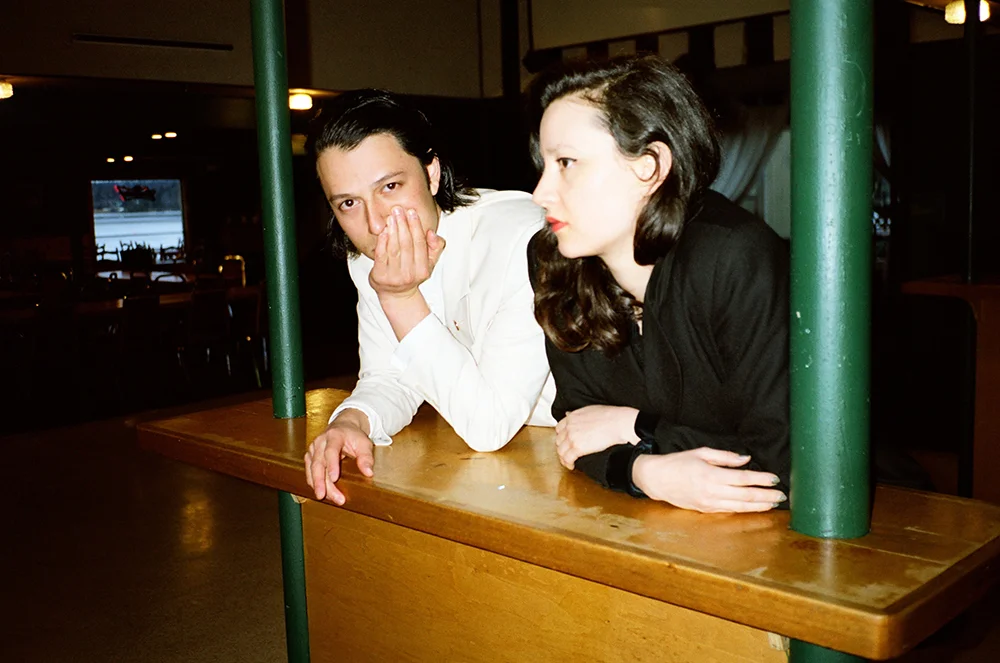
Hey Mother Death are among those enlightened musicians MacLennan spoke of. The duo also bring to mind MacLennan’s great novel of national identity, Two Solitudes. The dual European heritage of Canada dealt with so eloquently by the Haligonian writer is mirrored in the duality of Hey Mother Death. Denma Peisinger is an English Canadian (from Halifax) and Laurence Strelka is from Paris, French French as she says.
The two met in Paris and the project was born there. They have since moved to the wild barrens of Cape Breton. They create sonic soundscapes tracks that run between the two solitudes of light and dark, of space and confinement, of wide open landscapes and close quartered urban streets. The name references an Allen Ginsberg poem and the high priest of beat was no stranger to the pursuit of balance. Much of “Highway”, their debut five song LP, was composed partly in Paris and partly in the Canadian and the French countryside says Strelka and the trick was finding the road between.
“There is definitely tension, a clash when the album was beginning. I felt the music itself, when we made it was very very atmospheric. Laurence really wanted to groove and I actually really love to too. At first I didn’t get it but once it clicked then it was finding the groove and we found it naturally in the rhythms that were happening in the ambient parts. But 'The Hills', that started with just drums and then we took a more dub approach to build that atmosphere,” says Peisinger.
“When I came back to Canada to work on “Highway” I was bringing a kind of grooving, beats and kind of a dancing rhythm which is really part of French culture,” says Strelka, “The French love beats and groove and basslines.”
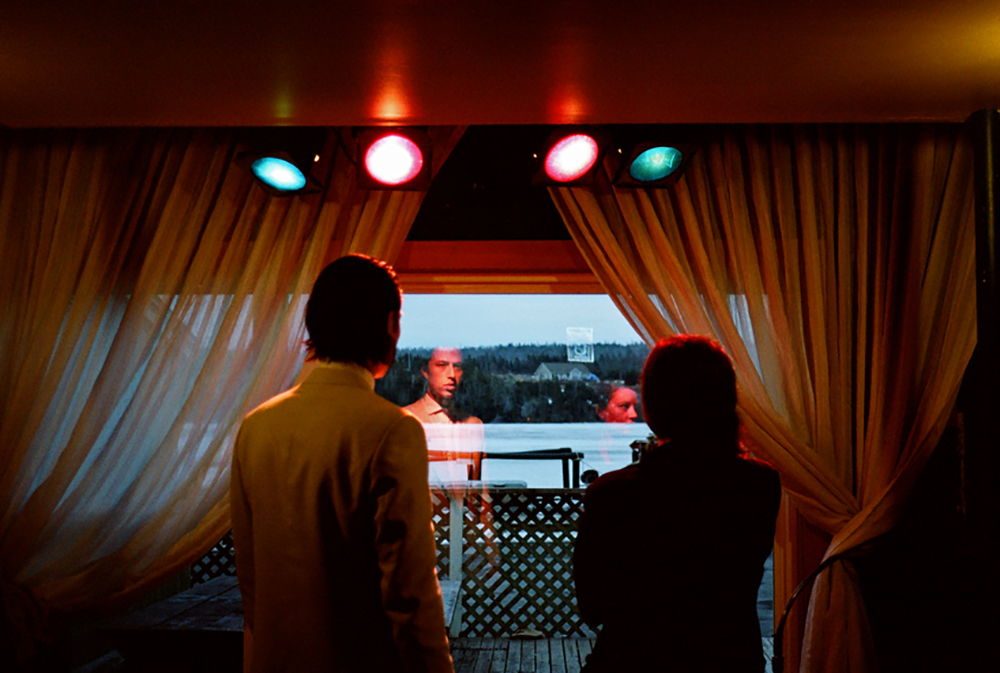
Peisinger says there is no line in sight when they begin to write. They just begin. They take a very spontaneous approach, mixing free jazz and dub and just “follow the music,” he says.
“We have found it very productive to be in wild spaces when we work because I think whats going to happen is that for us its always a surprise and always uncovering. For us, its constantly, we don’t know where its going. Its always uncovering and developing. Its completely uncertain and can be nerve-racking when we are composing. When we were making Highway there were times when I completely doubted it, whether it was working and what was going on but we just pray and follow it.”
While France and Canada are the physical landscapes they draw from they say they bring a wide mix of influences and music styles to their own compositions but always seeking the edge and how far they can travel to find it.
“We come from many different places,” says Peisinger, “I spent some time apprenticing with free jazz composer Jerry Granelli whom I relate too but my vision is spontaneous composition. Laurence comes from a theatre background and she has the same approach. Musically we both love blues music. I was the first thing we spoke about when we met. What we listen to a lot is music coming from Black art and culture, also the Jamaican dub tradition. We have been introducing each other to music. Laurence has introduced me to the world of European electronica. At the moment we are both very excited about Grace Jones.”
Jamaican and New Yorker Jones is a great touchstone for Hey Mother Death who trade in the sounds of the old trade routes between Nova Scotia and the Caribbean as well as the French Connection. From Jones its an easy leap to Massive Attack and the Mad Professor and from them a sly Vespa ride to Hey Mother Death.
The Ginsberg quote by the way is from Father Death Blues, “Hey Old Daddy I know where I’m going”. Hey Mother Death don’t want to know where they are going they are just going because, as Ginberg's mate Kerouac said “There was nowhere to go but everywhere. . .”

Grey Lands' Right Arm took some left turns
In one of the first interviews I had with the Hamilton-based, Oshawa-raised, Wayne Petti, he told me when Cuff The Duke started their intention was to marry the punk of Nirvana with the country of Johnny Cash to create a new sound. For most of Cuff's records the songs veered more towards the Cash side of things but with Petti's new project Grey Lands he is steering things back to the punkier side of the street.
"When I first started playing guitar all I was listening to was Nirvana, Sonic Youth, Dinosaur Jr., Pavement," says Petti, "I've always really liked the sound of those bands. In Cuff The Duke we touch on those influences but never went head first into those sounds and styles so to speak."
He says he wanted to take a break from the roots scene he has long been a part of and explore some other styles. The tracks on Grey Lands' Right Arm available on Paper Bag Records have been brewing for almost five years he said. He just had to wait and see where they took him.
"I wanted the songs to be melodic but also have the option of taking a complete left turn away from that at times. The rest of the record has a lot of moments like that," he says.
A video for False Alarm has been released. Listen for the left turns.