• SLOW -
  • SLOW -
  • SLOW -
  • NEWS -
  • SLOW -
  • SLOW -
  • SLOW -
  • Photos by Mikki Simeunovich -
Menu

SLOWCITY.CA

  • SLOW -
  • SLOW -
  • SLOW -
  • NEWS -
  • SLOW -
  • SLOW -
  • SLOW -
  • Photos by Mikki Simeunovich -
×

Mark Howard

Interview with Mark Howard on his new book 'Recording Icons / Creative Spaces'

Will McGuirk February 6, 2023

By Will McGuirk

Architecture, as much as audio, has a place in the life and work of music producer and engineer Mark Howard. The look, feel, vibe of a recording studio is of such import he will create such a studio where none exists. Howard learnt the art of acoustic spaces by working with Daniel Lanois but he is a producer in his own right, a producer of records yes but also of books. 'Recording Icons / Creative Spaces' is his latest. It is a collection of behind-the-scene photographs of the spaces he has recorded in and his clients inside them, Bob Dylan, U2, Neil Young, Joni Mitchell among them.

Order via Blue Heron Books here -> 

Mark very kindly agreed to an email chat with Slowcity.ca. 

Slowcity.ca: Hi Mark, thank you for doing this, the whole recording thing is beyond me but I'm fascinated by it. Going through the book it seems you like to have the music makers gather in one space?

Mark Howard: “Working with musicians all in one place makes for a family-like experience. No one is late or missing. Also create a creative tightness while recording. These days of small budgets it also is a way to spend more time on the music. Recording studios and the hotel take up all of people’s budgets”

SC: What is your favourite place to have recorded in and why?

MH: “I look for places with high ceilings to record in. They make for better sound with air around it. Low ceilings don’t breathe as good as the big room. Makes for great rock records.”

SC: In the pictures some places have carpets, some slate flooring. How important are the acoustics of the room itself to your decision in choosing locations?

MH: “Carpets are important for deading the room if it’s too reverberant and Indian rugs look beautiful :) Wood floors are best too”

SC: Were there times when recording sessions were scrapped from one location in favor of another, because of vibe or acoustics? if yes what happened?

MH: “I tried to switch locations on Bob Dylans records time out of mind. We started the record in a old Mexican porno theatre in Oxnard California and it sounded amazing but Bob thought it was too close to home so we went to Miami to Criteria Studio. The second I walked I in there I hated the room. It was a Video blue screen room, all plaster and nothing sounded good in there. I tried to rent the Bee Gees studio but they said no. So I had to make it work.”

SC: You must have hundreds if not thousands of photos, how did you choose the pictures and what is the overarching narrative do you think you were trying to express?

MH: “I have thousands of photos and editing was hard. I showed the book publisher 300 that I had picked as my best then they said cut it down to two hundred. I’m so close to them and feel like I left so many out. But at my book signings I will project the photos from the book and lots that got cut. I’m going to do a commentary on them all.”

Blue Heron Books announces the Book Drunkard Festival Spring Sampling Flight 2023

Will McGuirk December 19, 2022

By Will McGuirk

Blue Heron Books in Uxbridge, ON, announces another chapter in its tale of notoriously fabulous events. The 2023 Spring festival includes three author readings, two in the evening, and one brunch. The full lineup includes

April 11 - Books and Brunch with Jennifer Robson, author of ‘The Gown.’
May 2 - Dessert and Coffee with Elizabeth Hay, 2007 winner of the Scotiabank Giller Prize
May 16 - Dessert and Coffee with Jeannette Walls, author of ‘The Glass Castle.’

Early Bird flights purchased before December 31 2022 will also be entered to win a VIP flight pass, which include first access for two to author’s signing table, reserved seating for two, a $25 gif certificate for Blue Heron Books and $50 gift certificate for an Uxbridge restaurant.

Purchase tickets here.

Uxbridge Book Drunkard Festival returns to in-person

Will McGuirk September 19, 2022

By Will McGuirk

As an avid imbiber of the written word I’m swirly with giddiness to share the news the Book Drunkard is back. There’s something touching about books, that just doesn’t cut it in the digital realm so although Zoom was a good stand-in, being around pages and people, well, isn’t that what it is about really.

The Book Drunkard Festival takes place in Uxbridge over a couple of weeks from Oct 5 to Nov 14 2022. There are several locations and packages to choose from, and a wide variety of writers to chummy up to too. From the iconic John Irving, and Anne-Marie MacDonald, the intriguingly informative Ted Barris, to the indigenous hockey player Bryan Trottier, all brought to you from the folks at the bestest indie bookstore, Blue Heron Books.

All the info you need here ->

Interview: Danny Goldberg on his new book 'Bloody Crossroads 2020: Art, Entertainment, and Resistance to Trump’.

Will McGuirk November 5, 2021

Author Danny Goldberg’s new book is ‘Bloody Crossroads 2020: Art, Entertainment, and Resistance to Trump’. Goldberg had previously published ‘Serving the Servant: Remembering Kurt Cobain ( Goldberg was Nirvana’s personal manager), as well as ‘How The Left Lost Teen Spirit’, ‘Bumping into Geniuses’, ‘In Search of the Lost Chord, 1967 and the Hippie Idea.’

He also managed Bonnie Raitt, Sonic Youth, Allman Brothers and runs Gold Village Entertainment with a client list which includes Steve Earle, Martha Wainwright, and The Waterboys.

His new book relates how 45 galvanized the artistic left and Goldberg interviews those who used their platforms as musicians and entertainers to call out, warn, and generally urge for resistance against the former president.

Slowcity.ca had a chat.

Slowcity.ca: What was your reasoning for writing this book?

Danny Goldberg: “It was clear to me that after Trump was elected, that there was a huge increase in the political engagement of artists and entertainers in the resistance to him ranging form long time activists like Jane Fonda and John Legend to pop stars like Taylor Swift, Cardi B and Billie Eilish whose political engagement was more recent and included performers like Jim Carrey, Robert De Niro and Bette Midler who had previously been pretty quiet about politics. I also observed that most American political journalism either ignored or condescended to this phenomenon which seemed myopic to me with a reality TV show host in the White House. So I decided to write an alternative history of the 2020 campaign through the eyes and words of artists and entertainers.”

SC: So many artists are told to stick with music and stay out of politics - in your experience and your research what is the fall-out, good or bad, for artists making political statements?

DG: “The right-wingers who tell artists to “shut up and sing” are almost always ideologically motivated. The same people who attack Taylor Swift for being political usually embrace right wing performers like Jon Voight who Trump gave a medal to.

As far as fall-out goes---I think most fans like artists because of their art. I think that Bruce Springsteen’s fans pretty much know what his politics are but come to see him play for the music. And even though I’m nauseated by Eric Clapton’s recent anti-vax rants—I still will always listen to “Layla” all of the way through whenever I hear it on the radio.

For the most part I don't think it helps or hurts careers the one exception in recent decades being the Dixie Chicks after Natalie Maines criticized George W. Bush at the outset of the Gulf War because a big part of the group’s fan base connected with them through American country music radio stations who stopped playing the Dixie Chicks records in deference to their Republican listeners.”

SC: The book is a great read of a timeline and of actions taken, do you think these actions mattered in the end, did they affect change and do you think this change is permanent or transitory?

DG: “I think that artists and entertainers were part of the coalition that defeated Trump. There were many other factors but the ideological and moral clarity of the vast majority of artists were part of the larger victory.

I think that most of the artists of the resistance will stay engaged but there I no telling what other political winds will blow. One day at a time.”

SC: How has the writing of this book changed you politically and personally?

DG: “My politics haven’t changed. I’ve been a “leftie” as long as I can remember, Personally-Im so glad I did it because it gave me something to do during lock-down. It's a great satisfaction to finish the book—and a great source of anxiety to await the response to it.”

SC: When you got into music did you find yourself drawn to politically active artists or more towards the entertainment side of it? and can you give me some of the artists and songs you have drawn inspiration and comfort from?

DG: “I graduated from High School in 1967 at the peak of the Viet Nam War so as a teenager I was inspired by many politically outspoken artists like Phil Ochs, Buffy St, Marie, John Lennon,The Jefferson Airplane and others. I also was inspired by films and theatre like The Dutchman, A Raisin in the Sun, and Dr Strangelove.”

SC: There is on one hand the power of a celebrity endorsement for politicians but is there, do you think, on the other hand, a regard for the creativity of the artist on the side of the politician,- and the artists' need to be free to create?

DG: “I think each artist is an individual and has to follow their own muses. Not every great artist feels the impetus to be political –and among those that do—not all of them are what I would consider “progressive. “ But art is often a vehicle that suggests moral and political ideas.

As far as creative freedom for artists is concerned—I’m for it. I believe artists should fully express themselves whether or not I like with what they do”


SC: For me on a broader societal level I hope your book instills in any politician who reads it a greater interest in collaborations between the political and the creative class not just for the fan votes but for the creativity which can be unleashed. We are in such a mess these days only the most creative, innovative minds can help us.

DG: “I agree! Thanks so much for reading the book and for your thoughtful questions.”

PURCHASE AT BLUE HERON BOOKS, UXBRIDGE

Tags Danny Goldberg, Bloody Crossroads 2020, Nice Marmot

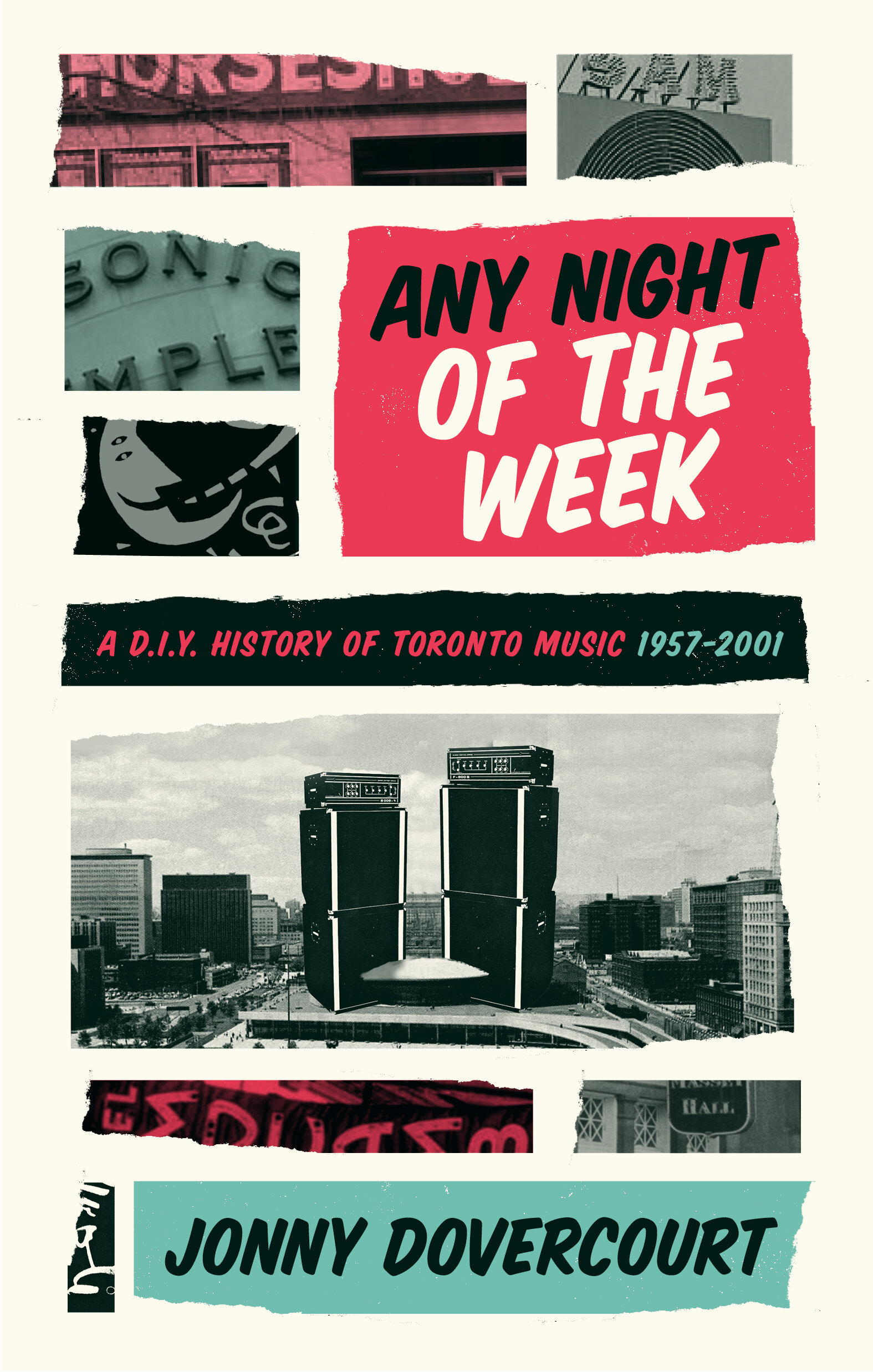
#StayAtHome - reading 'Any Night of the Week' by Jonny Dovercourt

Will McGuirk April 11, 2020

By Will McGuirk
Do you remember rock ‘n roll? Steppin’ out, blue dress on, pink carnation, that night in Toronto? Does it seem so long ago now, and wow was a book ever so relevant as Jonny Dovercourt’s ‘Any Night of the Week’?

Dovercourt’s book, a history of Toronto’s D.I.Y. culture, explores the communities which gathered around new bands and the stages they played on, and it’s a delight to visit, and in some cases revisit, those thrilling nights and recall what a blast it was to go out and make friends of strangers and the you-had-to-be-there earworms which got us through the daily grind. He lays out the lineage and legacy of Hogtown’s seminal acts, by way of their club beginnings, from 1957 to 2001, from Ronnie Hawkins & the Hawks to Broken Social Scene, weaving a tale of the city’s underground scene as interconnected as the overhead wires of the TTC. The book is published by Coach House and for your Covid-19 convenience Jonny has also compiled a Spotify playlist as well.

Jonny is co-founder of the two decade long 100% D.I.Y. indie to its core Wavelength Music Series and in ‘Any Night of the Week’ he completely avoids anything which reeks of industry organized nights out, and opts instead for deep dives into those start-up promoters, some of whom grew into major players, and the venues they discovered and converted. What Jonny’s book speaks to is the agility of the do-it-yourselfers, their tenacity, and drive as well as the creativity of the musicians and promoters who for the most part had one foot solidly in the city’s art scene. For TO punks, and we will use that in the outlier sense, it was all about freedom of expression, of enabling voice, and if the scene was politically motivated it was in the search for some kinda fun in dour faced Toronto the Good.

The role of the music industry is important, it has to be noted, as it is bait for musicians from all over the country lured by the promise of glittering prizes . Many acts ‘based in Toronto’ have members originally ‘hailing’ from in some cases, Durham Region and the D-Rawk’s own entrenched D.I.Y scene is a vital resource to fuel the big city. Dovercourt can not be expected to know the all of every small town’s scene, but there are welcome shout outs to a couple of places and bands I have fond memories of, including Pizza Pino and Kat Rocket.

Dovercourt states at the onset this is just one thread of history, his story. It is granted a well-researched and well told story but still his. He does speak to indie and punk and the city’s hip hop scene’s roots in reggae but metal is less his thing so its not covered. The book is not comprehensive but in the context of Canada, honestly can anything ever be?

'Any Night of the Week’ is informative but also inspirational so buy it, read it, dig it, dream it and then get to work.

We sent Jonny some questions and he generously answered.

Slowcity.ca: Tell me a little about yourself, where you were born, how you got into music and in particular what turned you onto indie/alternative?, and also why you chose writing?

Jonny Dovercourt: “I was born in Scarborough. My parents played a lot of Beatles around the house. I wasn’t much of a musical child - hated piano lessons, barely made the cut for school band - but I really got into pop radio (1050 CHUM) around Grade 4. My older sister turned me on to CFNY (aka 102.1 The Edge), where I got into the usual alternative fare like New Order, The Smiths, Depeche Mode, The Cure, etc.

“This coincided with the rise of music videos, and I think that was the biggest conduit for me - even prior to MuchMusic launching in 1984, there were video shows like Toronto Rocks and Video Hits, which aired after school, and the original incarnation of CityLimits (later Much’s alternative video show), which aired late at night, but was re-run on Sunday mornings. In terms of what drew me to indie/alternative, I think what’s funny is that I didn’t really realize what I was seeing wasn’t what most people considered “normal.” I did have the sense I was getting a window into a more “adult” world that was otherwise off-limits. I was also a sci-fi nerd, so I was attracted to things that were a little weird or different in sound or look, though tuneful musically.

“MuchMusic played some pretty out-there stuff during regular programming hours, and that’s where I first heard the Sex Pistols, as well as gonzo local indie video likes “Apple Strudel Man” by Jolly Tambourine Man. I started my first band in Grade 9, after befriending a classmate, Dave Rodgers, who was the only other person I knew who was into punk. We could barely play when we started, but Dave was a prodigious songwriter at a young age, we had ambitions that far outstripped our talent. We jammed in the basement and released a handful of home-recorded and home-dubbed cassettes. It was super D.I.Y., but we didn’t even know what that meant.

“There wasn’t much of a music scene for original bands in Scarborough at the time. We played our first gig at our high school, at a United Way benefit concert - which became an annual event I ended up helping organize - the beginnings of my “career” as both musician and promoter!

“My high school band played a few gigs downtown, and our first one was the most memorable - we played an Elvis Monday at the Soup Club (aka the Slither Club), a club I wrote a bit about in the book - it smelled like raw sewage, as there had indeed been a sewage leak. I’ll never forget the look on my Dad’s face when he came to pick us up (bless that man). It was through Elvis Mondays organizer William New that I discovered the 1150 Queen West scene, after he started booking that club in 1991, and that’s where I made friends with people like Brendan Canning and Noah Mintz (then of hHead). It was a really happening scene, and really welcoming, and that’s how I first found my place in the local music scene.

“As far as writing goes, I started writing about the local music scene (mostly) for my university newspaper, The Gargoyle. I devoured Now Magazine and Eye Weekly every Thursday, and also wrote a few reviews for Exclaim early on. Alternative media was also really my window into the larger world of culture. I started an internship with Eye after finishing undergrad, and became the listings editor, which really set me off on both my writing and arts presenting careers. I worked at Eye for five years, which was an amazing cultural education.”

SC: How long did the book take you to write?

JD: “The book took me four years to write! The idea of doing a Toronto music book had been bouncing around my head since about 2009, but it took a while for me to decide to sit down and do it. I came up with the concept and outline and pitched it to Coach House in the fall of 2015, and started working on it in 2016. The book went through a few different structures and working titles before we found a format that really worked. It took a lot longer than I originally expected to research and write, which is unsurprisingly given the breadth of the timeline, and that I was writing it as a passion-project/side-hustle while running Wavelength as an arts organization full-time. I handed in my manuscript in October 2019, pretty much exactly four years after I first pitched it.”

SC: The book finds its base in the architecture of the scene, and it gives a physicality to the music, - why did you choose that approach?

JD: “The structure really emerged as I got into writing the book. Originally it was told strictly chronologically, but the early chapters I wrote jumped all over the place and would have given readers whiplash. As a lot of the research and writing were done hand-in-hand, and one theme that emerged was the strength of Toronto’s live music venues, at least in comparison to its anemic track record on record. It wasn’t until the 21st century that really vibrant, impactful homegrown independent labels were able to push local music out to the rest of the world. It was live venues that really created the fabric of the scene, as these were the meeting places for the community and where people developed their sound. You could really see the sound of Toronto music evolve as it migrated throughout different neighbourhoods in the city - from R&B and rock’n’roll on Yonge Street in the ‘50s to folk, blues and jazz in Yorkville coffeehouses in the ‘60s, to punk, reggae and new wave on Queen West in the ‘70s and ‘80s, to the blend of indie and electronic in and around College/Kensington in the ‘90s.”

“What I think unites Toronto music is a spirit of community or communitarianism, of artist-run, DIY self-determination. ”
— Jonny Dovercourt

SC: So many of Toronto bands are made up of members from elsewhere, it is the centre of the industry which is why people move there but do you think there is a "Toronto Sound" which has emerged from this confluence of sources?

JD: “Actually, I don’t think there is a “Toronto Sound,” and I don’t think that is something that’s either possible... or desirable! The city’s motto, after all, is “Diversity Our Strength,” and the city and its music scene are simply too large to get pinned down to one sound. There are too many cultural inputs, too many backgrounds and traditions, for one sound to dominate. A “City Sound” is really only possible in a smaller place, and for places where it has happened, eg. Seattle or Manchester - both of which are smaller cities than Toronto, it ends up being more of a curse in the end, a creative straitjacket for anyone from those towns who didn’t want to play grunge or “baggy” electro-rock.

“What I think unites Toronto music is a spirit of community or communitarianism, of artist-run, DIY self-determination. There’s also a high degree of musicianship and technical excellence, in part due to our strong public education system and arts/music programs in schools. But there’s also plenty of sardonic, humourous, tongue-in-cheek goofiness, and artsy conceptualism. And there are certain sounds that dominated at certain times here, such as roots-rock in the late ‘80s / early ‘90s. And that was happening at the same time as hip-hop was starting to emerge here, in other parts of the city besides Queen Street.”

SC: You steered clear of anything which smacks of industry, and really dove deep into the DIY (street level and below) scene - why does that scene matter to you and why are you so invested in its survival?

JD: “Because I think it’s where the most interesting music was (and is) being made. I never felt much connection with the music industry - or rather the recording industry - as it always felt peripheral to me; this thing you knew was there, but never really encountered directly. I don’t think the A&R guys were coming to the same shows as me and my friends! And I can understand why: the Canadian major labels were a branch-plant economy, without a lot of power, and they were looking to sign things that were going to be profitable. And there wasn’t a lot of crossover between anything that fit that bill and what excited me. The industry wouldn’t touch Fifth Column or Rent Boys Inc. or Phleg Camp. . . or even Ghetto Concept - who won Junos and had videos in regular rotation on Much! Musical innovation is always artist-driven and coming from DIY initiative and energy.”

SC: On the Facebook we had a chat as you saw about the pizza place, Pino Pizza, in Ajax, it was a lot of fun there, - in your research are there similar places in other small towns around the GTHA which you found just as bizarre or interesting?

JD: “Pizza Pino’s was by far the most bizarre and interesting of the GTHA all-ages venues that I was aware of. I heard about it back in the 1150 days, but only after shows there had been shut down, and I was a bit bummed, because it sounded like exactly the scene I was looking for while playing with my high school band in Scarborough, and we weren’t even that far away geographically! So Pizza Pino’s became a bit of a mythical “white whale” for me. In terms of the ‘90s small-town all-ages scenes, they definitely seemed more fun, arty and weird east of the city, in more working-class places like Oshawa, home of Starkweather (a gnarly garage punk band named after a serial killer) or Cobourg, from which hailed Holocron, a post-hardcore band whose lyrics entirely concerned Star Wars. And probably the greatest Canadian post-hardcore band, Shotmaker, came from Belleville, before relocating to Ottawa - which also had a really amazing arty indie-rock scene with bands like Wooden Stars, the Spiny Anteaters, etc.

“West of the city, in the wealthier 905 suburbs like Mississauga, Oakville and Burlington, the all-ages hardcore scene was a lot more serious, heavy and straight-edge-influenced - this is the community that spawned bands like Chokehold, Grade, and (from St. Catharines) Alexisonfire. Totally vibrant scene, but less my cup of (herbal) tea, stylistically speaking.”

SC: The book is a great reminder of community importance and timely as we deal with this virus - what do you think the other side will look for your DIY scene, what music do you think will emerge, what will playing live look like and what venues will survive?

JD: “That’s a great question. And one that’s really hard to answer, as no one can predict how long this will go on for, and what the ultimate socio-economic cost will be. I think that music made solo will prevail in the short term - with social distancing and livestream concerts privileging singer/songwriters, hip-hop emcees, electronic DJs and experimental drone acts. “Bands” are definitely handicapped at the moment. You may see a huge boom in live venues, if this ends by the summer, people are stoked to go again, and the economy makes a quick recovery. Or they could all go out of business, if this goes on for a long time, we’re stuck in an economic depression, and we all forget how to socialize in collective physical space.”

Crack open a book, crack open a beer; Blue Heron's 'Book Drunkard Festival' opens Oct 17

Will McGuirk October 16, 2019

Shelley MacBeth

Blue Heron Books in Uxbridge, one of North America's finest independent bookstores, is celebrating 30 years in business. And what a celebration it is. On top of a year full of special events and community outreach initiatives owner Shelley MacBeth has launched a new festival combining her love of books with her love of music with her love of local craft brews and sharing that love among several venues in the trail capital of Canada.

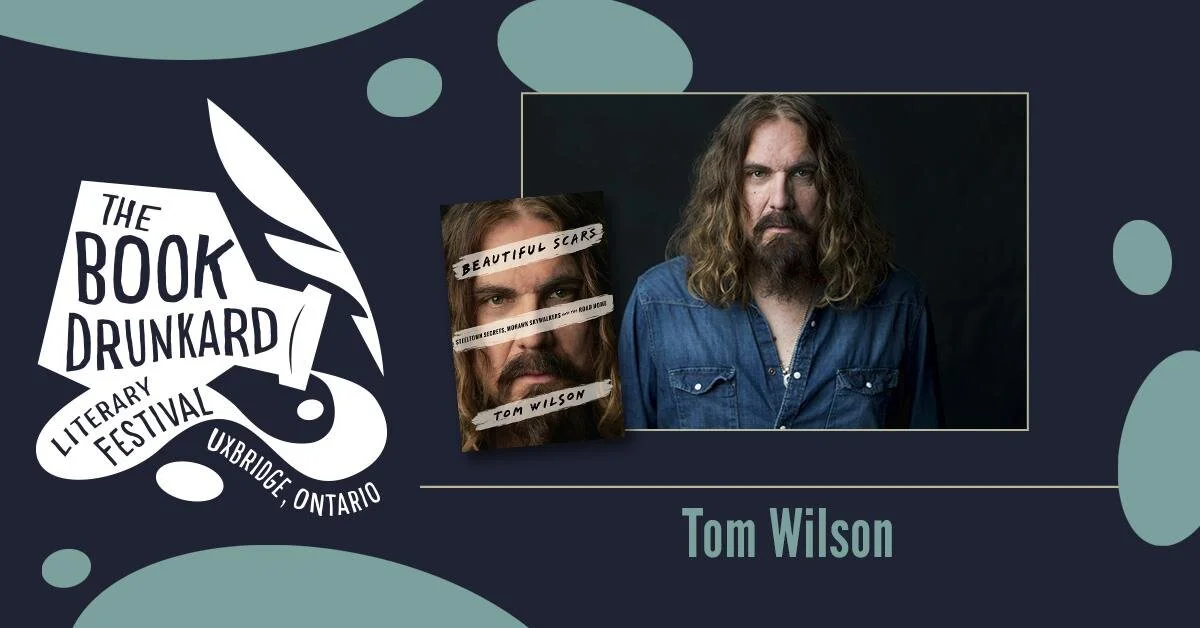
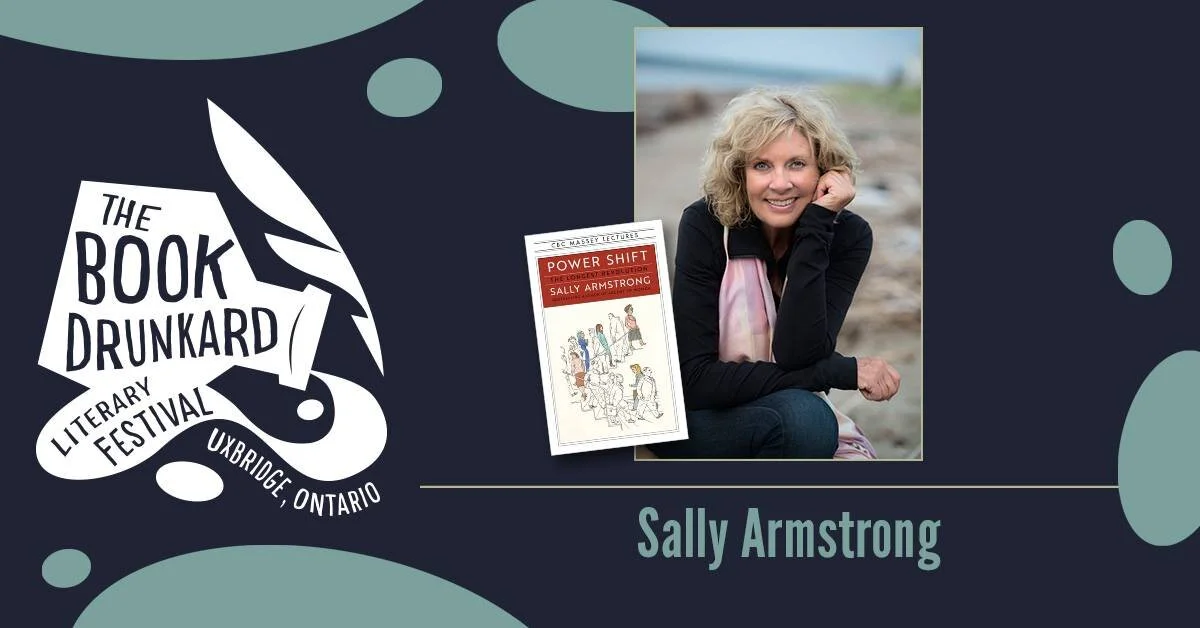
The Book Drunkard Literary Festival is bookended with an evening with American author John Irving on Thursday, October 17 at the Uxbridge Music Hall and with classy Canadian children's entertainers Sharon & Bram on Sunday, Nov. 3 at the Trinity United Church. In between there is a packed shelf of local and nationally renowned authors; from musician Tom Wilson to chef Mary Berg to human rights activist Sally Armstrong and investigative journalist Robyn Doolittle. Plus special brews from the Second Wedge Brewery and Slabtown Cider Co.

The festival name is a quote from Uxbridge author Lucy Maud Montgomery (Anne of Green Gables series) and it is a great title for anyone who has been hooked on books as Shelly MacBeth has been.

But it is difficult to turn your passion into a business, and to keep it afloat for three decades, well thats another level of accomplishment altogether.

So, Shelley MacBeth, what do you attribute your longevity and success to and what advice do you have for other brick 'n mortar stores in this digital age?

SM: “I guess for me it's all about reinventing yourself constantly. And being an independent makes you very nimble. You can turn on a dime, make your own decisions, change it up.

“Not only that, it is no longer enough for brick and mortar stores to simply sit there and wait for customers to come in. You need to create an experience, something memorable. And that is much more than just handing the merchandise over the counter and taking payment!”

SC: Of course its like choosing a favourite child but what Book Drunkard events are you most excited for and why?

SM:“Well, like everyone else I'm pretty darn excited for John Irving. I have been a John Irving fan since ‘The World According to Garp’ was released 40 years ago! That said, I'm also pretty pumped for our music events, which would be dear to your heart! We have an amazing producer/sound engineer, Mark Howard, who has worked with all the greats (U2, Red Hot Chili Peppers, Bob Dylan etc) coming, as well as a literary concert with Tom Wilson of Blackie and the Rodeo Kings.

“In addition, we have a complete feminism-focused night with the Massey lecturer for this year, Sally Armstrong, delivering part of her lecture. In her 2019 CBC Massey Lectures, award-winning author, journalist, and human rights activist Sally Armstrong illustrates how the status of the female half of humanity is crucial to our collective surviving and thriving. And with her will be investigative journalist, Robyn Doolittle, with her book on the changing landscape of sexual politics.

“Finally, as the name of the festival is totally stolen from Lucy Maud Montgomery, our Nod to Maud cocktail party at the Historic Leaskdale Church with four amazing authors is bound to be pretty great. We will even have a special raspberry beer brewed ONLY for that event by The Second Wedge Brewery.

“In fact we have inspired three unique brews for our Festival. The Second Wedge is creating their first-ever lager, called the Book Drunkard beer which will be releasing very soon. This is an Oktoberfest style marzen. They're also brewing a lighter raspberry brew as I just mentioned. And one of our new cider houses, Slabtown Cider Co, is creating a brand new cider called The Cider House Rules, in honour of John Irving's visit.”

SC: Why are you a book drunkard, what is it about books that has such a hold on you? What is it the rest of us, who are not reading so much, are missing out on?

SM: “Cheap travel.

“Joking aside, in what other way could you travel in time and space to another world another year another place another time for less than thirty bucks?

“In addition, spending most of the day and the night in front of a computer screen does tend to blank out your brain. Escaping to the comfort of a book. . . bliss.”

For further information see the website.

Twelve authors longlisted for 2019 Scotiabank Giller Prize

Will McGuirk September 3, 2019

By Will McGuirk

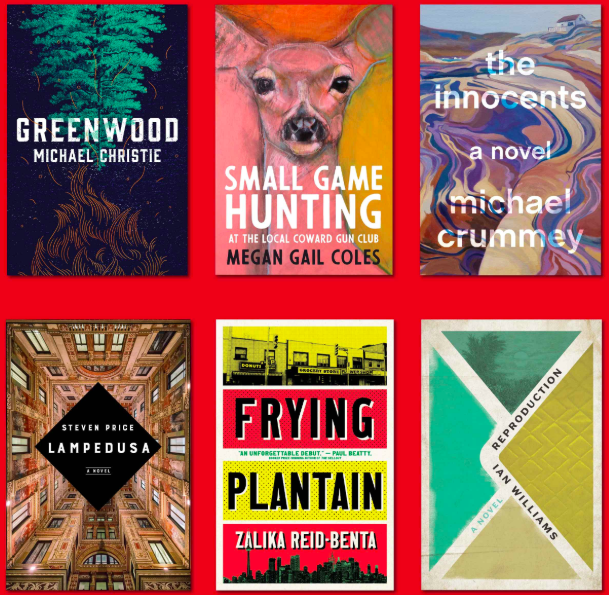
It may be time to start reading more. These books have been longlisted for the Giller, by a five member jury; Canadian authors Donna Bailey Nurse, Randy Boyagoda (jury chair) and Canadian playwright José Teodoro, plus Scottish-Sierra Leonean author Aminatta Forna and Bosnian-American author Aleksandar (Sasha) Hemon.

In a press release the jury said “Over the past few months, we have had the opportunity to read a selection of books that speak to the distinctive vitality of Canadian writing now. The 2019 Scotiabank Giller Prize longlist reveals and affirms a welcome and timely truth: Canadian fiction in 2019 is as confident in its exploration and interrogation of the local as it is curious and voracious in its engagement with the world beyond our borders, with time and place being understood in ways that are expansive, warping, and unexpectedly intimate. These books make it plain that great writing happens when art and ideas matter over all else in establishing the imaginative terrain that readers are invited, inspired, and challenged to explore.”

The award ceremony can be seen Monday, November 18th, on CBC at 9 p.m., (ET) CBC Radio One at 9 p.m. (ET) and will also be livestreamed at CBCBooks.ca.

GREAT GRANDFATHER: Making the World a Better Place By Paul Magyar - review by Joe Szek -

Will McGuirk August 19, 2019

Book Review by Joe Szekeres

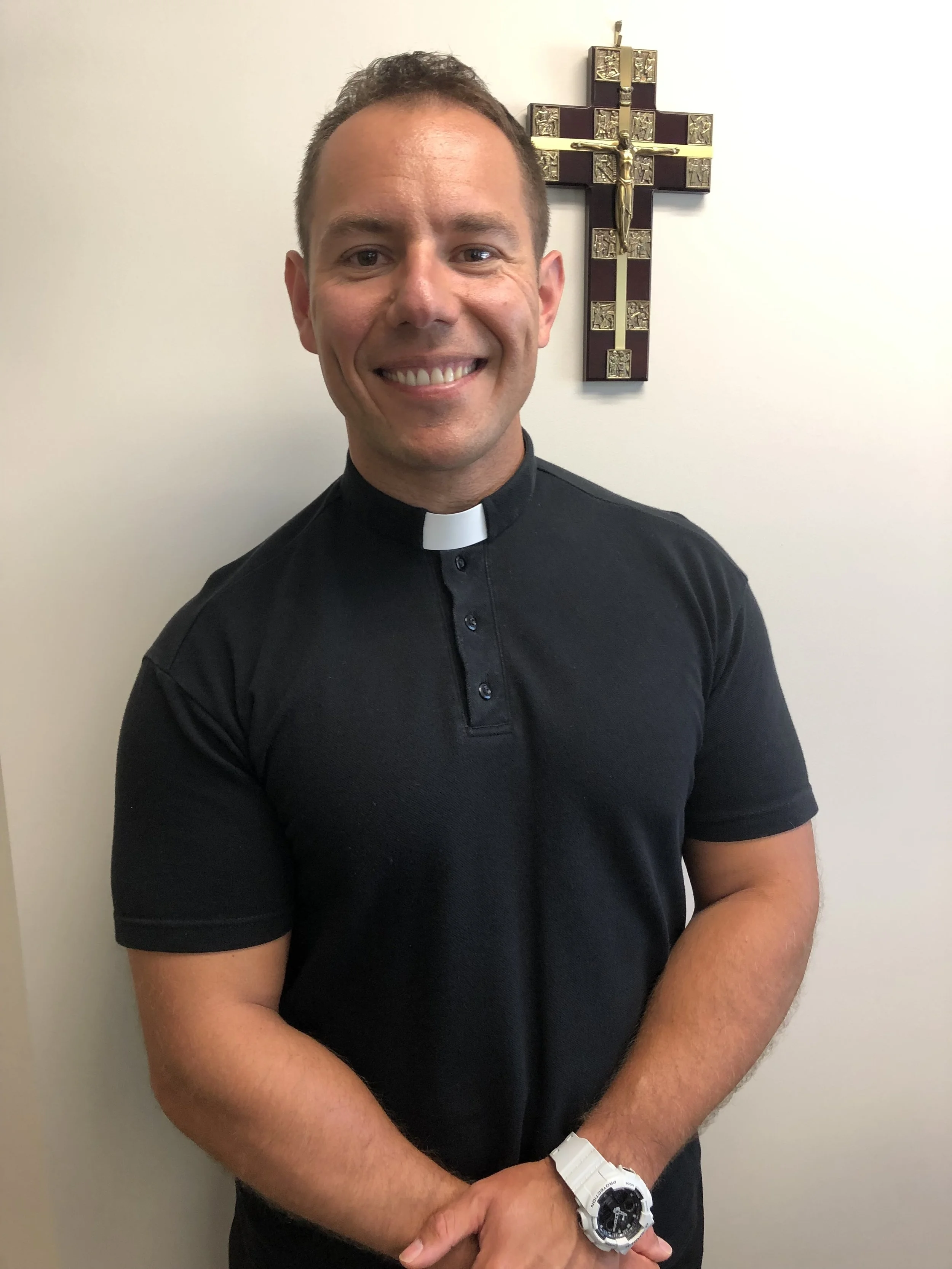
I had a most enjoyable conversation with my parish priest and pastor, Father Paul Magyar, at Oshawa’s St. Gertrude’s about his first self published book GREAT GRANDFATHER: Making the World a Better Place. This 38-year-old pastor, who likes to sketch when he has a few minutes, models tremendous respect for the dignity and value of others and for all human life. Magyar’s book is a non-fiction narrative exposition reflecting his respect for his great grandfather, Jozef Cizek, who is alive today at 102 and in relatively good health.

Father Paul sheds light on two principal questions in his book through the story of his great grandfather, places, and through his own travel experiences in Egypt as well as from his own research. The questions he poses and answers are one, will the world become better? and two, how can we help?” 

A rather bold task indeed and heady questions which cannot be simply answered in such a short text, although he did take a year and a half to write. 

Father Paul’s further challenge was to ensure the Bioethics and Catholic teachings and references were very clear:

“The challenge in writing the book was to ensure that the research my editor and I had completed was not misrepresented or misquoted. Even one word can or could change a meaning. I had to make sure all references were meticulously clear.”

I have also studied and taken theology courses and agree with Father Paul that this type of study to find answers takes time. At 113 pages of large font print, Father Paul begins a clearly respectful and insightful conversation of the two principal questions in his book by using stories his great grandfather shared while integrating them with the issues he studied post secondary and in the seminary. 

During our conversation, Magyar says he just knew by experiencing the silence around the Great Pyramids his God was near him. Magyar wanted to begin writing how the world can become better if we could each just take that moment to listen for the “still small voice” the prophet Elijah calls it in the Bible.

Just like Father Paul, I too have experienced those wonderful moments of sitting and just listening to the silence surrounding me. I watched the sun rise when I was at a cottage in Nova Scotia for the first time and just listened.  I had the impression that I was on this journey with Father Paul and lived vicariously through the descriptions of the visit to see the Great Pyramid, a place I may never see.

We don’t see the face of the person on the cover of ‘Great Grandfather’, only the back. The image was striking enough for me to pick the book up originally, the sketch by Fr. Paul of a man walking with a cane, casually dressed with the lower part of his sweater slightly askew. He has included other sketches which add a personal touch to his tale. A few more throughout the book would have enhanced the narrative further.

What surprised me was Great Grandfather is atheism. There is an explanation why Mr. Cizek is an atheist and I don’t want to spoil that moment for readers, but “he seemed to accept the reality of a supernatural power beyond perceived reality.”  

I asked Fr. Paul whether Cizek’s belief in a supernatural power might make him an agnostic instead but Magyar steered me more toward the values his great grandfather taught him; respect for others, for elders, for hard work, traditions and family rather than any labels.

Fr. Paul also gives us reliable and valid teachings of the Catholic faith in his book in easy to understand language. He says love and forgiveness will help the world become better but his analysis of forgiveness, well, I found it intriguing.

“To live in a society, we need to act in a civilized way. If God’s forgiveness is limited, how much more is human forgiveness. We cannot assume the forgiving patience of others. We need to practise asking for forgiveness. Jesus says we have to love everyone, but never says we have to like everyone. You can love your neighbour as a human being but you don’t have to be happy about his attitude.”

Wise words to consider.

When I was reading the first section of the book, I couldn’t quite make the connection between the trip to Egypt and his great grandfather.  And then it dawned on me, like the Nova Scotian silence. 

Sharing stories is the way we continue to teach each other. Great grandfather Jozef Cizek told wonderful stories. Magyar may not have always agreed with some of the messages, but he listened and learned and in sharing these stories once again he demonstrates the profound affect Jozef had on him as a person and as a person of faith.

Father Paul’s book is a touching display of respect for someone he found common ground with and is inspirational for all of us as we try to live with those we disagree deeply with. Love and forgiveness, love and forgiveness.

GREAT GRANDFATHER: Making the World a Better Place is available for purchase at St. Gertrude’s Parish Office, 690 King Street East, Oshawa.

Blue Heron Books bringing Slow guru Carl Honoré as part of its Winter/Spring authors line-up

Will McGuirk January 7, 2019

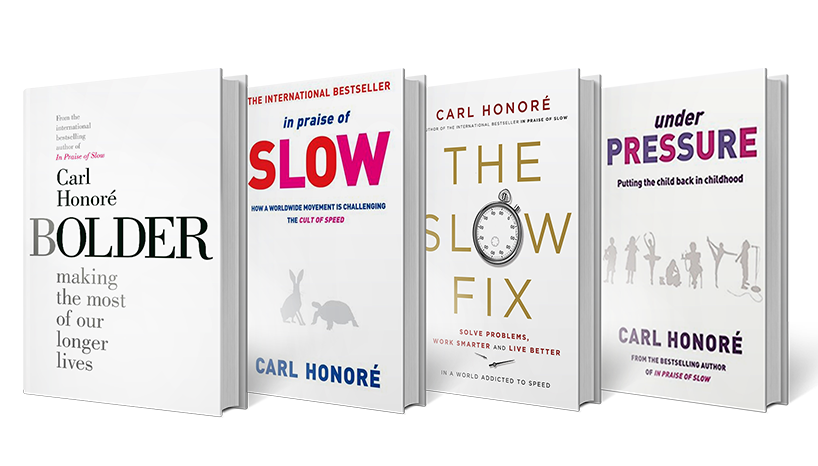
Slow down, read carefully, pay attention, Carl Honoré, author of “In Praise of Slow” will be speaking in Uxbridge Sunday Mar 3. This is a Blue Heron Books presentation and is just one of the many authors lined up for the independent bookstore’s 2019 Winter/Spring Series of Fortunate (literary) events. For those of us here at Slowcity.ca this is pretty rad news; we have been advocating slow living for some time of course but Honoré’s new book “Bolder”, is also of great interest as it explores what it is to be older in our culture at this juncture - and who isn’t getting older and yes we are getting bolder too.

Folks are no longer happy being defined by age, no more than they are by geography or gender or job. Instead of becoming less as we age we can be more, so much more.

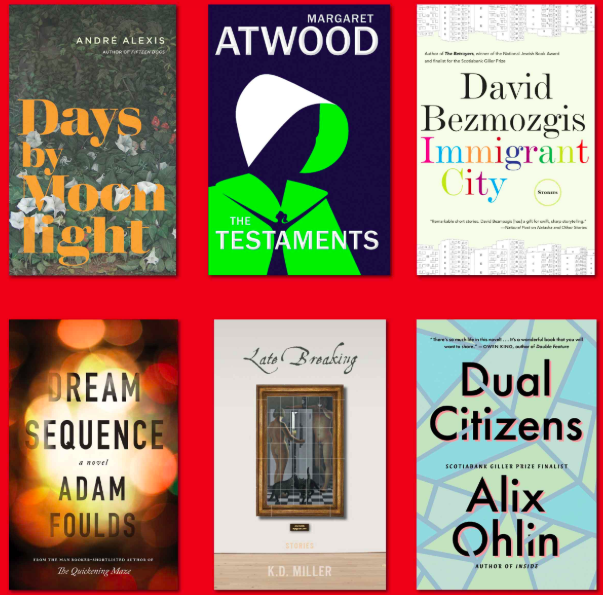
Broadcaster Erin Davis, the 2018 Scotiabank Giller prize shortlisted Thea Lim with Laura B. Davis, Lisa See, Jennifer Robson with Shelley Wood and Armando Lucas Correa are the other authors coming. All six events take place at Wooden Sticks Golf Course, five include brunch. Buy the Passport and get one event free and $15 in Blue Heron Books coupons.

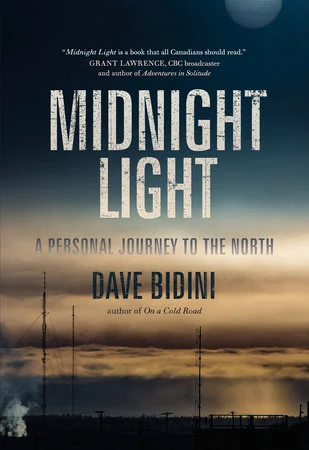
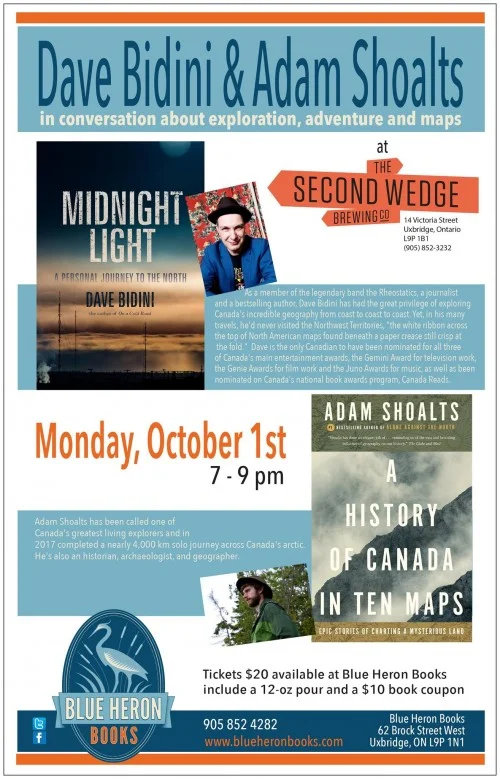
Dave Bidini shines 'Midnight Light' on life in the North

Will McGuirk September 18, 2018

Its a place most of us will never know, the North, but we can know it through the journals and memoirs of those who visit and return, decked out in experience, noticeably changed. One senses there are those for whom a visit to somewhere new is a return, a sense of belonging as if the very ground reaches up and says do you remember? I will never visit the North I bet but I have visited parts through the medium of journalists who write like artists. I am lucky to know a few, and we are lucky to know Dave Bidini and fortunate to have his new book, “Midnight Light” as a document. This is an absolute joy to read as his writing just flows, inspired, unencumbered, passionate, his joy at being there, his thrill of living loud, leaps off the page. He consumes it all, the edge of the world and the caravan of characters who populate it. They emerge from the pale in all their raw bloodiness, kind, cautious, interested, introspective, seekers, hiders, First Nations and the last of their ways, the young, the very elderly, and right there in the middle of it, the muddling, middling middle of it a newspaper seeking the new. Bidini was there as a journalist, getting as close to the truth of the North as was possible - and its as if he cupped it all in his hands, came South and gently, opens up - there in his palms, a globe of midnight life captured in light.

IMPAC Dublin Literary Award winner Rawi Hage at Uxbridge Music Hall Sept 27

Will McGuirk September 2, 2018

Rawi Hage along with Wayne Grady, Elizabeth Hay and Lisa  Gabriele will be at the Uxbridge Music Hall Thurs Sept 27 at 7 p.m. for the town's annual Celebration of the Arts.
Get tickets and books at Blue Heron Books -> 

Beirut Hellfire Society. There was a hellfire club where I grew up and CNN’s Jake Tapper’s book is called The Hellfire Club. Hell’s Bells its a theme maybe, maybe enough to get me to pick up Rawi Hage’s newest, the aforementioned Beirut Hellfire Society and I was hooked in the first lines - Pavlov heard the bell, got up and spat - This is a book of choices, of freedoms, of self-definition, of travelling your own path and observing others as they travel to the end of theirs. Pavlov is an undertaker in Beirut, he’s busy, but there are those who can’t get buried for one reason or another, usually by another’s degree and the dead are not bothered to argue. Pavlov is the funeral fixer.

Because he lives among the dead the living fear him. They fear his oversight and because they fear him he is a target. Looking after the dead is an undertaking open to few and the takings are perceived to be lucrative.

Because he is seen as a rich man he is a target.  How the fixer fixes to survive is the story Hage has set himself to tell. Pavlov lives in a magical reality, a state where the dead animals are more real than people and people live like animals. It is Beirut in the 1970s, one must be one of the other in this binary war, either with or without, Pavlov chooses his own path through the corpses.

I'll step out into the winderness and say I can see Hage being mentioned soon in the same canonic lists at Ondaatje and Atwood, Rushdie and Garcia-Marquez. 

Screenshot 2023-06-10 at 10.18.16 PM.jpg
TownBrewery.jpeg
SecondWedge.png
Atria_logo.png
apologue_logo2.png
kv_eyes.jpg
Avanti_logo.png
RMG SQ.jpg
11666057_10154039986198378_4496427229864055720_n.jpg
COnvergenceSQ.png